Comprehensive Guide to the Differences Between British and American English: Spelling, Pronunciation, Grammar, & Vocabulary Explained
English is a global language spoken by people all over the world. A survey conducted in 2022 estimated that there are approximately 1.5 billion people worldwide who speak English as their native or second language [1]. However, even native English speakers often get confused when trying to understand the differences between American English (US) and British English (UK).
What Are the Main Differences Between British and American English?
Differences in Spelling Between British and American English
Differences in Pronunciation Between British and American English
Differences in Grammar Between British and American English
Differences in Vocabulary and Word Choice
British English vs. American English: Which One Should You Learn?
What to Do If You Can’t Decide Which One to Learn
Frequently Asked Questions (FAQs)
What Are the Main Differences Between British and American English?
What Exactly Are “British English” and “American English”?
British English and American English are two regional variations of the same language. According to history, it was the British who introduced the language to the rest of the world, including American regions during the sea explorations in 16th and 17th centuries [2]. After the American Revolution in the late 18th century, Noah Webster modified how the words were spelled and pronounced to pioneer the American version of English. That is why you consult the Merriam-Webster Dictionary for American English and the Oxford Dictionary for British English!
Differences in Spelling Between British and American English
There are distinct spelling differences between American and British English. The major differences have been highlighted below.
-re (UK) vs. -er (US)
| British English | American English |
| centre | center |
| metre | meter |
| fibre | fiber |
| litre | liter |
| calibre | caliber |
| theatre | theater |
| spectre | specter |
-our (UK) vs. -or (US)
| British English | American English |
| colour | color |
| flavour | flavor |
| labour | labor |
| honour | honor |
| neighbour | neighbor |
| tumour | tumor |
| vigour | vigor |
| favour | favor |
| behaviour | behavior |
| humour | humor |
-ise (UK) vs. -ize (US)
| British English | American English |
| organise | organize |
| analyse | analyze |
| synthesise | synthesize |
| specialise | specialize |
| visualise | visualize |
| recognise | recognize |
| optimise | optimize |
| normalise | normalize |
| crystallise | crystallize |
| sterilise | sterilize |
Note that the spelling of even the modification with suffixes “-tion” or “-ing” to these words will differ.
| British English | American English |
| organisation | organization |
| optimisation | optimization |
| visualisation | visualization |
| specialisation | specialization |
| analysing | analyzing |
| recognising | recognizing |
| synthesising | synthesizing |
| sterilising | sterilizing |
-ogue (UK) vs. -og (US)
| British English | American English |
| catalogue | catalog |
| analogue | analog |
| dialogue | dialog |
| monologue | monolog |
| epilogue | epilog |
| prologue | prolog |
| demagogue | demagogue |
| travelogue | travelog |
However, there could be some exceptional cases. US English also accepts the usage of “-ogue” in several instances. For example, you will typically see “prologue” and “epilogue” at the beginning and end, respectively, in almost all books regardless of whether it follows British or American English.
Also, the word “dialogue” often is used in both British and American English to indicate a conversation, whereas with respect to computing, a pop-up window or a prompt is usually referred to as a “dialog” box.
Differences in Pronunciation Between British and American English
Differences in the “R” Sound
To understand how Americans and British pronounce the /r/ sound differently, you need to know about rhoticity. In linguistics, there are rhotic and non-rhotic dialects that determine how the /r/ sound is pronounced in words
Rhotic: The /r/ is pronounced in all instances when it appears in a word, such as at the end of the word or even as a syllable. For example, in words like “Far,” “Mother,” “Curd,” etc. you will clearly hear the /r/ in American English.
Non-rhotic: Here, the /r/ is not sounded aloud unless it is followed by a vowel or a vowel sound. So, words ending with “R” or when “R” is just a syllable within a word, you will often feel that it is silent. For example,
- “far” will sound like “fa-h”
- “farmer” will sound like “fa-h-ma”
- “mother” will sound like “ma-dah”
Practical Tip: To practice pronouncing /r/ in American English (US), curl your tongue slightly upward without touching the roof of the mouth entirely. When practicing British English (UK), lengthen the vowel sound and release it without the /r/ sound.
Differences in the “T” Sound
There are different types of /t/ sounds in the English language depending on whether the letter is placed at the beginning, in the middle, or at the end of a word [3]. Let’s look at the prominent types and how they are pronounced in American and British English.
1. Aspirated /t/
Here, you will not say a sharp /t/ sound. Instead, you will release a puff of air from your mouth, almost as if making a “T + Huh” sound. In both British and American English, you will hear the same sound but with different accents.
Typically, the aspirated /t/ is commonly heard in words beginning with the letter “T”: True, Take, Total, Table, etc. However, the sound will also be heard in words “Hotel,” “Motel,” etc.
2. Glottal /t/
You will commonly hear glottal /t/ sounds for words ending in letter “T” in American English. Glottal /t/ is when the sound /t/ is stopped in your vocal chords. Unlike aspirated /t/ where your tongue comes back down from the roof of your mouth, it remains at the top when you make the glottal /t/ sound.
- Cut
British English -> Cut (aspirated /t/ sound with a soft puff of air released)
American English -> Cu’ (/t/ sound is almost silent or not stressed at all)
Example phrase: Cu’ down - Spot
British English -> Spot (aspirated /t/)
American English -> Spo’ (silent or unstressed /t/)
Example phrase: Spo’ the odd one ou’ - Sit
British English -> Sit (aspirated /t/)
American English -> Si’ (silent or unstressed /t/)
Example phrase: Si’ with me
3. “T” after “N”
- Internet:
British English -> in-ter-net (/t/ is pronounced softly but clearly)
American English -> Inner-net (/t/ is an unstressed syllable and avoided from being pronounced) - Wanted:
British English -> wan-ted (soft sound of /t/)
American English -> wan-ned (/t/ is not sounded out loud) - Printer:
British English -> prin-ter (soft sound of /t/)
American English -> prin-ner (/t/ is not sounded out loud)
4. “T” between vowels
- City:
British English -> Ci-tee (aspirated /t/)
American English -> Ci-dy (a soft /d/ sound is heard) - Witty:
British English -> Wi-tty (aspirated /t/)
American English -> Wi-tdy (a soft /d/ sound combined with soft /t/) - Water:
British English -> Wat-uh (aspirated /t/)
American English -> Wad-der (a soft /d/ sound combined with soft /t/) - Better:
British English -> Bet-uh (aspirated /t/)
American English -> Bed-der (/t/ sounds like /d/)
Differences in Vowel Sounds
The vowel sounds in English vary in terms of lip rounding and diphthong length (two vowels used together to make a sound). Below are some common differences often heard when pronouncing vowel sounds in English [4].
- /a:/ vs /ae/
The letter “a” in words are either pronounced as a long /a:/ sound or a short, flat /ae/ sound (as in “cat” or “apple”). So, the “a” in words like bath, class, prance are often elongated in British English, whereas they sound crisper and flatter in American English.
- Ah vs Aw
Several words containing the letter “o” are often pronounced with a diphthong sound like “ah” in American English (like in “father”), with a significant jaw drop and relaxed, rounded lips. Conversely, in British English, this sounds more like “aw” with only a slight jaw drop and more lip rounding.
Dog: American English -> d-ahg; British English -> d-awg
Hot: American English -> h-aht; British English -> h-awt
Mom: American English -> m-ahm; British English -> m-awm
Honest: American English -> -ahnest; British English -> -awnest
- Omission of sound /y/
Words containing the letter “u” or sounds like “-yoo-” are also pronounced differently in American and British English when they are typically found after consonants ‘t,’ ‘d,’ and ‘n.’ In the US, people typically eliminate the “-yoo-” sound entirely in words like tune, student, news and make it sound like toon, st-oo-dent, noos. However, the “-yoo-” sound is retained in British English making the words sound like t-yoo-n, st-yoo-dent, n-yoo-s.
Differences in Grammar Between British and American English
Past Tense and Past Participle Form Differences (e.g., *got* vs. *gotten*)
In verb tenses (past tense and past participle form), the suffixes at the end of certain verbs differ in American and British English.
- The -t vs -ed suffixes: In British English, past tense and past participle of verbs like burn, dream, and learn are burnt, dreamt, and learnt. Whereas in American English, these words are suffixed with “-ed” instead to make them burned, dreamed, and learned.
British English: I accidentally burnt the toast.
American English: I accidentally burned the toast. - The verb “Get”: A prominent difference is observed in the verb “get”. The past tense is “got” in both variants, but the past participle is either “got” or “gotten.”
British English: The past participle remains the same as the past tense “got”
Example: I have got a present for my birthday.
American English: The past participle of “got” becomes “gotten.”
Example: I have gotten a present for my birthday.
Collective Nouns: Singular or Plural?
Collective nouns are words that refer to a group of something. Example: Team, Government, Band, Staff, etc. American English considers collective nouns as a single unit, and hence uses singular verbs when referring to these words. British English, on the other hand, accepts either singular or plural verbs depending on the context in which the collective noun is used, either as a single entity or as a collection of individuals.
British English: The band are playing my favourite song.
American English: The band is playing my favorite song.
Alternatively: The band members are playing my favorite song. (Accepted in both US and UK English).
Differences in Using the Present Perfect Tense
American English usually prefers the simple past tense of verbs, while British English favors the present perfect tense when connecting a completed action to the present. This is predominantly noticed when using words like “just,” “yet,” and “already” in sentences.
Examples
British English: I have already eaten (“eaten” is the present perfect tense of the verb “eat”)
American English: I already ate (“ate” is the simple past tense of “eat”)
British English: She has just begun to read this book (“begun” is the present perfect tense of “begin”)
American English: She just began reading this book (“began” is the simple past tense of “begin”)
Practical Tip: Note that present perfect tenses are combined with helping verbs like have/has when constructing sentences.
Differences in Vocabulary and Word Choice
List of Everyday Vocabulary Differences
Another most obvious difference between British and American English is everyday vocabulary. The table below shows how commonly used words with same meaning are often varied in the two countries.
| Meaning | British English | American English |
| Painted area on the road used for crossing | Zebra crossing | Crosswalk |
| Front of a car | Bonnet | Hood |
| Rear of a car | Boot | Trunk |
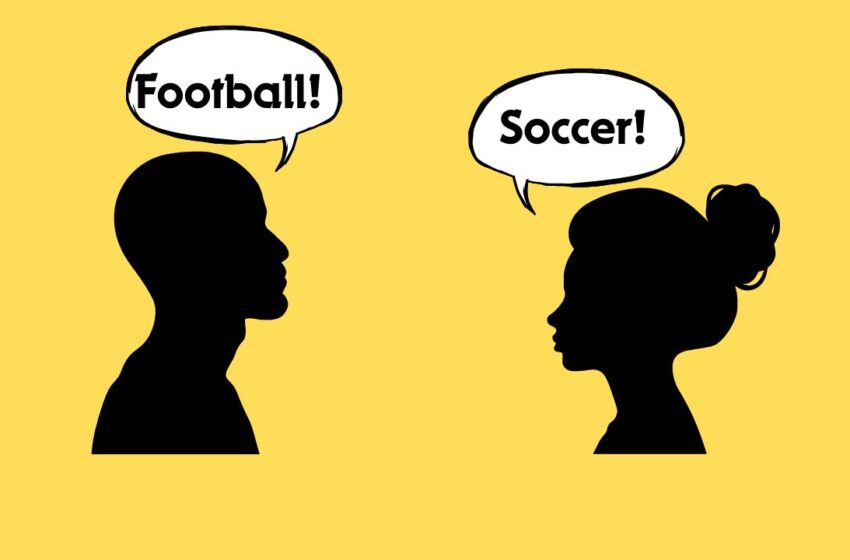
| Game where the ball is kicked | Football | Soccer |
| Paved path for pedestrians on the road | Pavement | Sidewalk |
| Groups of houses in a building | Flats | Apartments |
| Garment worn on the lower part of the body | Trousers | Pants |
| Large vehicle used for transporting goods | Lorry | Truck |
| Institution of higher education | University | College |
| An extended period of break from routine | Holiday | Vacation |
British English vs. American English: Which One Should You Learn?
Which Is Easier for ESL Speakers to Learn?
Learning to speak the English language is influenced by various factors like the environment, regional exposure, simplicity of accent/tone, and pronunciation skills. For instance, countries like Japan, Korea, Singapore, and India are normally more exposed to American English through pop culture. So, one might find it easier to pick up American English.
Moreover, many ESL researchers are likely to have easy access to American media (TV shows, music, movies, etc.), and this popularity makes the accent easily recognizable. The simplicity of certain enunciations and the rhythmic flow of the tone makes American English easy to learn compared to British English.
Also, Americans pronounce /r/ more clearly than British because of the rhotic pronunciation. This makes the consonant and vowel sounds feel slightly more natural than those heard in British English.
How to Choose Based on Your Personal Goals
Students and researchers should align their language learning goals with their personal goals.
- Work and Study: If you are planning to travel across European countries (UK, Scotland, Northern Ireland etc.) for your study or are looking to collaborate with peers from European Universities, you are better off learning British English. But if you are leaning towards institutions in the US, familiarize yourself with American English.
- Journal Submission: Many international journals specify that the papers submitted must either be in American English or British English, as long as you remain consistent. Here, you need to be careful about spelling and punctuation styles in written English.
- Conference Presentation: You may encounter researchers from different geographical backgrounds when attending conferences. If you are a presenter, simply focus on the language itself rather than worrying about sounding British or American! It does not matter as long as the listeners understand what you are trying to convey about your research.
If you are only participating in a conference without presenting anything, familiarize yourself with both American and British English accents by listening to a few audio lessons or presentations prior to attending the conference. This will help you understand the presenters better regardless of where they are coming from. - Everyday Conversations: When collaborating with researchers worldwide, do your homework on who you are communicating with. Are they British researchers? Or are they from the United States of America? Because while academically you may use the same terminology, it’s the everyday vocabulary that will help you connect better with your peers!
What to Do If You Can’t Decide Which One to Learn
If you can’t decide between US English and UK English, don’t fret too much! On a global level, the two are simply variants of the same language and are not so different that if you learn one you will not be able to communicate in the other. Depending on your geographical location, educational priorities, and career opportunities, you may decide which one would suit you more.
For written assignment: When writing theses, dissertations, and journal papers, always follow the guidelines outlined by the universities or the journal. If they explicitly mention that only American English or only British English must be used, follow it. However, if they let you decide between either of the two, pick one and use the spelling and styling conventions consistently throughout the paper.
For speaking: This is usually a personal preference. If you are exposed to American English more because of media influence, you might automatically pick up the tone and accent when you start learning English. It also becomes easier to grasp because of your familiarity with the usage of words and intonation of speakers.
Frequently Asked Questions (FAQs)
Q1. Should I learn British English or American English?
British English and American English are variants of the same language. The rules of grammar almost remain same in both with some variations. British English is often considered the more formal and “correct” version of English (also referred to as the Queen’s English), making it the first option for many to learn proper English. However, American English is also widely adopted across the world. And because of its simplicity and flexibility in certain grammar rules, it is also considered easier to learn.
Whether you learn British or American English depends on your personal goals, career opportunities, educational fields, and regional exposure.
Q2. Why did these differences develop between British and American English?
The two variants diverged primarily because of intentional linguistic reforms, geographical isolation, and exposure to different cultures after the American revolution. Once the United States of America became an independent nation, the restricted contact between the two nations for centuries allowed the language to evolve distinctly with their own dialects, pronunciations, spellings, and intonation.
Q3. Which is more widely used around the world, British or American English?
Because of its popularity, American English is more widespread and prominent globally. Although British English shows a larger share in terms of geographies because of its standard use in Commonwealth regions (Asia, Africa, Europe, Pacific nations), American English speakers dominate the global media, internet, and even international business domains.
Q4. Can native speakers tell the difference between British and American English?
When speaking, yes! Native English speakers can easily notice the differences in rhotic and non-rhotic pronunciation of /r/ in the two accents. Even the use of everyday vocabulary terms like football (soccer), lorry (truck), sidewalk (pavement), etc. is an obvious difference to native speakers. Moreover, British tend to end statements with question phrases like inn’it or a’right, making it a clear indicator of the influence of their regional dialects!
Q5. Are there words that mean completely different things in British and American English?
There are a few words in everyday vocabulary that could imply different things in different contexts in American and British English.
| Word | Meaning in British English | Meaning in American English |
| Pants | Underwear (clothing worn inside trousers) | Garment worn covering the entire lower body (the word for “underwear” is boxers) |
| Purse | A small wallet or pouch used to hold coins | A woman’s handbag |
| Chips | Thick-cut hot-fried potatoes (what Americans call French Fries) | Thinly sliced crispy snacks (e.g., potato fries) |
| Jumper | A pullover sweater to keep you warm and cozy | Someone who leaps from high points like buildings or bridges |
| Rubber | An eraser | A contraceptive product (condom) |
| First floor | One floor above a building’s ground level | The floor of a building at ground level |
| Pissed | Intoxicated with alcohol (drunk) | Angry or irate |
Q6. Is it okay to mix British and American English in the same sentence or text?
No! Mixing British English with American English in writing, especially academic writing, is considered bad practice. Whether you are submitting to academic journals, preparing user manuals, or finalizing your thesis/dissertation, pick one (either American English or British English) and stick to it throughout the text. Follow all spelling conventions and punctuation preferences as per one language variant.
Conclusion
In summary, while there are many differences between British and American English, these differences are not that significant when speaking the language. For the average audience, these differences are easily understood in context.
However, for researchers and academics who need to use the language to communicate their findings in academic papers, knowing the differences between American and British English becomes crucial.
References
1. The most spoken languages worldwide in 2026 https://www.statista.com/statistics/266808/the-most-spoken-languages-worldwide/
2. Differences between British and American English https://www.britishcouncilfoundation.id/en/english/articles/british-and-american-english
3. British vs American accent https://www.youtube.com/watch?v=7VjPCBGWTAw
4. American vs British English – Vowel Sounds- Pronunciation Differences https://www.youtube.com/watch?v=LIZ78RwhSPc