How a strong research protocol improves study quality
Key takeaway: A research protocol is far more than a document for ethics approval. It lays the scientific, methodological, and ethical foundation of a study, shaping research quality long before the first participant is recruited. This article walks describes the elements of a strong research protocol and identifies common mistakes to avoid when preparing one.
Common mistakes that weaken research protocols
Essential elements of a high-quality research protocol
How can researchers develop a strong research protocol?
The value added by scientific writing during protocol development
The cost of irreproducibility
Protocol writing is often viewed as an administrative task that needs to be undertaken to satisfy an Institutional Review Board (IRB), ethics committee, or funding agency. However, a research protocol serves a much larger purpose – it is the first quality control mechanism in research.
An analysis revealed that every year, in the United States alone, ~$28 billion is spent on preclinical research that cannot be reproduced. The leading causes of irreproducibility were study design flaws (28%), data analysis and reporting problems (25%), and deficiencies in laboratory protocols (11%). A detailed research protocol could have helped identify these problems before the first experiment was initiated.
What is a research protocol?
The Standard Protocol Items: Recommendations for Interventional Trials (SPIRIT) initiative describes a research protocol as a document that provides a clear understanding of a clinical trial’s background, objectives, population, methods, statistical analyses, and ethical considerations. This information supports scientific and ethical rigor from ethics approval through to publication.
A research protocol is an operational blueprint for investigators, ethical assurance for IRBs and ethics review committees, methodological clarity for peer reviewers, and transparency document for funders and regulators. A poorly prepared protocol creates problems downstream.
Common mistakes that weaken research protocols
Let us look at the common mistakes researchers make during protocol development.
- Vague descriptions of methodology increase the risk of outcome reporting bias. When primary and secondary endpoints are poorly defined, hypotheses could be altered post hoc to highlight positive results. A systematic review of study publication and outcome reporting biases found that failing to lock down endpoint metrics before data collection leads to skewed meta-analyses.
- Insufficiently defined eligibility criteria create problems during participant enrollment and publication. IRB and journal reviewers assess whether a study’s sample is appropriate for the research question. Undefined or inconsistently applied criteria raise scientific and ethical flags.
- Inadequate statistical planning weakens studies considerably. Poor experimental design and statistical issues are key contributors to the reproducibility crisis. Inadequate reporting of methods or data handling processes could also lead to a loss of confidence in the results.
Such structural problems in a research protocol often lead to operational complications, frequent amendments, a drain of institutional and editorial funding, delayed project timelines, increased risk of study termination due to unexpected data anomalies, or even journal rejection. The question that now arises is: what should be included in a research protocol and how can researchers develop a strong one?
Essential elements of a high-quality research protocol
Although requirements vary across disciplines, most high-quality protocols stand out because of the following:
- A well-articulated research question: The document explains why the study matters and the knowledge gap it addresses.
- Clearly defined objectives: Without clearly articulated objectives, every component of the study becomes difficult to justify. A study cannot try to answer too many questions; its objectives must be precise and clearly outlined.
- A scientifically appropriate study design: Even an excellent research question cannot compensate for an inappropriate study design. A strong research protocol explains how the chosen design aligns with the research question and includes details about participant inclusion criteria, randomization sequences, and timelines.
- Transparent methodology: Robust research protocols describe participant selection, interventions, data collection methods, timelines, and outcome measures in detail. Such transparency also improves reproducibility, allowing future researchers to evaluate or replicate the work.
- A predefined statistical analysis plan: This covers sample size justification, primary and secondary outcomes, procedures for handling missing data, and subgroup analyses. This reduces the risk of post hoc decision making and selective reporting.
- Ethical considerations: Explanations of how participant welfare has been considered, covering informed consent procedures, confidentiality measures, risk mitigation strategies, adverse event reporting, and compliance with applicable ethical standards such as the Declaration of Helsinki and Good Clinical Practice (ICH E6) guidelines.
How can researchers develop a strong research protocol?
The first step is to view the research protocol not as an administrative document but as an essential process that will safeguard scientific rigor and satisfy ethics boards, funders, and peer reviewers. Reviewers typically want to be assured that a research protocol has ethical viability, clear objectives, defensible methods, appropriate sample sizes, participant safety, and realistic timelines.
Feasibility reviews of 116 protocols at the University of Minnesota found that reviewed protocols received one or fewer IRB stipulations on average. The review process, completed within six days by specialists in study design, biostatistics, and regulatory requirements, also educated study teams on how to write stronger protocols for future submissions. This implies that the quality of scientific writing in a protocol influences the efficiency of ethics review. Many downstream issues can be avoided if researchers seek scientific writing support to develop a structured protocol document.
The value added by scientific writing during protocol development
A research protocol is both a scientific manual and a communication document. Its purpose is not only to describe the research plan but also to convince reviewers, ethics committees, collaborators, and funding organizations that the study is scientifically rigorous and operationally feasible. In other words, clear scientific writing begins with protocol development. With global research becoming increasingly interdisciplinary, many research teams seek specialist support during protocol development to ensure clarity, consistency, and regulatory compliance.
Scientific writers who specialize in research protocol development bring unique expertise that domain experts alone do not. Experienced scientific writers have the ability to translate researchers’ methodological intentions into precise, reviewer-ready language that aligns with the expectations of ethics review, funding bodies, and peer review. They help investigators develop a research protocol that clearly articulates the research question, meets ethical and eligibility criteria, and demonstrates clear statistical planning. Platforms such as Kolabtree connect researchers with vetted scientific writing specialists who work across clinical research, biomedical science, and health-related fields at the protocol development stage.
At a time where transparency and research integrity are receiving unprecedented attention, investing time in developing a robust research protocol with the help of experienced scientific writing experts may be one of the most important scientific decisions a research team makes.
Frequently Asked Questions
What is a research protocol and why does it matter?
A research protocol is the foundational planning document for a study, specifying its objectives, methods, eligibility criteria, statistical approach, ethical safeguards, and data management plan. There is a strong connection between how a study is planned and how robustly it shapes up. Every downstream stage of a study depends on the decisions made and documented in the protocol. Weaknesses in the protocol impact the entire study.
What is the primary difference between a research protocol and a research paper?
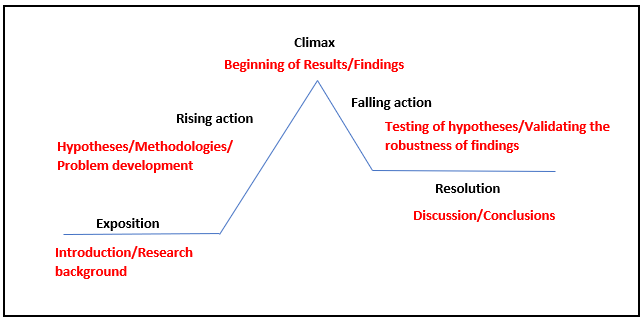
A protocol is a prospective operational blueprint written before the study or its analysis begins. It includes details about methodology, statistical plans, and ethical safeguards. A manuscript is a retrospective document written after analysis is complete to present actual findings, discussions, and conclusions for peer-reviewed publication. A research protocol is a planning document that describes HOW the study will be conducted. A research paper describes HOW the study was conducted in alignment with the research protocol and what the findings indicate.
What are the most important sections of a research protocol?
The most critical sections are the study objectives, eligibility criteria, methods and procedures, statistical analysis plan, and ethical considerations. The SPIRIT 2025 statement provides a checklist of the minimum items a protocol should address, and is used by IRBs, funders, and journals to assess protocol completeness.
How does a well-written protocol speed up Institutional Review Board (IRB) approval?
IRBs (and other review boards) assess both ethical permissibility and scientific validity. A protocol with clearly written consent procedures, explicit risk mitigation measures, well-defined eligibility criteria, and a transparent statistical plan reduces review times, revision cycles, and delays.
Why do poorly written protocols harm reproducibility?
If a protocol does not specify methods in sufficient detail for another investigator to replicate the study, the study is unlikely to be reproducible regardless of how much potential the research question has. Vague methodology, undefined data handling procedures, and analysis decisions made outside the protocol are among the leading contributors to the reproducibility problems that affect preclinical research.
How does scientific writing help in research protocol development?
Professional scientific writing improves clarity, consistency, and document quality, helping reviewers understand complex study designs while ensuring that the investigators’ scientific intent is communicated accurately.
When should investigators seek scientific writing support for research protocol development?
The best time to engage specialist scientific writing support is at the protocol planning or drafting stage, before submission for ethics review or funding consideration. This is when methodological decisions can still be adjusted and documentation can be structured to meet the specific requirements of the target ethics committee, funder, and intended journal.
How does a detailed statistical analysis plan prevent publication bias?
A detailed statistical analysis plan prevents bias by locking in power calculations and data exclusion rules before data collection starts. This pre-planning prevents researchers from shifting endpoints or running unauthorized post-hoc analyses to find statistically significant results from random data fluctuations.
Can a research protocol be modified after the study has officially commenced?
Yes, a protocol can be modified through formal amendments, but changes must be reviewed and approved by the institutional review board before implementation. Frequent or unapproved modifications threaten study validity and can lead to immediate compliance rejections or funding withdrawal.
Do journals demand registered research protocols?
Yes, they do. Journals require registered protocols to ensure research integrity and eliminate selective outcome reporting. By comparing a submitted manuscript against its registered protocol, editors and reviewers can confirm that the researchers stuck to their original hypotheses, sample sizes, and endpoint metrics without bias.
- Freedman LP, Cockburn IM, Simcoe TS. The Economics of Reproducibility in Preclinical Research. PLoS Biol 2015; 13(6): e1002165. https://doi.org/10.1371/journal.pbio.1002165
- An-Wen C., Jennifer M. T., Douglas G. A., et al. SPIRIT 2013 Statement: Defining Standard Protocol Items for Clinical Trials. Ann Intern Med.2013 158: 200-207. doi:10.7326/0003-4819-158-3-201302050-00583
- Kerry D., Carrol G., Paula R.W., James J. K. Systematic Review of the Empirical Evidence of Study Publication Bias and Outcome Reporting Bias — An Updated Review. PLoS ONE 2013; 8(7): e66844. https://doi.org/10.1371/journal.pone.0066844
- Balakumar P., Nandakumar K., Jagadeesh G. Insights into Effective Protocol Structuring: Optimizing Dosing Strategies, Experimental Design, and Statistical Approaches. Pharmacol Ther 2026; 282, 109015. ISSN 0163-7258. https://doi.org/10.1016/j.pharmthera.2026.109015.
- World Medical Association. Declaration of Helsinki. https://www.wma.net/what-we-do/medical-ethics/declaration-of-helsinki/. Accessed 15 July 2026.
- ICH Harmonised Guideline for Good Clinical Practice E6(R3). https://database.ich.org/sites/default/files/ICH_E6%28R3%29_Step4_FinalGuideline_2025_0106.pdf. Accessed 15 July 2026.
- Nicole T., Ryan L., Francoise C. Carrie MK. et al. The University of Minnesota’s Clinical Research Support Center Feasibility Review: An Objective Protocol Assessment Carving a Pathway to Study Success. J Res Adm. 2022; 53(2): 103-118. PMID: 37440894.
- Kolabtree. https://www.kolabtree.com/. Accessed 15 July 2026.