When to Learn & When to Get Help: Hacking the Modern Research Landscape
A practical framework for deciding when researchers should build skills and when expert collaboration leads to better outcomes.
The Modern Research Landscape
Modern research unfolds in an extremely fast-paced landscape, driven by rapid technological advances, global challenges, and non-negotiable demands of precision and reproducibility. Scientific breakthroughs are no longer catalyzed by steady incremental progress alone, but rather by revolutionary advances arising from rigorous scientific inquiry, the use of sophisticated tools, and—importantly—integration of knowledge across domains.
However, this has created a fundamental challenge. Modern research requires researchers to keep up with the pace of innovation while producing high-quality and reproducible results. This expectation inherently demands continual upskilling to learn new tools, technologies, and techniques. At the same time, contemporary research questions are highly interdisciplinary in nature, often requiring expertise in multiple fields. Should a researcher, then, attempt to master all required research skills and become an expert in multiple fields? Such an expectation is neither practical nor humanly possible — it would drastically slow progress, increase the risk of errors, and inevitably make the researcher a “jack of all trades, master of none.”
A simple solution to this is collaboration. Several studies have shown that collaborative research—in any field—leads to better quality outcomes and greater innovation. Collaborative work offers several advantages, such as access to resources, complementary skill sets, and larger impact, all of which could be difficult to achieve alone. Thus, collaborations have become almost a requirement for science to move forward without compromise.
Hence, the real challenge today is no longer about choosing to be independent or collaborate, but rather about learning how to balance the two: knowing when one should invest time and effort to learn new skills and when one should seek expert support.
When to Learn Research Skills
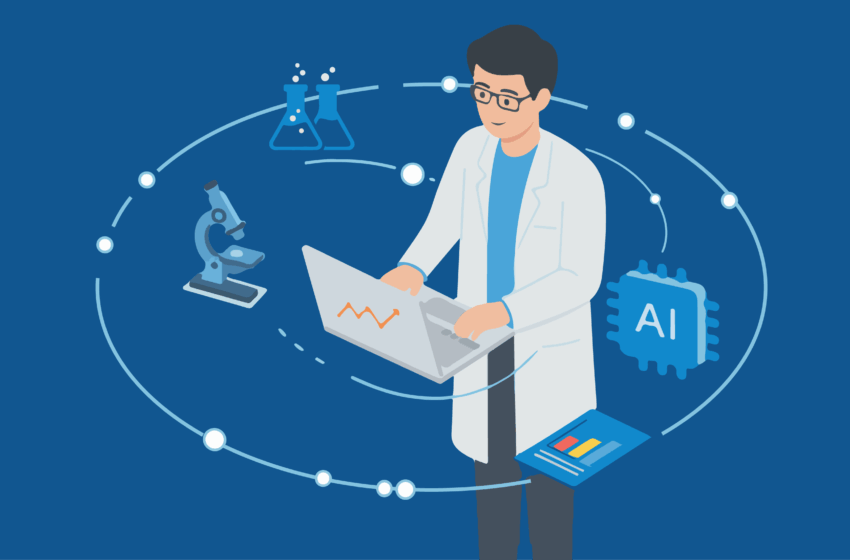
Research has always demanded rigor. Today it also demands a certain level of technical fluency in different domains, as a single project may involve various techniques and tools such as programming to process large datasets, use of simulation software, visualization of data, and AI-assisted processes.
Four clear scenarios where learning a skill/tool yourself is the best investment, are the following:
- To gain foundational understanding: Learning the basics of all skills or techniques that may be required in a project has become a core research competency. Even if the plan is to outsource or collaborate, taking the effort to learn the basics has advantages. It will allow you to ask better questions, make appropriate decisions, carefully assess the results, and carry out interdisciplinary communication with collaborators. For example, a basic understanding of simulations can enable a biomedical researcher to communicate effectively with a computational modeler and critically evaluate the outcomes.
- When you foresee repeated requirements: If a method or platform will be used repeatedly and across multiple projects—such as statistical software, specialized confocal microscopy, or basic machine-learning pipelines—mastering it pays off over time. Outsourcing these repeatedly could reduce efficiency and create bottlenecks arising from dependency on others.
- For claiming ownership: If the method or skill is central to the research, then learning it should be non-negotiable so that you can claim ownership of the project. For example, if your research revolves around developing a new platform for drug delivery, it is essential to gain a certain proficiency with the tools and skills supporting its development to strengthen your intellectual ownership.
- When it reduces dependency on scarce resources: Sometimes specialized equipment or services may have limited accessibility. In such scenarios, it might be worth investing the money, time, and effort to equip yourself or your team with the required skill-sets to avoid delays and ensure faster progress.
When Outsourcing or Collaborating Improves Research Outcomes
Even though equipping yourself with the required skills for a project has its advantages, there comes a tipping point where learning everything yourself slows the progress and yields poorer results rather than enhancing outcomes. That’s when you should seek help. The following scenarios outline when and why seeking expert help or collaborating becomes advantageous.
- When the project demands niche expertise: If a project reaches the point where it requires a specialized knowledge and skill-set that is outside your expertise, collaboration or seeking expert service is the best choice to avoid delays as well as potential errors. For example, a biologist can seek the help of an expert if a project demands advanced AI architectures or complex simulations. Such experts will not only deliver precise and reliable results but also give innovative directions to the project. Studies have consistently shown that complementary skill-sets will lead to more impactful research outcomes.
- When the requirement is one-time or not central to the project: For tasks that are unlikely to recur in a project or are only supplementary in nature, it becomes more cost-effective to outsource or collaborate rather than spending months learning the task.
- When you need to prioritize impact over time: Projects that are linked to grants, industry requirements, regulatory protocols, etc. are often time-sensitive and need to be completed within a specific period for optimal impact or to ensure completion. In such cases, it is more efficient to outsource or collaborate and spend your own time focusing on other high-value tasks central to the project.
Learn-Versus-Hire: A Practical Framework
Ultimately, seeking help should not be viewed as a shortcut; it should be a deliberate strategic choice. At the same time, collaboration should support learning and rigor, not replace them. Thus, the simple answer is that one should adopt a blended approach: learn the fundamentals, while working with experts on advanced aspects.
In today’s world where AI is at the forefront of almost all domains, the question of whether to learn AI or call in experts presents the perfect example of taking the blended approach. AI allows automation of various tasks such as literature review, data analysis, and pattern recognition. Learning how an AI tool works at the basic level will empower a researcher to make informed choices and critically evaluate the results, while collaborating with specialized experts will prevent misinterpretations and propel the project to a new level.
As research becomes more interdisciplinary and global, formal networks of experts are growing and becoming critical. Such networks are transforming how research is done and knowledge is generated. Platforms such as Kolabtree, for example, give researchers access to experts for specific needs — whether it is to conduct large surveys for a dataset, analyze complex data, visualize data in interesting ways, or refine a report for grant submission. Such platforms overcome the skill burden and enhance research outcomes.
On this International Day of Education, it is important to note what education for researchers means today. Education is no longer limited to undergoing formal training or gaining degrees. It means continuous upskilling, networking, and, importantly, making smart decisions on how knowledge is built—individually, collaboratively, and efficiently.
References
Researcher of the Future — a Confidence in Research report. https://www.elsevier.com/en-in/insights/confidence-in-research/researcher-of-the-future?
Bansal et al. Collaborative research in modern era: Need and challenges. Indian J Pharmacol. 2019; 51(3):137–139. doi: 10.4103/ijp.IJP_394_19
Yu et al. Does Interdisciplinary Research Lead to Higher Faculty Performance? Evidence from an Accelerated Research University in China. Sustainability 2022, 14(21), 13977. https://doi.org/10.3390/su142113977
Vieno et al. Broadening the Definition of ‘Research Skills’ to Enhance Students’ Competence across Undergraduate and Master’s Programs. Educ. Sci. 2022; 12(10):642. https://doi.org/10.3390/educsci12100642
Morrison M. “A good collaboration is based on unique contributions from each side”: assessing the dynamics of collaboration in stem cell science. Life Sci Soc Policy. 2017; 13:7. doi: 10.1186/s40504-017-0053-y
Dong et al. Collaboration Diversity and Scientific Impact. 2018. https://doi.org/10.48550/arXiv.1806.03694
Zeng et al. Impactful scientists have higher tendency to involve collaborators in new topics. 2022. https://doi.org/10.1073/pnas.2207436119
NotedSource. The Rise of the Freelance Researcher Economy. https://notedsource.io/resources/the-rise-of-the-freelance-researcher-economy/
Covid-19 Causes 50% Spike in Demand for Freelance Medical Writers, Kolabtree Finds. https://www.clinicaltrialsarena.com/contractors/consulting/kolabtree-2/pressreleases/spike-freelance-medical-writers/
The Purpose of Research Networking in Open Science: Fostering Collaboration and Advancing Knowledge. 2023. https://opusproject.eu/openscience-news/the-purpose-of-research-networking-in-open-science-fostering-collaboration-and-advancing-knowledge/
Kolabtree. https://www.kolabtree.com
Scientists Are A New Force In The Freelance Revolution: Meet Kolabtree. 2019. https://www.forbes.com/sites/jonyounger/2019/07/29/scientists-are-a-new-force-in-the-freelance-revolution-meet-kolabtree/?sh=5a02acaf7505