3 Basic Tips on Writing a Good Research Paper Title
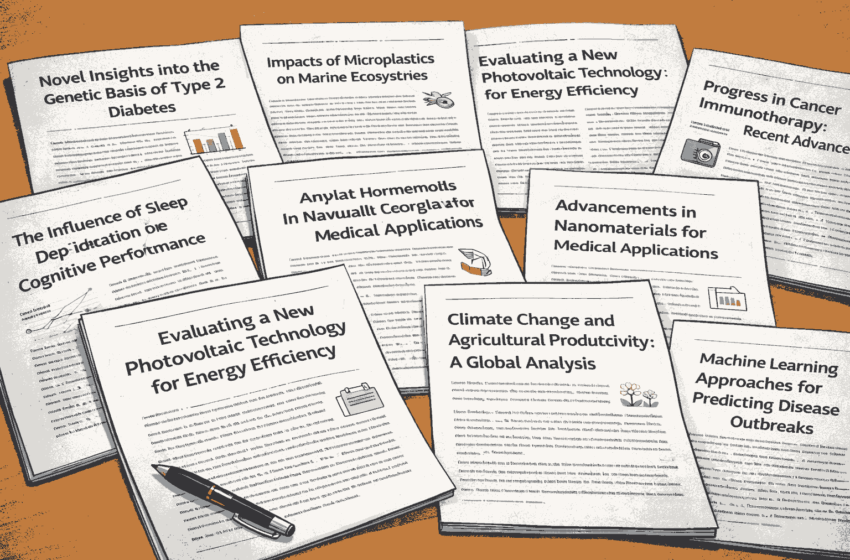
The “Title” is the most basic and important aspect of a research paper. Think that writing a research paper title is a simple task? Well, think again!
It might come as a surprise to most people that an author, having successfully written a detailed account of their research study, experiences a block while attempting to title the research paper. However, most authors, by virtue of possessing comprehensive details of the research paper, are perplexed with regard to how to make their research paper title concise without sacrificing any relevant elements. This is a task that requires some serious thought.
Why Research Paper Title is Important
What Makes a Research Paper Title “Good”
3 Tips to Write an Effective Research Paper Title
Why Research Paper Title is Important
When writing a research paper title, authors should realize that despite being repeatedly warned against it, most people do indeed fall prey to “judging a book by its cover.” This cognitive bias tends to make readers considerably susceptible to allowing the research paper title to function as the sole factor influencing their decision of whether to read or skip a particular paper. Although seeking the professional assistance of a research paper writing/editing service could help the cause, the author of the paper stands as the best judge for setting the right tone of their research paper.
What Makes a Research Paper Title “Good”
Readers come across research paper titles in searches through databases and reference sections of research papers. They deduce what a paper is about and its relevance to them based on the title. Considering this, it is clear that the title of your paper is the most important determinant of how many people will read it.
Therefore, a good research paper title:
- must condense the paper’s content in a few words
- should captures the readers’ attention
- has to differentiate the paper from other papers of the same subject area
3 Tips to Write an Effective Research Paper Title
Here are three basic tips to keep in mind while writing a title.
Tip 1: Keep it simple, brief, and attractive
The primary function of a title is to provide a precise summary of the paper’s content. So keep the title brief and clear. Use active verbs instead of complex noun-based phrases. Avoid unnecessary details.
Moreover, a good title for a research paper is typically around 10 to 12 words long. A lengthy title may seem unfocused and take the readers’ attention away from an important point.
Avoid: Drug XYZ has an effect of muscular contraction for an hour in snails of Achatina fulcia species
Better: Drug XYZ induces muscular contraction in Achatina fulcia snails
Tip 2: Use appropriate descriptive words
A good research paper title should
- contain keywords used in the manuscript,
- define the nature of the study,
- highlight only the important aspects of a study, and
- attract the reader’s attention in a single glance.
Think about terms people would use to search for your study and include them in your title. This helps because search engines show results based on what users type in the search bar when looking for a paper.
Avoid: Effects of drug A on schizophrenia patients: Study of a multicenter mixed group
Better: Psychosocial effects of drug A on schizophrenia patients: A multicenter randomized controlled trial
Tip 3: Avoid abbreviations and jargon
Known abbreviations such as AIDS, NATO, and so on can be used in the title. However, other lesser-known or specific abbreviations and jargon that would not be immediately familiar to the readers should be left out.
Remember: the title is the one thing that is “freely” visible to all readers regardless of how or from where they are trying to access your research article. So, if the very first thing they notice about your research is unclear to them, they’re not likely to dive in further.
Avoid: MMP expression profiles cannot distinguish between normal and early osteoarthritic synovial fluid
Better: Matrix metalloproteinase protein expression profiles cannot distinguish between normal and early osteoarthritic synovial fluid
Bonus Tips
Some additional things to note when creating a research title:
- Convey ONLY the key methods and research findings. Your research is most likely to have multiple “important” aspects, especially when you’ve conducted such an in-depth analysis. But recognizing one or two key elements that’s unique about your study and combining them helps create a research title that’s accurate and effective
- DO NOT make any unsubstantiated and exaggerated claims. In this era deeply influenced by “click baits,” you may feel tempted to write titles that make highly attractive claims to get you more citations. But if your research does not support these claims, you will quickly see the negative impact it can have on your reputation as a researcher. So always write evidence-based research titles.
- Choose a declarative research title: Unlike a descriptive research title that simply “describes” the topic (e.g., Regular Medication Helps Control Diabetes), declarative research titles include the main conclusion or the key argument within the title itself. It is informative, impactful, and more likely to pique a reader’s interest. Even journal editors are in consensus that papers with declarative titles often receive higher shares online [1], letting you reach a wide audience.
Conclusion
Always write down the hypothesis and then take into consideration these simple tips. This would help you in composing the best title for your research paper. Sometimes, even after you’ve produced a title that suits your study, you could require an expert’s opinion. To submit a publication ready manuscript without errors and mistakes that commonly go unnoticed by authors, check out Editage’s professional editing services and submit with confidence.
Here’s a short 3-minute video on writing an effective research paper title explained with an example:
Reference
1. Healthcare articles with simple and declarative titles were more likely to be in the Altmetric top 100 https://www.jclinepi.com/article/S0895-4356(16)30853-8/abstract
Originally published on October 17, 2013. Revised on April 20, 2026