Beyond the Lab: The Expanding World of the Modern Researcher
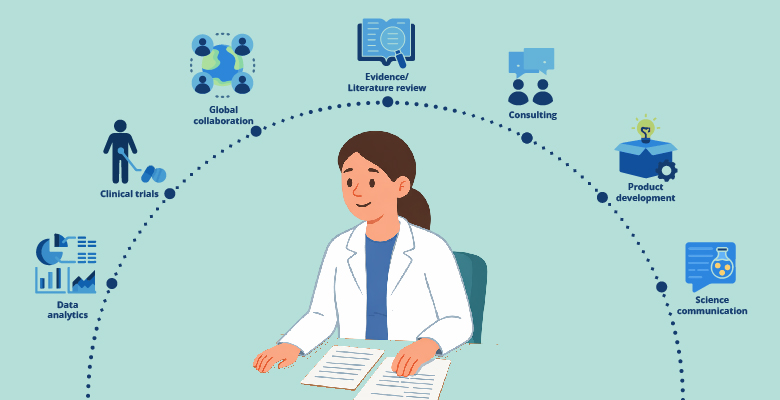
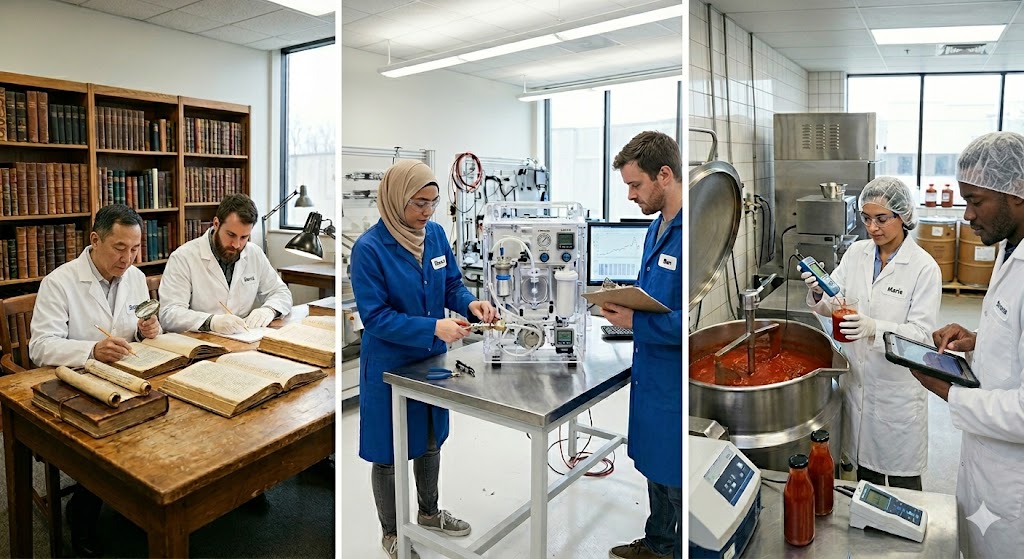
Gone are the days when the image of a researcher was predominantly that of a person confined to a laboratory bench or a single academic department. Today’s reality is far more dynamic. A cancer biologist based in China advises a biotech startup in the United States on experimental design. A materials scientist who once worked exclusively in academia now helps a renewable energy company troubleshoot challenges. A behavioral researcher collaborates simultaneously with a local hospital, a public policy consortium, and a global technology firm, contributing to decision-making across borders. This is today’s reality!
The modern researcher’s role is far more fluid, offering numerous opportunities to participate in interdisciplinary collaborative work. Furthermore, geography is no longer a barrier, as digital connectivity has opened access to global networks of talent and opportunities. Additionally, organizations have changed their approach on how they source the skills required. Companies are increasingly seeking experts on a project basis rather than hiring full-time permanent employees for narrowly defined roles. In such a landscape, research is no longer defined by where it is conducted, but by the quality and rigor that it delivers.
Multiple reports, including those by organizations such as the World Economic Forum and McKinsey & Company, indicate the rise of a knowledge-based gig economy—one in which highly specialized expertise is increasingly delivered on demand. And scientific researchers, particularly those early in their careers, are increasingly embracing this expanded landscape.
The Rise of Scientific Consulting
Research training equips researchers with a powerful and highly versatile skill set: critical thinking, data analysis, structured problem-solving, hypothesis-driven reasoning, and the ability to synthesize complex information into valuable actionable insights. Traditionally, these skills have been applied only within academic ecosystems for publishing papers, securing grants, and advancing disciplinary knowledge. However, today the true value of these skills extends far beyond academia.
The ability to design rigorous experiments can translate directly into product testing and validation in industry. Literature review expertise can be applied to gather knowledge and formulate strategies for industrial R&D teams. Statistical analyses can help with interpretation of business data. Scientific writing facilitates high-impact communication tailored to regulatory bodies, policymakers, investors, or other stakeholders.
Career analyses consistently show that non-academic employers are increasingly prioritizing these transferable competencies over purely academic benchmarks. This is particularly visible in the rise of scientific consulting, which operates at the intersection of research and real-world application.
There are three main forces driving this shift to scientific consulting. First, industry often faces complex challenges, requiring niche expertise that is not usually justifiable by hiring in-house permanent employees. Second, the pace of innovation has accelerated, and the problems that companies face are increasingly interdisciplinary. Third, digital collaboration platforms have made remote engagement with experts frictionless. The result of these factors is the growth of the ‘scientific consulting ecosystem.’ By engaging external experts on a project basis, organizations gain access to specialized knowledge as and when they need it. This approach reduces costs, increases flexibility, and enables faster decision-making. It also allows companies to tap into unrestricted global talent pools. Thus, ‘scientific expertise’ has become modular and on-demand, separate from its traditional role in academia.
The Diversity of Opportunities in Scientific Consulting
Scientific consulting provides a researcher with a wide range of opportunities for applying their research training to real-world challenges:
- Product development: Researchers can apply their knowledge of materials or biological systems to design, test, or optimize products in various industries such as pharmaceutical, medical devices, food products, cosmetics, etc. For example, a chemist can assist a start-up with designing and testing environment-friendly and sustainable packaging material.
- Data science and analysis: As data becomes increasingly large and complex across sectors, companies are often in need of experts in the field of statistics, modeling, and computational analysis. Researchers in these fields can lend their expertise to data interpretation, predictive modeling, or streamlining operations. A biostatistician, for instance, may analyze multi-center clinical data to identify efficacy trends to help a MedTech company.
- Evidence synthesis: Companies often need to make decisions regarding their products based on a large volume of available information. Researchers are uniquely capable of conducting extensive literature reviews, assessing their value, extracting relevant information, and gleaning important insights. For example, a researcher in health sciences can support government agencies in reviewing the effects of public health policies and informing updates.
- Regulatory and clinical consulting: In industries such as pharmaceuticals or biotechnology, there is a need to adhere to strict guidelines and compliance frameworks. Researchers in the biotechnology or medical field can play a pivotal role in helping start-ups and industries navigate these frameworks and designing rigorous validation protocols. For instance, a medical researcher can assist a pharmaceutical company in designing a robust and compliant clinical trial framework.
- Scientific communication: It has been well established that science can make a real impact if communicated clearly. Researchers can help translate complex ideas into clear and accessible details for different stakeholders. For example, an environmental engineer can distil the long-term cost-benefits for a development project for city officials and other stakeholders.
- Market and strategy advisory: Researchers can contribute to analyzing technical feasibility, identifying market gaps, assessing potential risks, etc. For instance, a materials scientist can evaluate the scalability, performance, and competitive position of clean-energy battery technology before launching a start-up.
- Idea validation: Start-ups may begin with an idea that requires scientific scrutiny. Researchers can help test the idea, its feasibility, its requirements, and predict the potential bottlenecks before the start-up is properly established. For example, a molecular biologist can evaluate the idea of a rapid diagnostics tool for diabetes before prototype development.
Across these examples, one point is clear: research training does not have to be solely geared toward advancing knowledge. When deployed strategically, it can drive immediate, evidence-based impact across different sectors and industries.
The Freelance Consulting Ecosystem and its Challenges
A growing freelance ecosystem of scientific experts now operates globally. Platforms such as Kolabtree stand as examples of how this ecosystem operates, connecting organizations with independent experts across a wide range of disciplines.
Notably, those who are successful as research consultants not only extend their domain expertise, but also adapt to different contexts. They learn to translate laboratory rigor into client-centered solutions. Importantly, they also develop other competencies that go beyond purely academic roles such as client management, pricing negotiation, project scoping, contract development, etc.
However, scientific consulting is not without challenges.
- For many researchers, the main challenge is the need for a fundamental shift in mindset. The central question often shifts from “What is intellectually interesting?” to “What problem must be solved now, within these constraints?” Understanding client needs becomes a critical skill to have.
- Deliverables are time-bound, and recommendations must often be made before all variables are fully resolved. This can feel uncomfortable for those trained to achieve methodological completeness.
- Credibility building differs between academia and consulting. In academia, credibility is typically linked to the robustness of the work, publication record, grants, and institute prestige. In consultation, credibility has to be built through outcomes, testimonials, demonstrated reliability, professional network building, etc. Furthermore, transparency, data integrity, and clear conflict-of-interest management are non-negotiable in consulting.
- Unlike salaried academic roles, consulting income may fluctuate and building a stable pipeline of work takes time.
The Future of Modern Scientific Work
Despite these challenges, scientific consulting is promising and represents an evolution of a researcher’s role. The future does not necessarily have to be a choice between academia and consulting. Rather, a hybrid identity, one that maintains academic rigor while contributing to diverse external projects, is likely how the modern researcher’s role is going to be. This “distributed” model of scientific work has the potential to accelerate innovation, democratize access to expertise, and expand the impact of research.
Advances in digital technology and artificial intelligence are likely to further enable this transformation. Therefore, one needs to embrace this transformation and realize that beyond the lab is not a departure from research, but rather it’s an expansion that can make rapid and meaningful impact.
References
- Upwork Study Finds 64 Million Americans Freelanced in 2023, Adding $1.27 Trillion to U.S. Economy. 2023. https://investors.upwork.com/news-releases/news-release-details/upwork-study-finds-64-million-americans-freelanced-2023-adding
- World Economic Forum. The Future of Jobs Report 2023. https://www.weforum.org/reports/the-future-of-jobs-report-2023/
- McKinsey & Company. The future of work after COVID-19. 2021. https://www.mckinsey.com/featured-insights/future-of-work/the-future-of-work-after-covid-19
- Kässi O, Lehdonvirta V, and Stephany F. How many online workers are there in the world? A data-driven assessment. Open Research Europe 2021, 1:53. https://doi.org/10.12688/openreseurope.13639.3
- Schwartz, J. et al. The alternative workforce: It’s now mainstream. 2019. Delloite Insights. https://www.deloitte.com/us/en/insights/topics/talent/human-capital-trends/2019/alternative-workforce-gig-economy.html
- Fuller, J. et al. Building the on-demand workforce. 2020. Published by Harvard Business School and BCG. https://www.hbs.edu/managing-the-future-of-work/Documents/Building_The_On-Demand_Workforce.pdf
- Amanda Langer. Scientists Have Great Skillsets for Careers in Consulting. 2025. NIH-OITE Career Blogs. https://www.training.nih.gov/oite-careers-blog/scientists-have-great-skillsets-for-careers-in-consulting/
- Naren Madan. The Knowledge Economy and Cost-Effective Scientific Consulting: Insights from Freelance PhDs. 2022. https://www.kolabtree.com/blog/the-knowledge-economy-scientific-consulting-insights-from-freelance-phds/
- https://www.kolabtree.com/how-it-works?
- Garcia-Morante, M. et al. A dialogical approach to unveil hybrid researcher identities of educational PhD holders. Higher Education Research & Development, 2026. 45(1), 118–135. https://doi.org/10.1080/07294360.2025.2526076