Different Minds, Stronger Science: Celebrating Neurodiversity in Research and Innovation
Shining a Spotlight on Inclusion During NDEAM
October marks National Disability Employment Awareness Month (NDEAM), a nationwide observance that celebrates the contributions of people with disabilities and promotes inclusive workplaces. The tradition began in 1945 as National Employ the Physically Handicapped Week, observed during the first week of October (U.S. Department of Labor, n.d.). In 1962, the word physically was removed to recognize the talents and employment needs of individuals with all types of disabilities. By 1988, the observance expanded to the entire month, evolving into the NDEAM we know today (U.S. Department of Labor, n.d.).
Today, more than 61 million adults in the United States—about one in four—live with a disability (Centers for Disease Control and Prevention, 2025). Disabilities can affect hearing, vision, cognition, mobility, self-care, or independent living. While mobility disabilities remain the most common overall, cognitive differences are reported most frequently among younger adults. Historically, variations in learning, attention, memory, or problem-solving were categorized as cognitive or intellectual disabilities—labels that often emphasized limitations rather than strengths (Centers for Disease Control and Prevention, 2025). These differences encompass a range of conditions, including intellectual and learning disabilities, memory disorders, attention deficit hyperactivity disorder (ADHD), autism spectrum disorder (ASD), and dementia.
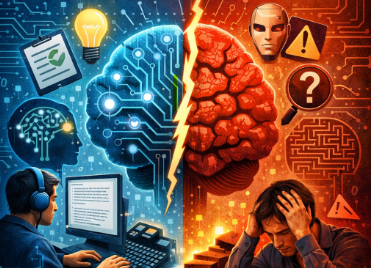
The modern concept of neurodiversity reframes these differences as natural variations in how the brain functions—not deficits to be fixed (Jaarsma & Welin, 2012; Singer, 1999). Neurodivergent individuals bring distinctive skills, insights, and perspectives that enrich workplaces and scientific environments (Armstrong, 2010). By focusing on the value of contributions rather than perceived limitations, the neurodiversity framework promotes inclusion, fosters creativity, and strengthens problem-solving through diverse ways of thinking (Jaarsma & Welin, 2012).
Understanding Neurodiversity: Different Minds, Unique Strengths
The concept of neurodiversity emerged in the mid-1990s, when autistic activists collectively developed the idea within online communities (Botha et al., 2024). The term itself is often attributed to Judy Singer, who introduced it in a 1999 book chapter, alongside other early theorists such as Harvey Blume (Botha et al., 2024). The neurodiversity movement has since evolved into a social justice initiative advocating for civil rights, equality, respect, and inclusion for all neurodivergent individuals (The National Autistic Society, n.d.). Its mission is to end discrimination and reshape both societal and medical perspectives—encouraging understanding of neurodivergence as a natural form of human variation, rather than a “deficit” or “disorder” (The National Autistic Society, n.d.). This approach emphasizes supporting individuals as they are, rather than attempting to change who they are.
At its core, neurodiversity recognizes that every brain is different—and every difference is valid. As Victoria McGovern observes, “the human brain is as diverse as the human fingerprint.” The concept encompasses the full spectrum of human cognition, from neurodivergent to neurotypical individuals.
Neurodivergent people are those whose brains function differently from what is considered typical, whether due to genetic or acquired factors. These differences influence how individuals learn, process information, interpret the world, and experience emotions. Examples include autism, ADHD, dyslexia, developmental language disorder (DLD), tic disorders, dyscalculia, developmental coordination disorder, and intellectual disabilities.
By contrast, neurotypical individuals have brains that align with expected patterns of development and social functioning, including communication, organization, and interpersonal skills that emerge in conventional ways.
The diversity of human minds mirrors the diversity of the universe itself. As astrophysicist Neil deGrasse Tyson reflects, “There are as many atoms in a single molecule of your DNA as there are stars in a typical galaxy. We are, each of us, a little universe.” Similarly, science writer Steve Silberman notes, “Neurodiversity may be every bit as crucial for the human race as biodiversity is for life in general.” These perspectives underscore how varied ways of thinking are essential for humanity’s growth, creativity, and collective understanding.
Neurodivergent individuals often possess distinctive strengths—sometimes described as “superpowers”—that may be less pronounced in neurotypical peers. As Nick Walker reminds us, “Neurodiversity is a gift, not a burden,” while Jim Sinclair adds, “Our differences are our strengths.” Abilities such as creativity, pattern recognition, hyperfocus, and deep curiosity can be especially valuable in scientific and research settings, where innovation often depends on seeing problems from unconventional angles.
The prevalence of neurodivergent conditions varies: approximately 1 in 36 U.S. adults (2.8%) have autism spectrum disorder (ASD), 1 in 22 have ADHD, and 3–7% experience dyslexia (Lee & Leger, 2024). Co-occurrence is also common—around 50–60% of people with ADHD have an additional learning disability, often dyslexia (ADDitude Editors, 2022). A 2024 survey of 241 individuals working in scientific laboratories found that 48% identified as neurodivergent (Lab Design News, 2025), suggesting that neurodiversity may already play a far greater role in science than many realize.
What Makes a Good Scientist—and How Neurodiversity Strengthens Science
What makes a great scientist? Certain characteristics are essential for success in research and discovery (D’Augustino, 2017):
- Curiosity: Scientists are driven by a desire to understand how the world works and why phenomena occur.
- Patience and Courage: Scientific progress takes time, persistence, and the willingness to learn from failure. Experiments must often be repeated, and mistakes are part of the process.
- Attention to Detail: Reliable data and accurate observations are the foundation of every scientific breakthrough.
- Creativity: The best scientists think beyond conventional boundaries and see patterns or possibilities that others may miss.
- Persistence: Many discoveries emerge only after years—sometimes decades—of dedication and exploration.
- Communication Skills: Scientists must convey their findings clearly so others can build upon their work.
- Open-Mindedness and Integrity: Good scientists remain receptive to unexpected results and report data honestly, even when outcomes challenge personal beliefs.
- Critical Thinking and Problem-Solving: Logical reasoning and analytical skills are essential for interpreting data and solving complex problems.
These qualities—curiosity, creativity, patience, attention to detail, and persistence—form the foundation of scientific achievement. Remarkably, many of these same traits are often found in neurodivergent individuals, whose unique cognitive profiles can significantly enhance research and innovation.
Neurodiversity Strengths That Make Great Scientists
Many characteristics that define successful scientists overlap with the strengths commonly seen in neurodivergent thinkers. Individuals with autism, ADHD, dyslexia, and other neurodevelopmental differences often bring cognitive advantages that enrich scientific inquiry.
- Deep Focus and Attention to Detail: Neurodivergent individuals often demonstrate exceptional concentration on topics of interest. This strength supports careful data analysis, precision in experimentation, and the recognition of subtle patterns that might escape notice.
- Innovative and Creative Thinking: People with ADHD or dyslexia may think in non-linear, associative ways—connecting ideas and generating novel solutions that drive scientific breakthroughs.
- Pattern Recognition and Analytical Strength: Many neurodivergent scientists excel at detecting structure and meaning within complex datasets, an invaluable asset in fields such as genetics, bioinformatics, and neuroscience.
- Resilience and Perseverance: Navigating systems not always designed for neurodiverse minds builds resilience and determination—traits that mirror the persistence required for scientific discovery.
- Authenticity and Integrity: Neurodivergent individuals often value truth and accuracy over social conformity, aligning closely with the ethical principles of science.
- Hyperfocus and Passion for Learning: When deeply engaged, many neurodivergent individuals experience sustained, intense focus—a passion-driven attention that fuels productivity and insight.
The very qualities that may make neurodivergent individuals seem “different” in traditional environments are often the same traits that propel scientific discovery forward. By recognizing and supporting these strengths, research institutions can foster greater innovation, creativity, and excellence—ensuring that science benefits from the full spectrum of human intelligence and experience.
Indeed, history offers numerous examples of groundbreaking scientists who exhibited traits consistent with neurodiversity—proof that different minds don’t just belong in science—they strengthen it.
How Neurodiverse Perspectives Drive Research and Innovation
Throughout history, science has advanced because of those who think differently. Many of the world’s most influential scientists and inventors—including Albert Einstein, Nikola Tesla, Thomas Edison, Sir Isaac Newton, Marie Curie, Temple Grandin, and Carol Greider—demonstrate how neurodiverse perspectives have shaped human progress. Their distinctive ways of perceiving information, recognizing patterns, and solving problems have led to discoveries that continue to define modern science and technology.
Albert Einstein, one of the greatest scientific minds of the twentieth century, was renowned for his curiosity and unconventional thinking. Although never formally diagnosed, historians and psychologists have noted traits often associated with autism or ADHD, such as deep focus and strong visual reasoning—qualities that may have contributed to his development of the theory of relativity (Falk, 2009; Fitzgerald, 2004). His creativity and imagination revolutionized our understanding of time, space, and energy.
Nikola Tesla possessed extraordinary visualization skills, often constructing intricate electrical systems entirely within his mind before building them. His exceptional memory and inventive approach led to innovations such as alternating current (AC), radio transmission, and early wireless communication concepts (Seifer, 1996; Cheney, 2011). Tesla’s ability to conceptualize complex systems paved the way for modern electrical engineering.
Thomas Edison, who struggled in traditional classrooms, preferred hands-on experimentation and independent learning. His curiosity, persistence, and problem-solving mindset yielded more than a thousand patents, including the phonograph and electric light bulb (Josephson, 1959; Israel, 1998). Edison’s relentless drive transformed daily life and industry worldwide.
Sir Isaac Newton, whose discoveries laid the foundation for classical physics and calculus, was intensely private and deeply focused on his studies. Scholars have noted that his concentration and solitary nature may reflect characteristics of autism spectrum conditions (Fitzgerald, 2003). Newton’s singular focus and intellectual rigor led to the laws of motion and universal gravitation, shaping scientific thought for centuries.
Marie Curie’s discipline and determination carried her through years of demanding research that culminated in the discovery of radioactivity. Her precision, endurance, and intellectual integrity earned her two Nobel Prizes in different fields—a distinction that remains unique in the history of science (Quinn, 1995; Pasachoff, 1996).
In more recent times, Temple Grandin has exemplified how neurodiversity continues to drive innovation. Diagnosed with autism, she has described how her detailed, visual thinking helped her understand animal behavior. Her designs for humane livestock handling systems revolutionized animal agriculture and demonstrated how alternative perspectives can lead to both practical and compassionate solutions (Grandin, 2006; Sacks, 1995).
Carol Greider, a Nobel laureate diagnosed with dyslexia as a child, exemplifies persistence and creative problem-solving. Her discovery of the enzyme telomerase transformed our understanding of cell aging and cancer biology (Nobel Foundation, 2009; Greider, 2011). Her journey shows how determination and divergent thinking can yield transformative scientific insight.
Together, these examples remind us that neurodiversity is not a limitation—it is a source of strength. Scientific progress does not depend on uniformity of thought but on the collaboration of diverse minds. When research institutions and industries actively support and include neurodivergent scientists, they foster environments where new perspectives thrive, deeper questions are asked, and discoveries that shape the future become possible.
From Awareness to Action: Building Inclusive Pathways for Neurodivergent Professionals
A 2024 survey of 241 laboratory and scientific employees found that 48% identified as neurodivergent (Clark & Sargent, 2024). Yet, despite their representation, significant barriers persist. It is estimated that 30–40% of autistic adults are unemployed, compared to just 4–5% in the general population (National Autistic Society, 2022; CDC, 2020). Many neurodivergent individuals remain underemployed, working in roles far below their education and skill level (Doyle, 2020; Austin & Pisano, 2017).
One of the greatest challenges lies in traditional hiring practices. Up to 85% of jobs are filled through networking (Hutchison, 2017), yet social networking can be especially difficult for neurodivergent individuals. Standard interviews—particularly unstructured ones—tend to favor strong social communication skills over technical or analytical ability, placing neurodivergent candidates at a disadvantage despite their high potential (Maras et al., 2021).
Like many others, I have personally experienced bias and misunderstanding rooted in neurodivergent traits—often due to misperceptions rather than ability. Many talented scientists face similar obstacles, finding themselves underutilized or mismatched in their careers due to limited guidance and lack of inclusive career pathways (Nature Careers Survey, 2021).
Fortunately, evidence shows that inclusive workplaces benefit everyone. Companies with more diverse and inclusive cultures are 1.7 times more likely to be innovation leaders (Deloitte, 2017). Likewise, employers who embrace neurodiversity report measurable improvements in productivity, retention, and employee engagement (Accenture, 2020).
Advancing Neurodiversity Inclusion in the Workplace
To create inclusive and supportive environments for neurodivergent professionals, organizations must take intentional steps to understand, empower, and accommodate diverse ways of thinking. As emphasized in the American Enterprise Institute’s report Embracing Neurodiversity at Work (2023), advancing inclusion is not only the right thing to do—it is also a strategic advantage that unlocks untapped innovation and talent.
- Build awareness and promote continuous learning.
Inclusion begins with education. Organizations should encourage employees to learn about neurodiversity through ongoing training and open discussion. A culture of continuous learning helps dispel myths, reduce stigma, and foster empathy across teams. - Partner with neurodiversity experts.
Collaborating with consultants, nonprofits, or advocacy groups specializing in neurodiversity can help employers design evidence-based inclusion programs and inform effective policy development. - Adopt inclusive communication practices.
Clear, structured, and consistent communication enables all employees to thrive. Applying universal design principles to meetings, training, and written materials ensures accessibility and understanding across the organization. - Invest in assistive technology and accommodations.
Providing tools such as noise-canceling headphones, flexible workspaces, visual schedules, task management software, or screen-reading technology levels the playing field for neurodivergent employees—and often boosts productivity for everyone. - Redesign recruitment and onboarding.
Traditional hiring models can unintentionally exclude neurodivergent candidates. Employers can promote equity by simplifying job descriptions, offering alternative interview formats, and focusing on skills-based assessments. Personalized onboarding and mentoring further set new hires up for success. - Train managers and supervisors.
Supervisors shape workplace culture. Providing specialized training helps leaders understand neurodivergent communication styles, manage performance fairly, and deliver feedback that supports growth. - Establish neurodiversity strategies and champions.
Appointing neurodiversity champions or forming employee resource groups (ERGs) sustains inclusion efforts. These groups can guide policy development, share success stories, and promote best practices across departments. - Pilot and scale neurodiversity programs.
Organizations can dedicate resources to pilot initiatives supporting neurodivergent talent. Once successful, these programs can be expanded company-wide—creating a lasting culture that values every kind of mind.
By taking these steps, employers can transform workplaces into environments where neurodivergent individuals don’t just belong—they thrive. Inclusion benefits everyone, driving innovation, engagement, and resilience across the organization. When we build systems that honor different ways of thinking, we not only advance equity but also strengthen the very fabric of science and discovery.
Beyond NDEAM: Fostering Inclusion and Innovation Year-Round
As we recognize National Disability Employment Awareness Month (NDEAM), it’s essential to remember that honoring all abilities strengthens the scientific enterprise and fuels innovation—not just in October, but throughout the year. Science advances through diversity—of thought, background, and experience. By embracing neurodiversity, STEM organizations open the door to new ways of thinking, enabling a broader range of problem-solving strategies and creative breakthroughs that drive discovery forward.
When institutions provide the support and accommodations neurodivergent scientists need, both individuals and organizations thrive. Employees are empowered to reach their full potential, while teams gain greater innovation, productivity, and cohesion.
Creating opportunities for every scientist to contribute fully doesn’t just advance inclusion—it builds a forward-thinking, resilient scientific community capable of shaping a healthier, more innovative future for both science and society.
References:
U.S. Department of Labor. (n.d.). National Disability Employment Awareness Month (NDEAM). Office of Disability Employment Policy. https://www.dol.gov/agencies/odep/initiatives/ndeam
Centers for Disease Control and Prevention. (2025). Prevalence of disabilities and health care access by disability status and type among adults. https://www.cdc.gov/disability-and-health/articles-documents/disabilities-health-care-access.html
Jaarsma, P., & Welin, S. (2012). Autism as a natural human variation: Reflections on the claims of the neurodiversity movement. Health Care Analysis, 20(1), 20–30. https://doi.org/10.1007/s10728-011-0169-9
Singer, J. (1999). “Why can’t you be normal for once in your life?” From a “problem with no name” to the emergence of a new category of difference. In M. Corker & S. French (Eds.), Disability discourse (pp. 59–67). Open University Press.
Armstrong, T. (2010). Neurodiversity: Discovering the extraordinary gifts of autism, ADHD, dyslexia, and other brain differences. Da Capo Lifelong Books.
Botha, M., Chapman, R., Giwa Onaiwu, M., Kapp, S. K., Stannard Ashley, A., & Walker, N. (2024). The neurodiversity concept was developed collectively: An overdue correction on the origins of neurodiversity theory. Autism, 28(6), 1695–1700.
The National Autistic Society. (n.d.). The neurodiversity movement. https://www.autism.org.uk/advice-and-guidance/topics/identity/the-neurodiversity-movement
Lee, J., & Leger, M. (2024, April 30). Embracing neurodiversity at work: Unleashing America’s largest untapped talent pool. American Enterprise Institute. https://www.aei.org/research-products/report/embracing-neurodiversity-at-work-unleashing-americas-largest-untapped-talent-pool/
Lab Design News. (2025). Study: Traditional scientific workplaces don’t meet needs of neurodivergent employees. https://www.labdesignnews.com/content/study-traditional-scientific-workplaces-dont-meet-needs-of-neurodivergent-employees
ADDitude Editors. (2022, October 28). The dyslexia and ADHD connection. ADDitude. https://www.additudemag.com/adhd-dyslexia-connection/
Thorp, H. H. (2024). Science needs neurodiversity. Science, 384(6655), 365. https://doi.org/10.1126/science.adq0060
D’Augustino, T. (2017, February 1). What makes a good scientist? Michigan State University Extension. https://www.canr.msu.edu/news/what_makes_a_good_scientist
Cheney, M. (2011). Tesla: Man Out of Time. Simon & Schuster.
Falk, D. (2009). The Universe on a T-Shirt: The Quest for the Theory of Everything. Penguin.
Fitzgerald, M. (2003). Autism and Creativity: Is There a Link Between Autism in Men and Exceptional Ability? Brunner-Routledge.
Fitzgerald, M. (2004). Genius Genes: How Asperger Talents Changed the World. Autism Asperger Publishing Company.
Grandin, T. (2006). Thinking in Pictures: My Life with Autism. Vintage Books.
Greider, C. W. (2011). Telomeres, telomerase and cancer. Philosophical Transactions of the Royal Society B, 366(1574), 33–39.
Israel, P. (1998). Edison: A Life of Invention. John Wiley & Sons.
Josephson, M. (1959). Edison: A Biography. McGraw-Hill.
Nobel Foundation. (2009). The Nobel Prize in Physiology or Medicine 2009: Carol W. Greider Biography. https://www.nobelprize.org
Pasachoff, N. (1996). Marie Curie and the Science of Radioactivity. Oxford University Press.
Quinn, S. (1995). Marie Curie: A Life. Simon & Schuster.
Sacks, O. (1995). An Anthropologist on Mars: Seven Paradoxical Tales. Knopf.
Seifer, M. J. (1996). Wizard: The Life and Times of Nikola Tesla. Citadel Press.
Clark, G., & Sargent, K. (2024, October 16). Study: Traditional scientific workplaces don’t meet needs of neurodivergent employees. Lab Design News. https://www.labdesignnews.com/content/study-traditional-scientific-workplaces-dont-meet-needs-of-neurodivergent-employees
Doyle, N. (2020). Neurodiversity at work: A biopsychosocial model and the impact on working adults. British Medical Bulletin, 135(1), 108–125. https://doi.org/10.1093/bmb/ldaa021
Austin, R. D., & Pisano, G. P. (2017, May–June). Neurodiversity as a competitive advantage. Harvard Business Review. https://hbr.org/2017/05/neurodiversity-as-a-competitive-advantage
Hutchison, S. (2017). Study reveals 85% of jobs filled by networking. LinkedIn. https://www.linkedin.com/pulse/study-reveals-85-jobs-filled-networking-sandy-hutchison
Maras, K., Norris, J. E., Nicholson, J., Heasman, B., Remington, A., & Crane, L. (2021). Ameliorating the disadvantage for autistic job seekers: An initial evaluation of adapted employment interview questions. Autism, 25(7), 1854–1867. https://doi.org/10.1177/1362361320981319
Deloitte. (2017). High-Impact Diversity and Inclusion: Maturity Model and Top Findings. Bersin by Deloitte.
Accenture. (2020). Getting to equal: The disability inclusion advantage. Accenture. https://www.accenture.com/us-en/about/inclusion-diversity/disability-inclusion-research
Nature Careers. (2021). Nature Careers job and salary satisfaction survey 2021. Springer Nature. https://media.nature.com/original/magazine-assets/d41586-021-03041-0/d41586-021-03041-0.pdf
American Enterprise Institute. (2023). Embracing neurodiversity at work: Unleashing America’s largest untapped talent pool. AEI. https://www.aei.org/research-products/report/embracing-neurodiversity-at-work-unleashing-americas-largest-untapped-talent-pool/