Video: All You Need to Know About AI Use in Research: Q&A with the Expert
VIDEOS New

Questions about AI use are never-ending! What’s allowed by journals? What’s not? How does AI use impact plagiarism? Which is the most useful AI tool? Watch the video to get expert insights to all these questions and more.
Here are some questions answered:
1. My co-author uploaded a blind manuscript on ChatGPT for suggestions. Will it be problematic from a plagiarism point of view?
So from a plagiarism point of view, it wouldn’t be a problem. As long as you have not copy pasted the output given by ChatGPT as is. Then it could be a problem. But if you just saw the output and you have edited it in some way, then it should be fine. If you have only used it to get some ideas and brainstorm, that is perfectly fine. There’s no problem of plagiarism.
2. What are the key differences between ethical AI, trustworthy AI, and explainable AI?
Explainable AI would be where the end user knows what the training parameters are, how that particular model was trained on what dataset, and how many parameters were used. Basically everything you want to know about the tool is available to you. Maybe they even give you a fact sheet on how to use the tool. The difference between ethical AI and trustworthy AI is a very fine line. Because trustworthy AI is more about the user being able to trust the brand. You know the brand, you know the principles and guardrails they follow. So for example, as I believe, and I could be wrong, but on the basis of what I’ve read, Open AI is more about innovation and pushes ads. Whereas Anthropic is more cautious, which is why they didn’t go ahead with the Pentagon deal. And they even had like philosophers on board. So for ethical and trustworthy AI, you will have to really read about the developers and understand their policy. Follow their marketing campaigns. Are they more on marketing or do they actually feel responsible? Do they follow responsible use?
3. Is there a single AI-based tool which can use for literature search, writing, plagiarism check?
So to my knowledge, I’ve not used too many of them, but I think Paperpal. It helps with writing and definitely does the plagiarism check and there is a literature search option also. So you could check with that. Maybe even Trinka does that. So there are a couple of tools that have a suite of applications. So they will have about two, three options like that. So Paperpal for sure has these three features that you mentioned.
4. What is the difference between plagiarism and AI detection score?
These are two totally different things. A plagiarism score is an absolute and exact score. It will tell you the similarity of your text with previously published text. So if you have plagiarized or if there are a couple of similar words or sentences, it will detect 70% similar or 30% similar etc. So up to 15 or 20% similarity is considered acceptable in certain parts of the paper. Anything more than that means you have plagiarized it. So that is very clear cut. And AI detection score is a highly gray area because it will detect the possibility. It is not an exact score. It is a possibility that this text may, there’s an 80% chance that this was generated by AI. So it is not saying for sure, but a 70% chance or 15% chance. Now, the problem is these are not reliable. Unfortunately, a lot of journals and a lot of professors use it. It creates a lot of false positives. And a very interesting example is a lot of papers or texts that were generated long before AI, like the American Declaration of Independence or the Bible, if you put that to an AI detection tool, it will say a 70% chance this was written by AI. How is that possible? The thing is that AI-generated text sounds like human text. So anything you write and put through it, it will give you some score. So there are other ways in which you can monitor if somebody has used AI, but these AI detection tools are not very reliable.
5. Is digital storytelling still relevant?
Oh, yes. Of course! Why not? I think it’s more relevant now than ever before. Storytelling in any form will always be important, especially in science communication. And now with so many digital tools, definitely.
6. Can we use AI to help us locate the right methodology to use for the data?
Sure, you can ask questions like that, but don’t completely rely on the answer. It may give you a couple of ideas. Maybe you can work on those ideas, perhaps something that you were not thinking about and then you can research about it, read about it, and hit upon what is the right methodology. So definitely ask questions for that inspiration, but don’t believe it. It’s like you ask a friend for gossip! You will still verify it. You can’t just believe your friend. So if you won’t believe a human, why would you believe an AI? So ask it questions, take the answers, and then review the answers and see if it helps you identify a good methodology.
7. Is there any difference in percentage for accepting paper in the cases of plagiarism and self-plagiarism?
I would say it is similar because self-plagiarism is also plagiarism. So the publisher could claim a copyright suit. If you want to say accepting a paper in both cases, it will be a little difficult. Maybe self-plagiarism may be slightly higher chance of acceptance. But that’s only because you’re asking. But in both cases, I would say it is unethical. So try to avoid plagiarism at all costs. Paraphrase it completely and you can get help. Maybe use an AI tool to paraphrase. That may help.
8. Can we use AI for chapter review of literature in thesis to summarize paragraph grammar or give only important points in a previous article?
So to generate a chapter review of your literature, see, it can generate. It’s absolutely fine. It will give you a summary. But don’t use that entire summary. You should then read it and then try and get an idea how to structure that summary. So then try and write it in your own words and then you can polish the grammar. My point is that while you ask it to generate a summary, what happens is we just blindly we say, “Oh, what a nice, beautiful summary. I’m going to copy paste this in my thesis.” That is what you should not do. So read it, improve on it, add some text, delete some text, and then polish it for language.
Related post

Strategies to Maximize Chances of Paper Acceptance
October 19, 2026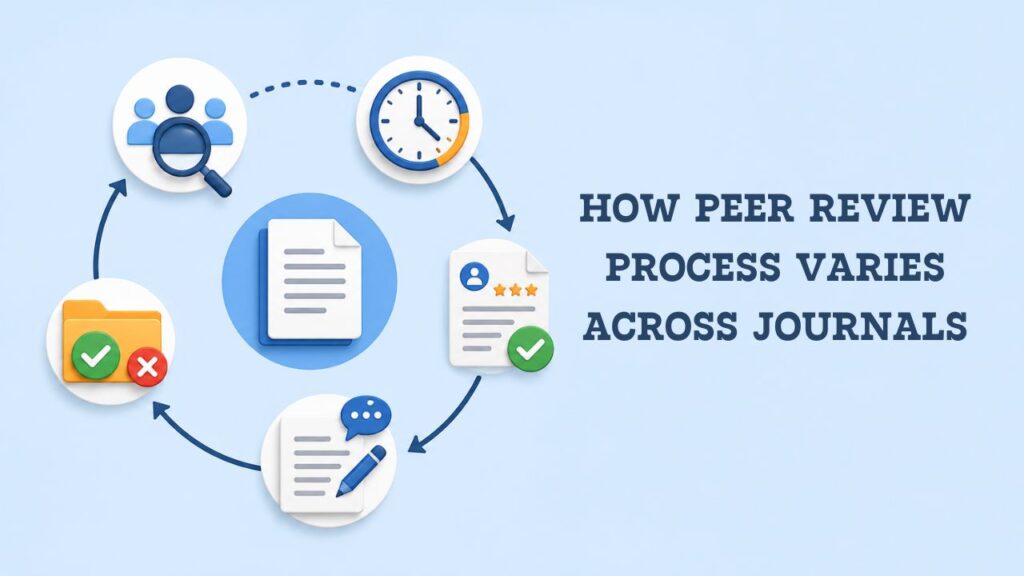
Understanding the Peer Review Process in Different...
October 13, 2026