

Scientific writing is all about being accurate, brief, and objective, and as editors or writers, we should reduce the bias that creeps in from the use of insensitive language and flawed terminology. Remember that writing Read More

Scientific writing is all about being accurate, brief, and objective, and as editors or writers, we should reduce the bias that creeps in from the use of insensitive language and flawed terminology. Remember that writing Read More
Apart from the urge to establish priority, career advancement is a major force in motivating scientists to write and publish. Scientists publish research papers and usually append to a given paper a list of other Read More
In my previous posts, I discussed governmental and nongovernmental agencies as research funders. Today, I cover another type of support that is worth considering: corporate research funding. More corporations are becoming proactive with funding initiatives Read More
Aims and Scope Academy of Management Journal (AMJ) publishes empirical research that tests, extends, or builds management theory and contributes to management practice. Publisher Academy of Management (AOM) Publishes five journals in all: Academy of Read More
Latin abbreviations are increasingly rare in today’s scientific writing: the Council of Science Editors recommends and others instead of et al. and such abbreviations as op. cit. and loc. cit., commonly used in citing Read More
Web searches can be a critically useful tool for researchers. Although hundreds of web pages are devoted to the topic of better searches, let me mention three simple yet effective ways to ensure that the “Read More
Hyphens are of two kinds, accidental and intentional. Accidental hyphens are those that occur at the end of a line of text and signal that the last word in the line is incomplete; such hyphens Read More
Constructions like “the data reveal that,” “Table 1 shows that,” or ‘Figure 2 indicates that’ are common enough in research papers—and all are commonly used to connect a source (data, a table, a figure, etc.) to Read More
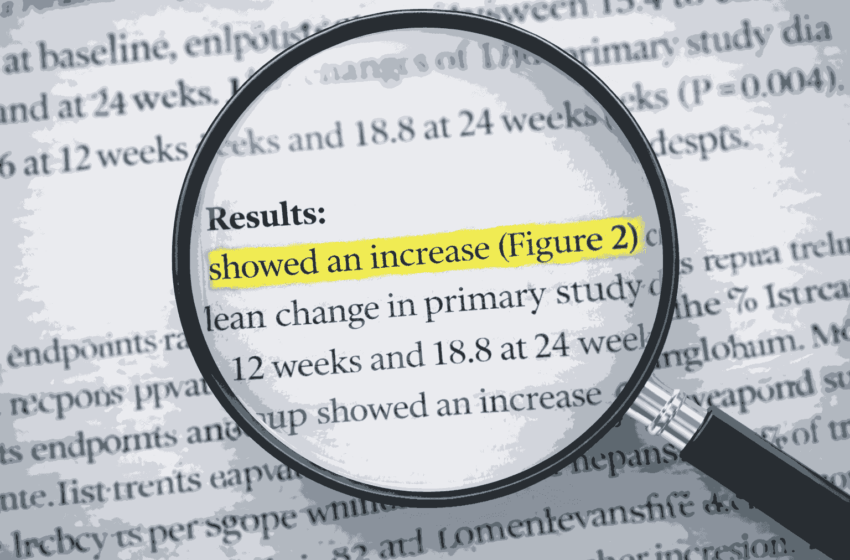
Tables and figures, although important components of many research papers, are just that—components; you can publish a paper without them but you cannot publish tables or figures without a paper. And if text is Read More
Science demands precision, and part of mastering a subject involves learning the exact differences between words that mean more or less the same thing. An entomologist, for example, knows the difference between a grub and Read More
Full disclosure: Editage Insights is a product of Editage, a global provider of world-class scientific communication solutions. Editage Insights is funded by Editage and endorses services provided by Editage but is editorially independent. English Editing - Editage.com | 英文校正 – Editage.jp | 원어민영문교정 – Editage.co.kr | SCI英文论文发表 – Editage.cn | publicação de artigos – Editage.com.br | 編輯英文 – Editage.com.tw



