Plagiarism vs Paraphrasing: Know the Difference
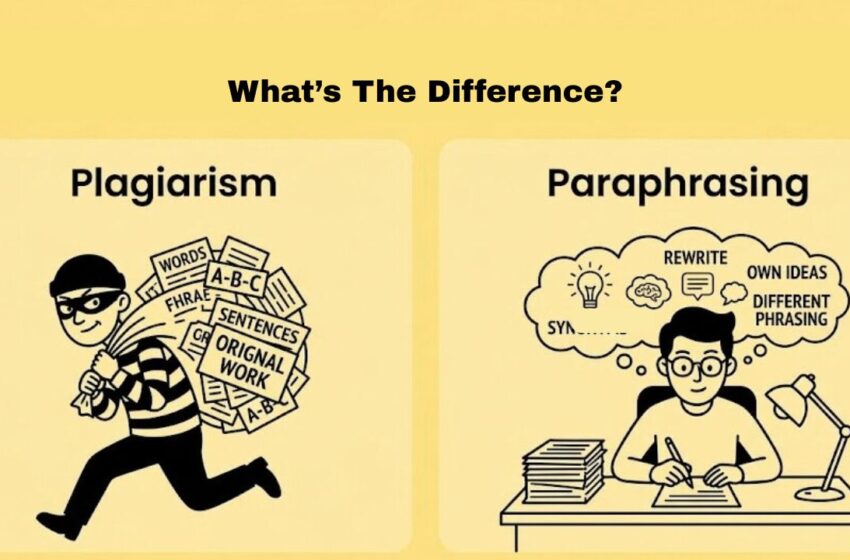
Plagiarism vs Paraphrasing
- Plagiarism is taking credit for someone else’s work without proper attribution.
- Paraphrasing is conveying someone else’s idea in your work using your own words and giving credit to the correct source.
Introduction
I think the earliest memory most of us have about plagiarism is when our teachers told us NOT to copy from each other’s assignments in school!
“Copying is bad.”
This thought was drilled into our brains from our early learning days. Yet, as adults, we realized that researchers build their idea on someone else’s work. Does that not count as copying? Well, the answer can be complicated. In the research landscape, terms like plagiarism and paraphrasing often seem confusing. So let’s get some clarity.
What is Plagiarism?
Plagiarism is passing off someone else’s idea, research, or findings as your own and not citing the original source. Deliberate plagiarism, also called direct plagiarism, is when the author is aware of their actions and still decides to go ahead with this unethical practice. Sometimes, content can be accidentally plagiarized. Meaning, the author is not aware that their action could be deemed plagiarism because, in their opinion, they’ve “paraphrased” what the other author wrote in their paper.
What is Paraphrasing?
Paraphrasing is using your own words to rewrite a previously published idea or a research finding and crediting the original source. Remember: it’s a two-step action where you
- first rephrase the original content
- and then cite the source
Even if one of these steps is missed, you’ve committed plagiarism.
Different Types of Plagiarism
Plagiarism can be deliberate or accidental. Nevertheless, knowing what journals consider plagiarized content helps you avoid them in your work. Here are three common types of plagiarism explained by taking examples from a research paper [1] published in the International Journal of Sport Nutrition and Exercise Metabolism.
Direct plagiarism
When you copy a sentence from a published research paper verbatim in yours, it is direct plagiarism. Even if you cite the source, it’s still plagiarized content because you’ve copied the text as is from the original.
Example:
Original sentence in the paper by Smith et al. (2022): It is recommended that mixed participant studies assess each participant classification separately.
Your sentence: It is recommended that mixed participant studies assess each participant classification separately.
Why is it plagiarized? One, you’ve copied the text verbatim without making any changes from the original; two, there’s no proper attribution. You’ve not used quotation marks or mentioned the citation. So, here’s how it can be corrected:
Smith et al. (2022) recommend separate assessment of participants classified into categories, especially when the participant group is mixed.
Here, you’ve managed to write a complete sentence by attributing the information to the original source and by modifying the wording to reflect what is important for your research.
Paraphrasing plagiarism
Paraphrasing plagiarism occurs when you rewrite someone else’s ideas but do not credit them. So, even if the sentence is your own, the idea is not. And when the attribution to source text is missing, the content is deemed plagiarized.
Example:
Original sentence in the paper by Smith et al. (2022): By identifying strengths and gaps in the quantity and quality of the existing literature, sports practitioners and academics can uncover underdeveloped topics or potential problems with the quality of research in relation to female athletes.
Your sentence: Identifying strengths and gaps in both quantity and quality of existing literature is a great way for sports practitioners and academics to recognize less-explored topics and possible issues with research quality with respect to female athletes.
You’ve paraphrased the original text. But there’s no citation attributing the idea to the original author. Hence, this will be considered as plagiarism. How to correct it:
According to Smith et al. (2022), for sports professionals and scholars, one way of recognizing emerging topics and potential issues with research quality concerning female athletes is to assess the strengths and weaknesses in both the quantity and quality of current literature.
The sentence is now correctly paraphrased with the source of the idea being accurately attributed.
Mosaic plagiarism
Let’s say you do paraphrase and cite the source. How you paraphrase matters! If you alter a few words from the original text, say by replacing them with synonyms, you’ve not put any of your own thought into it and simply changed how the sentence reads to make it slightly different from the original text. This is mosaic plagiarism.
Example:
Original sentence in the paper by Smith et al. (2022): It is noted that specific allocation of these themes will likely change according to the topic or subdiscipline of SSSM being assessed and may involve some subjectivity.
Your sentence: Smith et al. (2022) noted that particular allocation of themes is likely to modify according to the topic or subdiscipline of SSSM being evaluated and may include some subjectivity.
Notice the text highlighted? Those are the only replacements you’ve made. Now despite the mention of the original work at the beginning of the sentence, the lack of originality in your sentence itself stands out, causing plagiarism checkers to flag your sentence as plagiarized. Here’s an alternative:
The allocation of research themes is subjective when exploring the subdisciplines under sports science and sports medicine (Smith et al. 2022).
See the difference? You’ve taken the idea recommended in the original text but presented it in your own words and used proper attribution. This is good practice.
How to Paraphrase Correctly
We’ve now seen what causes plagiarism and how they can be avoided. In a nutshell, you need to paraphrase correctly and cite the source. The second part of attributing credit to sources is easy; but what about paraphrasing? Here are four helpful tips:
- Read the original text completely and understand it fully. What’s the author trying to imply? And what did you infer from it? Get clarity.
- Once the concept is clear, use your memory to write what you understood. Do not keep looking at the original text repeatedly as it could collude your own thoughts.
- Next, compare the two versions: your sentence with the original one. Make sure that the core message is the same but the words used differ from each other.
- Finally, provide proper attribution. Cite the source immediately after the sentence (or near to it) so it is clear which part was referenced.
Plagiarism can be tricky to handle, especially when you have a lengthy research paper to write and edit. Many journals use plagiarism checkers (either third-party tools or in-house developed ones) to filter out papers in the desk check process. If you’re looking for an expert-driven pre-submission check, plagiarism check, and comprehensive formatting, reach out to Editage’s Desk Rejection Shield Service and submit confidently!
Reference
1. Methodology review: a protocol to audit the representation of female athletes in sports science and sports medicine research https://doi.org/10.1123/ijsnem.2021-0257