Ask the Editor: The High Cost of Cutting Corners in Scientific Writing

Ethical dilemmas in research are often associated with experimental design or data handling, but some of the most consequential missteps occur at the final stage: when research is translated into words. In the “age of AI”, the temptations to use tools are all around – to speed up the process of writing and have a polished outcome. The question today is not whether, but when and how to use AI. However, at the end of the day, it is your own research and ideas that need to be communicated in a professional manner. There cannot be errors in interpretation, and one should not generously allow AI tools to write or rewrite – as the tools may misinterpret the data and conclusions, miss errors in wording, or replace technical words/language with vocabulary that doesn’t make sense. In addition, generative AI may edit your writing in ways that may not be accurate. Writing using AI and then re-checking everything again yourself can feel like double the effort. Yet, today, more than ever, we need human expertise to review work done by AI.
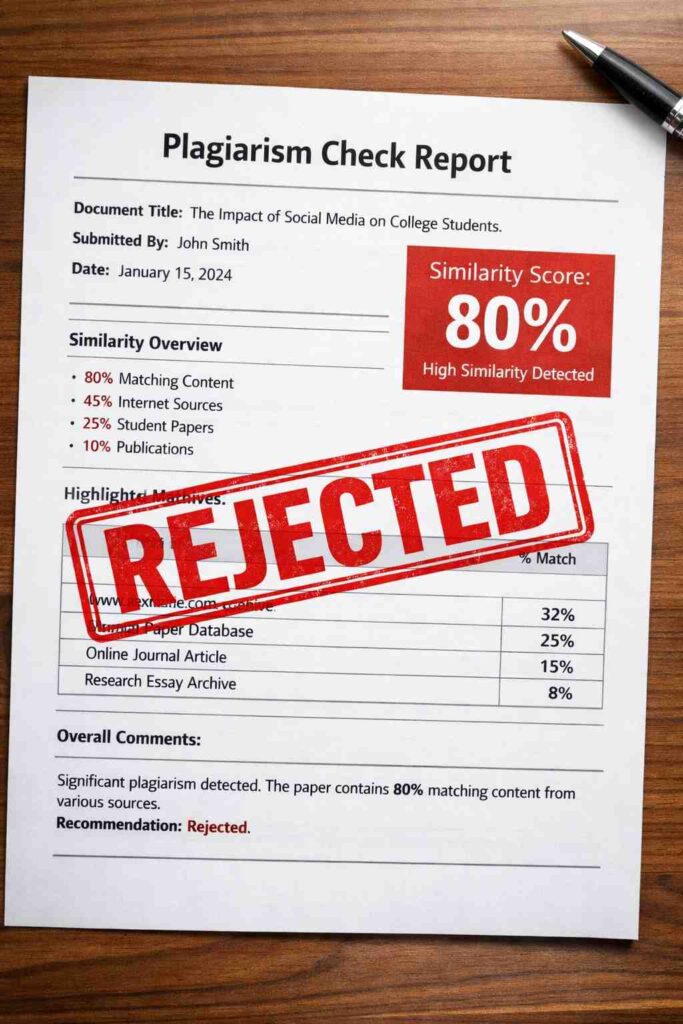
Let me rewind a little – to a time before AI entered our daily lives. During my postdoctoral training, over a decade ago, I observed a recurring problem among trainees in an otherwise highly rigorous and supportive environment: plagiarism. Students and postdoctoral researchers in US institutes where I worked and studied struggled with original writing, and plagiarism would surface in theses, manuscripts and figures. This issue often occurs at critical milestones such as thesis submission or manuscript preparation. What made this particularly striking was that these were not individuals lacking in scientific ability or dedication. On the contrary, many had spent years conducting careful experiments under strong mentorship. Yet, when it came to writing, the pressures of a high-performance, outcome-driven environment sometimes led to poor decisions. In many cases, the issue was not overt misconduct, but a lack of clarity about boundaries.
Where does writing assistance end and plagiarism begin? Is reusing text from previously published work acceptable? Can images or figures be adapted without explicit acknowledgment? These questions, though critical, are often overlooked. The consequences, however, are far from minor. Trainees may face delays in thesis approval, extensive revisions mandated by committees, or reputational setbacks that could have long-term implications for their careers. What is particularly unfortunate is that these outcomes often come after years of otherwise rigorous and ethical scientific work.
These observations underscore an important reality: integrity in research extends beyond data to include how that data is presented and communicated. Proper citation, transparent acknowledgment of sources, and respect for intellectual property are not mere formalities: they are fundamental to maintaining trust within the scientific community.
Using AI for editorial or language support is becoming more common and, in many cases, necessary, especially in the fast-paced a global publishing ecosystem. However, this support must be clearly distinguished from practices that obscure authorship or originality. Rushing to impress, especially at the final stage, can undo years of careful work.
It would be incomplete to frame these dilemmas solely as individual responsibilities. Researchers operate within systems that shape behavior: funding structures, publication pressures, institutional expectations, and mentorship cultures. Early-career researchers, in particular, often navigate competing demands. They feel the need to produce results quickly, publish in high-impact journals, and maintain rigorous standards. In such environments, ethical gray zones are not only possible; they are inevitable.
For researchers at all stages, especially those working in fast-paced and high-stakes environments, the growing challenge is to actively cultivate a culture of integrity, human oversight and post-AI human editing as a mandatory part of daily practice.