What Is Peer Review in Research and Why Is It Important for Journal Publishing?

What is Peer Review and How Did It Originate?
What is the Peer Review’s Role in Research?
What are the Different Types of Peer Review?
What are the Problems of the Peer Review System?
How Does the Peer Review Process Work?
FAQs About What is Peer Review
What is Peer Review and How Did It Originate?
Many students and early-career researchers often wonder what peer review exactly is. In the simplest terms, it means evaluation and assessment of research by fellow experts in a particular field of study. The peer review system has been considered as the keystone of scientific publishing for centuries and most reputed journals use peer review as they believe it assures quality control in science publication.
Although some form of pre-publication review was always present from the time scientific journals were published, the peer review process of today has evolved over time. Earlier, decisions about accepting or rejecting a paper were usually exclusively made by journal editors.
In the early 20th century, however, science started becoming increasingly specialized as researchers explored niche scientific fields. Hence, editors found it difficult to decide on their own what was worth publishing. Moreover, the number of scientists increased massively as did the number of papers written due to the growing emphasis on publication in decisions about jobs, tenure, grants, etc. This increased pressure for a system such as peer review.
What is the Peer Review’s Role in Research?
Peer review increases the credibility and reputation of research as it allows subject field experts to look closely at new research. Since this process helps journal editors in deciding whether a manuscript is publication worthy, it is also an expert advice system.
To understand peer review, one must understand the editorial decision-making at journals. Peer reviewers do not decide whether to accept or reject papers; they can only recommend a decision. At peer-reviewed journals, decision-making authority rests solely with journal editors or the journal’s editorial board.
What are the Different Types of Peer Review?
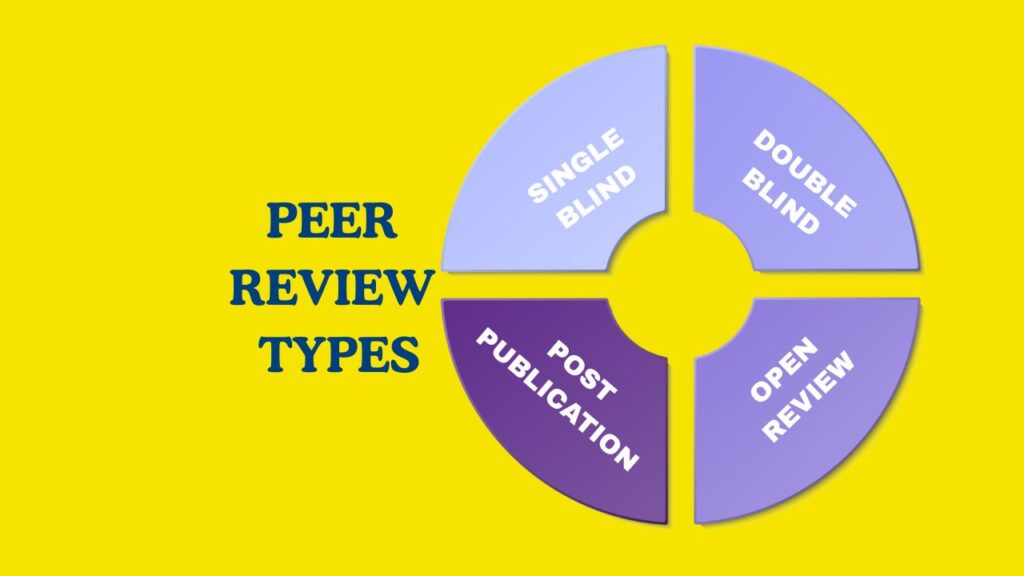
Over the years, peer review models have evolved to address challenges like capacity, volume, bias, and speed. Most researchers are familiar with the single-blind and double-blind peer review models. Here, we will understand five types of peer review models to include even the uncommon types of peer review processes.
1. Single-blind peer review
- Reviewers know who the authors are
- Reviewers’ names are not revealed to authors at any stage of the peer review process
- Helps reviewers provide critical feedback freely without worrying about backlash from authors
- Some reviewers may submit a biased review when the author identities are disclosed
2. Double-blind peer review
- Neither the reviewers nor the authors know the identities of each other
- Ensures an objective evaluation of research rather than bias towards authors’ reputation, gender, race, or affiliation
3. Triple-blind peer review
- Identities of authors, peer reviewers, and journal editors are all kept hidden from one another
- In addition to eliminating reviewer bias, this model eliminates potential editorial bias
- This peer review is the most stringent types of evaluation of research papers, wherein the submitted manuscript is assessed purely for its merit
- It comes with logistical challenges like complex administrative processes and intricate manuscript evaluation workflow
4. Collaborative review
- Collaborative peer review allows authors and reviewers to collaborate during the peer review process
- Interactive and open debate about the manuscript’s readiness helps enhance the quality of research
- Journals could provide a shared platform, either within the system or outside, to let reviewers and authors discuss the paper
5. Open review
- Identities of both authors and reviewers are known to each other
- Review reports are occasionally published along with the paper
- This peer review model is known for its transparency and ensures accountability, thus encouraging a responsible and fair peer review evaluation
Different journals follow different types of peer review based on their requirements. Some journals even implement the post-publication peer review as a means of weeding out bad science. Although the ways of reviewing research are different, the intention of following this system is validating research and ensuring that published science has a global impact.
How to Deal with Peer Review?
Getting a manuscript published is rarely a one-step process. Once a paper is submitted to a journal with an appropriate cover letter, authors usually have to wait for weeks to get a response from the journal. It is rare for papers to get accepted as they are without any edits; most papers must go through multiple rounds of revisions based on the comments of peer reviewers before the manuscript can reach the publication.
Peer reviewers can suggest rework ranging from minor changes such as language editing to major changes such as adding more experiments. Since the journal accepts the paper only when all the comments are addressed, it is essential that authors keep in mind some guidelines while responding to peer reviewer comments such as responding precisely and politely.
It is not necessary for authors to agree with every change suggested by the reviewer(s), but they should justify any differences in opinion with evidence. While doing this, authors can take the help of a few tips on submitting the revised manuscript so the paper reaches the print version sooner.
What are the Problems of the Peer Review System?
Despite the many merits of peer review, the system is ridden with problems such as delay in decisions, reviewers’ bias, plagiarism, personal or professional jealousy, etc.
Additionally, peer review has many unseen costs even though there are usually no monetary transactions involved in the process. The main costs are related to the time devoted by the peer reviewers in reviewing articles and the time spent by the journal editors in arranging for peer reviewers.
Reviewers usually do not receive any remuneration for their work, and hence academicians are divided over whether peer review is a thankless job or a duty to the academic community.
How Does the Peer Review Process Work?
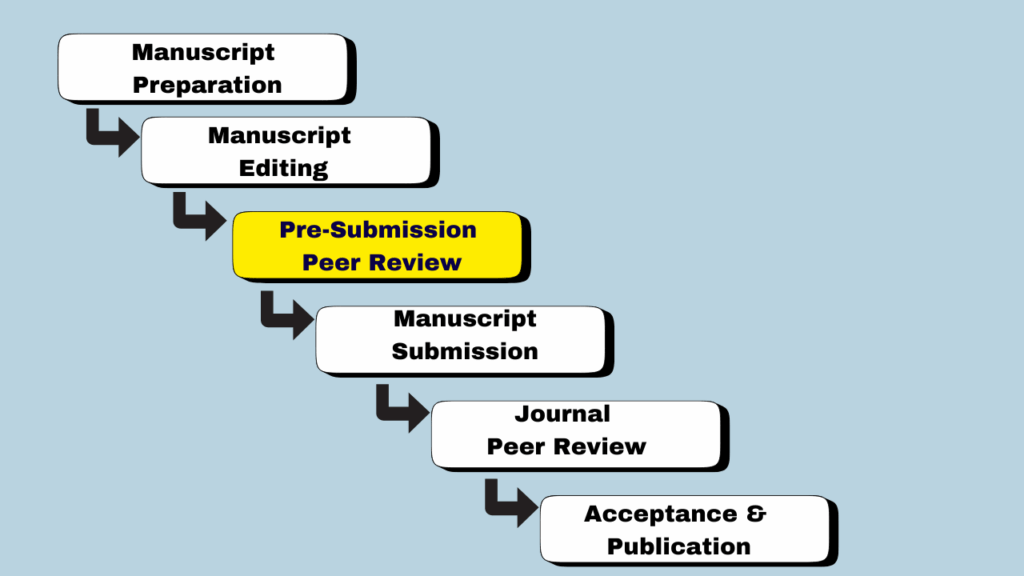
Understanding the peer review process is key for any researcher planning to submit to a journal. Here’s a step-by-step guide explaining how the peer review process works.
Step 1: Manuscript Submission
- Author selects the journal and prepares a submission package as per journal’s guidelines
- The submitted manuscript should align with the journal’s aims and scope
- Journal formatting instructions must be followed to avoid desk rejections
- Journal editor reviews the manuscript for its compliance with journal requirements
Watch this video to know more about preparing an effective submission package: https://youtu.be/AO-JI1gu-Ws
Step 2: Reviewer Selection
- After initial checks, journal editor decides whether the manuscript must be rejected or sent for review (author is notified in case of desk rejection)
- If standard journal criteria are satisfied, editor selects reviewers suitable to evaluate the manuscript based on expertise in subject area, research topic, conflicts (if applicable), and availability of reviewers
- Manuscript is then sent for peer evaluation
Step 3: Manuscript Evaluation by Reviewers
- Reviewers assess the manuscript for its submission readiness
- They evaluate the research methodology, accuracy of findings reported, originality of the work, and significance of the study
- Detailed feedback is shared with the journal editor with their suggestions and recommendations
Step 4: Reviewer Recommendations
- Reviewers provide their evaluation and recommend one of the following next steps: accept without revisions, accept with minor or major revisions, or reject
- Journal editor consolidates the feedback and shares a decision letter informing the authors of the next steps
Watch this video to know what editors and peer reviewer feedback actually means: https://youtu.be/3r_85DX2PrY
Step 5: Author Revisions
- Authors revise the manuscript as per reviewer feedback
- Each comment must be addressed and the responses must justify your actions. For instance, explain why a reviewer’s suggestion for more experiments was not implemented
- Both the revised manuscript and the response letter must be resubmitted to the journal
Step 6: Re-review (if required)
- The manuscript is again reviewed for the changes made
- If the editor and reviewers are satisfied, it will proceed to the publishing stage. Otherwise, it will be returned to the author to make further changes before acceptance
Step 7: Final Acceptance and Publication
- Once the manuscript is re-evaluated, the journal editor makes the final decision by factoring in the reviewers’ recommendations
- If accepted, manuscript is sent for copyediting, typesetting, and proofreading to make it journal ready
Advantages of Peer Review
1. Improves Manuscript Quality
Peer review is essentially a quality filter. Although receiving criticism about your work may not seem enjoyable, it helps improve the impact of your research. Any ambiguous writing, incomplete or lacking experimental details, unclear reporting of findings and implications are spotted before publication, making your research paper accurate and publication worthy.
2. Provides Expert Feedback
As authors, you would have spent substantial time preparing your research paper day in and day out, thus making you ineffective to objectively evaluate the research presentation. An external eye with the right expertise enables you to identify any inaccuracies and shortcomings that could have been overlooked.
3. Enhances Credibility
Peer-reviewed journal papers carry more value in academic circles. In fact, with the general public being wary of AI-generated content, both scientific and non-scientific, peer-reviewed papers assure them of the credibility of the work. It helps establish yourself as an authoritative voice in your discipline since your work has withstood rigorous academic evaluation.
4. Ensures Research Meets Academic Standards
Academic publishing warrants strict adherence to certain standardized scholarly and ethical guidelines. Peer review evaluations ensure that any malpractices are identified and filtered out to publish authentic studies that are not plagiarized, maintaining research integrity.
5. Identifies Overlooked Issues Before Publication
From simple errors like formatting issues and mistakes in styling conventions to larger problems like researcher biases, logical gaps, conflicting statements, and other unintended errors, peer reviewers help recognize the shortcomings before the research is publicly shared.
FAQs About What is Peer Review
1. What is the meaning of peer review?
Peer review is the process of critically evaluating an academic paper, typically journal submissions, for its novelty, originality, and impact. Expert evaluators from the subject area determine whether a manuscript is worthy of being published and help it reach the publication stage through rigorous assessments.
2. What is a peer review example?
Peer review processes vary from journal to journal. For example, one journal may follow a double-blind peer review process to maintain strict confidentiality of authors’ and reviewers’ identities, making research evaluation a priority over any kind of potential bias. Another example can be an open access journal using the open peer review model to maintain transparency in evaluation while enforcing reviewer accountability to ensure a fair assessment without any hostility towards authors.
3. What is the purpose of peer review?
The ultimate objective of peer review is to ensure high quality of published science. Peer review plays a key role in fair scientific publishing and is an excellent opportunity to improve the quality of research manuscripts that are published.
4. How long does a peer review take?
Usually, it can take anywhere between 3 to 4 weeks for the initial round of peer review. Then, revisions, resubmissions, and re-evaluations could amount to another 12 to 20 weeks before the journal article is published.
However, delays in peer review are quite common. Sometimes, these timelines stretch because of reviewer unavailability, misalignment of manuscript with journal scope leading to rejection and resubmission to another journal, lack of right subject matter experts, failing to find peer reviewers because of conflicts of interest etc.
5. What are the three main aims of peer review?
If one had to summarize three main aims of peer review, it would be
- Improving quality of research
- Eliminating publication bias, reviewer bias, editorial bias, and researcher bias
- Maintaining academic credibility in scholarly publishing
6. What are common peer review mistakes?
We can categorize peer review mistakes into two: author mistakes and reviewer mistakes
Author mistakes: Selecting the wrong target journal, using outdated or inappropriate study design, misinterpreting results and findings, reporting conclusions without evidence, and ignoring reviewer feedback post evaluation.
Reviewer mistakes: Making comments that have nothing to do with the submitted manuscript, being biased when evaluating especially in single-blind and open peer review models, providing unhelpful comments, using unnecessarily harsh language, and using AI tools for reviewing papers without any human interventions.
7. What types of documents are usually peer-reviewed?
Typically, any scholarly document undergoes peer review. It can be
- journal articles
- review papers
- academic book manuscripts
- conference papers
- clinical reports
- case studies
- white papers
- technical handbooks
- instruction manuals
Originally published on June 11, 2014. Revised on June 24, 2026