How to Avoid Grant Proposal Rejection – Grant Writing Part 2
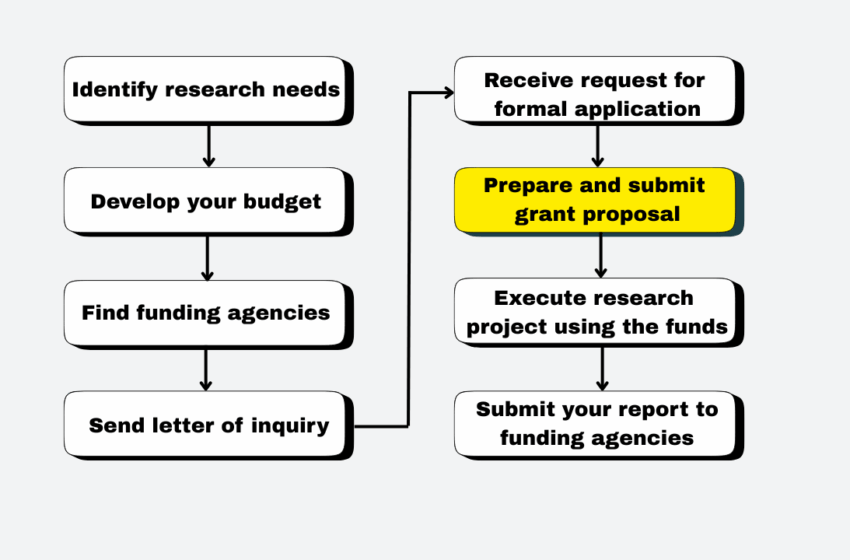
In the first part of this series, we highlighted the key components of a grant proposal and what it takes to write a winning grant proposal. In Part 2, let us understand the characteristics of a successful grant proposal and common mistakes that result in grant rejection.
9 Characteristics of an Effective Grant Proposal
How to Avoid Grant Proposal Rejection – Common Mistakes Explained
Conclusion: What to do if Grant Proposal is Rejected
9 Characteristics of an Effective Grant Proposal
Writing a strong grant proposal is key to receiving funding for your research. And there are certain standardized expectations for successful grant proposals. To stand out from the crowd, it is important to know what characteristics make a grant proposal effective.
1. Focus on the impact
Grant reviewers need to know why your research is worth their funds. Therefore, your research should not only aim to advance scientific knowledge but also benefit society at large. How does your research contribute to the betterment of global environment? What are the potential benefits of your findings being reported? Highlight the impact your study will create by describing the implications of your research.
2. Measurable aims
Set tangible study objectives that can be achieved. You need not exaggerate on what impact you expect to create with your research. Be realistic and set reasonable expectations that can be easily measured.
For instance, when you describe your research design and methods, specify what quantifying variables will be used in the study to test relationships. Describe specific outcomes that you intend to measure, such as identifying how screen time (measured in hours) correlates to sleep quality scores (consider a scale of 1 to 10) in people of different age groups or determining the percentage reduction in tumor size (mm2) after 6 weeks of treatment XYZ vs. placebo.
3. Inclusive samples
The sample size should be sufficiently large to merit your results. Additionally, it should give results that can be generalized easily. For instance, minority groups and women should be adequately represented in the sample whenever a clinical study deems it necessary. This ensures that your study implications can be applied to a diverse category, filling in the gaps existing in literature.
4. Rigorous methodology
The methods used for the analysis of your hypothesis must be well-developed, rigorous, and suitable for achieving the aims of the study. Make sure that you have recognized the latest techniques and testing methodologies rather than outdated ones to highlight the relevance of your study.
5. Address potential challenges
All studies come with limitations and challenges, and I’m not referring to the “study limitations” under the Discussion section! Consider what problems you foresee for your research work. Do you have access too sufficient testing equipment required to conduct your study? Could there be unavailability of personnel? What if participants back out mid-study? Propose alternatives that will help you continue your research despite any such disruptions.
6. Authority over the study topic
Grant reviewers want to be assured that not only is the research worth their investment but also that the research team deserves their support. Make sure to highlight in your proposal the experiential value you bring to the research. Describe how the research assistants are adequately trained in the skills required to conduct the study. Overall, ensure that the “Personnel” section of the grant proposal underscores your team’s expertise sufficiently.
7. Favorable research environment
Institutional support is another key factor that influences the decision of grant reviewers. Explain how the research will be conducted in an environment with adequate, state-of-the-art facilities. This assures reviewers that you will have access to all necessary lab equipment and other requirements to facilitate the successful completion of the research.
8. Justified budget
A well-planned budget is critical for reviewers evaluating your grant proposal. Clearly describe for what purposes you will be utilizing funds and set reasonable timelines to complete all planned tasks. The request for funds should be commensurate to the tasks carried out.
9. Ethical compliance
Ensure that your study is approved by an appropriate ethics committee and that it complies with the necessary ethical guidelines. When it comes to studies involving human participants or animal subjects, grant reviewers need to know that you have all the required approvals before initiating the study.
Writing an effective grant proposal with these characteristics indicates that you have made it halfway through in your grant application process. But rejections are quite common, especially if certain mistakes are overlooked.
How to Avoid Grant Proposal Rejection – Common Mistakes Explained
It is important to know what commonly leads to grant proposal rejection and how these mistakes can be avoided.
Mismatched funding agency
One of the first mistakes that researchers make is applying for a grant without learning enough about the funding organization. Funding agencies support certain kinds of studies and outline their aims, scope, and guidelines on their websites. An internal team first reviews your grant proposal to check whether your study objectives align with the funding organization’s interest. If there is a mismatch, the proposal is rejected without further review.
What you should do: Research the funder’s mission, values, and grants approved in the past. Your grant proposal should clearly demonstrate how your work aligns with their scope and objectives.
Poorly written grant applications
Most funding organizations provide a grant application template or recommend certain guidelines to be followed. Even in the absence of these guidelines, a grant application should logically flow from one section to the other, taking the reviewer through the research journey you are about to embark on. Any grant proposal that fails to do this could be rejected.
What you should do: Double-check the funder’s website and create a checklist of all the requirements. Use this checklist to ensure that you have satisfied all their guidelines and adhered to the instructions. Be thorough when proofreading and editing your grant proposal; this is a task that is often overlooked by researchers in their haste to apply for grants! Use accurate grammar, correct language, and a persuasive tone throughout the grant proposal. Avoid using excessive jargon as the internal committee may not be experts in your field of study.
Unclear research objectives
Your grant proposal should have clarity. Researchers often make vague statements about their research objectives and fail to provide sufficient reasons for requesting funds. If the reviewers do not understand the research problem or how you aim to solve it, they are likely to reject your grant proposal.
What you should do: Clearly state the research objectives and explain exactly how you intend to solve the identified problem. The study objectives should be in line with your research hypotheses. If required, include examples to highlight the problems and clarify why your research is the best solution. This way, the grant committee will understand the clear thought behind the proposal.
Insufficient impact
Funding organizations expect grant proposals to be holistic, wherein impact can extend beyond research labs and benefit a larger group. Grant proposals that fail to bring this across often only describe whether the research findings can verify the hypotheses. If your research does not seem impactful, reviewers are likely to reject your grant application.
What you should do: Outline the impact and implications of your study findings and explain who will benefit from it. For instance, could your study facilitate interdisciplinary collaboration? Does the research have multiple uses? Will the study inspire further research and influence student learning? All these are aspects you should highlight in your grant proposal to increase its chances of endorsement.
Unrealistic approach
Overly enthusiastic researchers often make impractical claims, set unattainable timelines, and provide unrealistic requirement list in their grant proposal. Researchers also tend to promise overly precise results, which could work against them as grant reviewers carry sufficient expertise to recognize exaggerated claims.
What you should do: Provide a logical and realistic account of the methods and techniques you plan to use. Ensure that your requirements are feasible and set achievable timelines. Do not make false claims regarding the implications of your potential research findings. Stick to the facts!
Missing deadlines
Yes, researchers have busy schedules and tend to procrastinate lower priority tasks. But mismanaging time and missing the deadline set by the grant committee is unacceptable, regardless of the reason. Rushing through the submission of a grant application could also result in incomplete proposals, leading to rejections.
What you should do: Always plan ahead! Note the deadline on your calendar and start working backward from the submission date. Use reminders and set mini deadlines for yourself to complete smaller tasks. Submit the grant proposal with ample buffer time to avoid any last-minute technical problems.
Conclusion: What to do if Grant Proposal is Rejected
Despite all your efforts, grant proposals could still get rejected for various reasons. So, what can you do in that scenario?
- Read the reviewers’ comments carefully. There could be inputs on aspects that you might have overlooked when preparing the grant proposal.
- Check with the grant committee if resubmission is an option; some agencies do allow for rebuttals. If not, look for other funding organizations that are more suited for your proposal.
- Ultimately, treat the grant application process as a learning experience. Address the concerns noted by the reviewers, make necessary corrections, and continue applying until you find the right funder to support your research.
Received reviewer comments but unsure of what to do next? Check out Editage’s Resubmission Support Service and revise manuscripts to match reviewer expectations!