The Empowered Researcher: Building Your Own Grant Support System

Writing Competitive Grants Without Institutional Support
For many researchers, the lack of institutional support seems unfathomable. For others, it is a way of life. Some may be fortunate to be at a tier-1 university or a large research institute or government-backed program that gives you unlimited access to dedicated office support. For many – from diverse geographies, or smaller teaching institutes, colleges or even independent or hospital-based researchers, such a promise of support seems unimaginable!
This can leave the researcher feeling very overwhelmed by the daunting process of grant writing and submission! Any researcher can attest to this: it is never simply think-do-write-submit.
A typical scenario: It is heavy grant submission season with several grants being submitted for the same deadline. Institutional staff will probably propose an earlier internal deadline to enable on-time submission. This needs to be factored into the timelines well in advance. Any help or resources should be tapped into early to avoid writing, editing, formatting, cross-checking and polishing at the 11th hour.
Today, for many early to mid-career researchers, securing funding is a huge part of the time spent, as it will determine the success and scale of their academic activities, the protected time for research and the trajectory of their career and their ability to continue to employ and train researchers of the future.
Even for senior researchers who have long been successful in writing and securing grants, the ever-changing rules, requirements and expectations, along with a tighter pay line in 2026 than perhaps when they started out, can greatly impact their ability to continue to do innovative and high-impact research!
The good news is that researchers are not as alone as they might feel. With deliberate planning, external support, and a clear workflow, it is possible to build a “virtual grant office” around yourself.
Grant success is often treated as a matter of individual ability but it depends heavily on the systems of support around a researcher. When those are missing researchers should not treat it as a personal failure: so creating their own support network is a practical way to level the playing field.
One of the biggest hidden advantages of institutional grant offices is not just expertise, but structure. Deadlines are tracked. Templates are provided. Feedback is scheduled. Without that, the process can feel overwhelming.
How to Build One’s Own Grant Support System
Use Grant Writing Coaching as a Strategic Substitute for Mentorship
When internal mentors or grant development staff are unavailable, structured grant writing coaching can play a crucial role. Unlike informal mentoring, coaching is typically goal-oriented, time-bound, and focused on specific outputs, such as refining aims, strengthening narratives, or aligning proposals with funding calls.
Coaching may be available through professional societies, national mentoring networks, independent consultants, or structured online programs. Even short-term coaching engagements can make a meaningful difference, particularly in the early conceptual phase.
Build a Peer-Based Feedback Loop (Even If It’s Informal)
One of the most underestimated resources in grant writing is peer feedback. In institutions with internal review committees, proposals are often critiqued multiple times before submission. Without that system, researchers must intentionally recreate it by forming or joining a small peer group that meets regularly to review drafts. These groups do not need to be discipline-perfect. In fact, feedback from adjacent fields often improves clarity and narrative strength. A peer group within or outside your institution can help reduce isolation and sustain motivation. Both these factors will play a big role in the overall completion, quality and outcome of the proposal.
Know When (and How) to Seek External Professional Support
Writing a grant alone does not mean doing everything yourself. Many researchers outsource parts of the process. It is important to remember that this is not because they lack skills, but because time and cognitive bandwidth are limited. External support can be particularly valuable for language editing, improvement of narrative flow, formatting, reference checks, biosketch and supplementary document preparation.
Professional academic editors, grant consultants, and specialized service providers can step in at different stages. The key is to be strategic. External support works best when researchers retain full intellectual control over content and provide clear briefs and timelines.
Leverage Funding Agency Resources More Actively Than You Think You Should
Many researchers underuse the support already provided by funding agencies themselves. In the absence of institutional guidance, these resources become even more important. Check the application guides, templates and sample applications that the funder may already have on their platform. Often, funding agencies will keep informational webinars explaining review criteria and common pitfalls. You can also write to the Program Officers of the institute you are targeting. This is key to understanding whether your idea fits the scope and current priorities. There are repositories of publicly available abstracts or summaries of funded projects that will also help you understand what kinds of grants have been funded recently.
Beyond a Single Grant: Building Long-Term Grant Readiness
Here are some tips so that you are always in a grant-ready mode all year round:
- Keep organized records of drafts, feedback, and reviewer comments
- Continuously refine core research narratives
- Continuously develop skills through workshops or teaching others
- Network and retain relationships among peers internally and externally
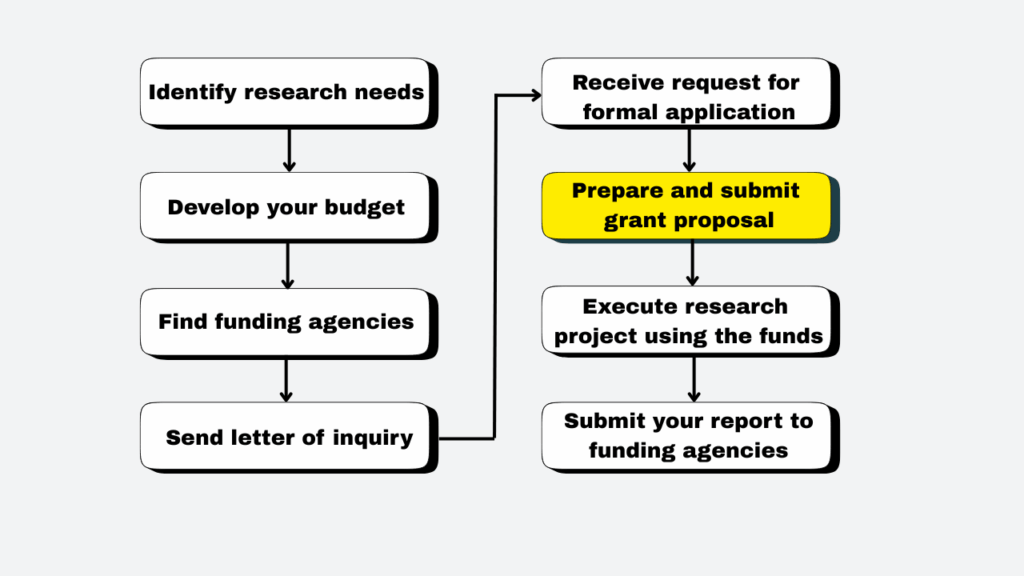
It is time for researchers to take control of their funding trajectory. Learning on-the-go is a highly undervalued skill of an academic. Taking charge of every step of the funding lifecycle will allow the remaining pieces of the puzzle to assemble with more clarity and vision.
Recommended Reading
Exploring Grant Writing Coaching and Its Role in the Professional Development of Health Equity Investigators. Journal of Clinical and Translational Science. Cambridge University Press.