How to Write a Winning Grant Proposal – Grant Writing Part 1
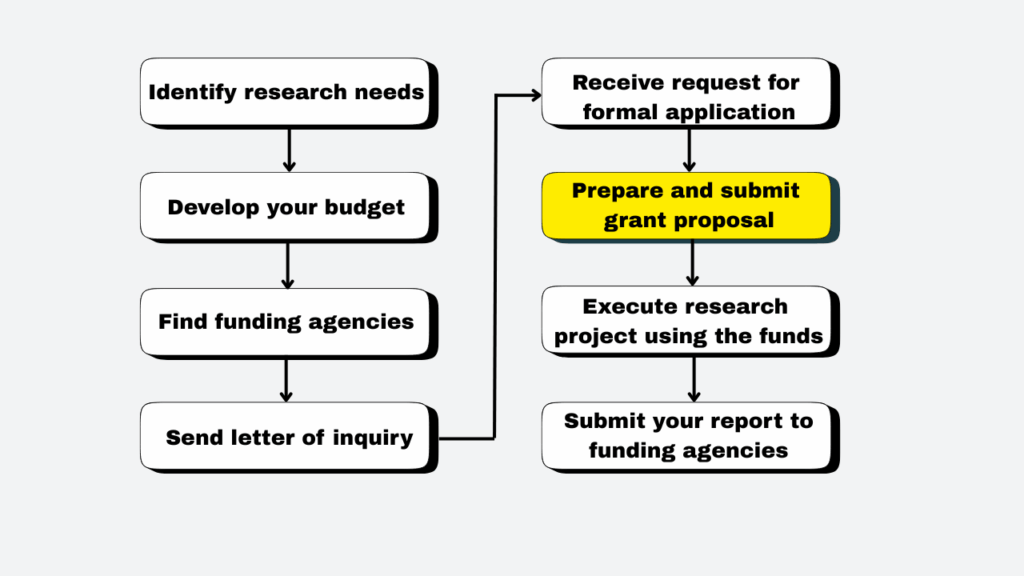
Conducting research is a massive project that requires time, effort, and funds. Research grants help fund research projects, and the foundations or organizations offering these grants (also referred to as grantors) need to know why particular research deserves their money. The recipients of these grants can be non-profit entities, businesses, educational institutions, or even individuals. What the grantors are interested to know is how their financial support be utilized. This is where grant proposals come into picture.
9 Core Parts of a Grant Proposal
3. Research design and methods
8. Research environment and institutional resources
What is a Grant Proposal?
A grant proposal is an application submitted by the recipient to a grant committee for acquiring financial aids for their research work. The grant committee reviews numerous grant applications and determines which proposal is worthy of their attention and investment.
When you submit a research paper to a journal, the editors and peer reviewers evaluate whether the topic is novel, important, and relevant before deciding on its acceptance. Another factor that editors consider is whether the research was funded. This is because a funded research project is deemed credible, increasing the chances of your manuscript’s acceptance for publication.
Therefore, grant writing is a crucial step in your research publication journey. The purpose of a grant proposal is to convince the grant committee to offer you funding. It should highlight how the funds will be utilized during your research work and what impact you intend to create.
But what does a grant proposal look like? Let’s understand the key sections of a grant proposal and how to prepare an effective grant application.
9 Core Parts of a Grant Proposal
Just like a research paper, grant proposal can be divided into sections. It starts with a strong title that clearly indicates the intent of your research. The rest of the grant proposal can be categorized into 9 core parts.
1. Abstract
The abstract is the first thing that the grant committee will review, and a well-written abstract ensures that your proposal stands out among all other grant applications. In fact, the committee may only look at the abstract before deciding to pass the application on to reviewers. So, it should be a concise summary of your proposed research written in an easily comprehensible manner such that it appeals to non-experts in the field. Clearly indicate the nature of the research problem, why it needs to be investigated, what hypotheses you plan on testing and the expected outcomes, the methodologies or the techniques you intend to use to perform the testing, and the novelty or significance of the study.
2. Introduction
The introduction should highlight the practicality and importance of your research. It serves as a cornerstone of your entire grant proposal. And so, it should explicitly state the specific aims of your research. Make sure that you highlight exactly how your research fills the gap in existing literature, such as correcting previously reported erroneous research findings or resolving controversies surrounding a topic.
3. Research design and methods
This is the section which informs reviewers whether your proposed study will indeed produce the promised results. So, provide a clear timeline of when each important task of your research work will commence and complete. This will indicate that you have planned your research for a feasible framework of time.
If your study involves human subjects, be sure to clarify the recruitment process by describing the inclusion and exclusion criteria. Provide details on how the participants will be incentivized and other details about the data collection methods, sample size, randomization, how the experimental procedures will be performed, and how the results will be calculated and evaluated. You can also highlight how your study abides by all the necessary ethical guidelines.
Ideally, divide this section into clear sub-sections to cover all details of the study, including the reliability of the equipment to be used, software applications, and statistical methods and data management techniques.
4. Preliminary studies
Before submitting your grant proposal, some preliminary or pilot studies should have been conducted to show the feasibility of your research project. Including data from these studies in your grant proposal shows your expertise in the field and that adequate groundwork has been conducted, thereby increasing the merit of your hypotheses.
5. Study limitations
Listing the limitations of the study is important to show that you are being realistic in your expectations of your research outcome. Unlike the members of the grant committee, the reviewers of your grant application are experts in the field. So, it is best to anticipate what questions they are likely to ask about what the research cannot achieve and address them beforehand.
6. Budget
This section should outline your expected research expenses in a tabular format. Ensure that you have checked the latest prices of your research equipment and supplies. You may also include details of the method of conducting your study to justify your expenses.
For instance, if you need to mail your study participants a printed questionnaire, specify the current postage rates. In case you need to utilize professional services for data analysis, compensate personnel for executing certain tasks, and purchase supplies for conducting experiments (e.g., chemical reagents, laboratory equipment, hardware, software applications, licenses for using apps or platforms etc.), provide all these details in a clear table.
Some funding agencies might have a template you need to follow to list all the expenses. Be sure to check the guidelines and carefully adhere to those instructions.
7. Personnel
This section helps the reviewers determine whether your team carries the required expertise to conduct the research. Provide details of all personnel involved in the research work and highlight how they have been trained to execute their tasks. You may even provide references to their most recent or relevant publications or other citation metrics to accentuate their expertise in the field.
8. Research environment and institutional resources
This section helps emphasize that the university or the institute you are affiliated with has qualified staff, expert research assistants, and adequate infrastructure for conducting the research.
To convince the reviewers that your university can aid the success of your research, highlight what unique facilities they offer. Discuss the available laboratory space and library facilities, how the research assistants are experienced in your field, and the institute’s history of high-value and credible research. Most importantly, if the university is partially funding your study, ensure that it is highlighted.
9. Appendices
The appendices cover any additional information and supporting documents that the reviewers need to be aware of. For example, you can include a sample of the questionnaire you intend to use for the study. You may also attach letters from department heads guaranteeing the supply of resources or letters of recommendations from colleagues or supervisors outlining your prior achievements.
While the format of a grant proposal can vary across funding agencies, these core sections would predominantly be included. However, their presentation may differ based on the specific guidelines and instructions. Always check that you have satisfied the requirements of the grant proposal format. Many funding bodies have stringent rules about conforming to their instructions, failing which your grant proposal may be rejected.
Key Tips for Writing a Winning Grant Proposal
Now that you know the core sections to include in any grant proposal, here are some key preparation tips.
- Learn about the funding agency: Before you start writing the grant proposal, learn all you can about the funding agency. Peruse their website to understand their scope and goals so you can highlight in your proposal how your research aligns with their scope and can contribute to achieving their goals.
- Understand your target audience: Get to know the reviewing committee to learn about your target audience. This will help you determine which aspects of the subject matter should to be elaborative in the grant proposal and which parts can be kept succinct.
- Examine the guidelines: Make a list of everything you need to prepare the grant application as per the funder’s guidelines:
a) What are the questions to be addressed?
b) Which sections are to be included?
c) What supporting documents should go with the submission?
d )How should the grant proposal be formatted as per their specifications?
Preparing this list before you begin writing the grant proposal ensures that you do not skip any aspect when submitting the application. - Be meticulous: Funding agencies are strict about reviewing grant proposals, and not meeting their criteria could result in rejection without review. Pay attention to details such as the page layout, font type and size, margins, line spacing, language, grammar, and spelling. While these may appear trivial, not adhering to the minor requirements will make the committee think that you are sloppy!
- Direct the reviewers’ attention towards the relevance of your research at the beginning of the introduction: In the first sentence of the introduction section, mention why your research is important. This is just a way to remind the reviewers why your study is relevant, underscoring the reason for them to support you financially.
- Highlight the research impact: The grant proposal should convince the reviewing committee that your research is useful for scientific development and to the society at large. Clearly explain what motivated you to choose the research topic and how you are committed to solving the identified problem.
In this first part of the two-part series, we have covered all you need to know about writing a winning grant proposal. In the next part, you will learn how you can avoid grant proposal rejection.