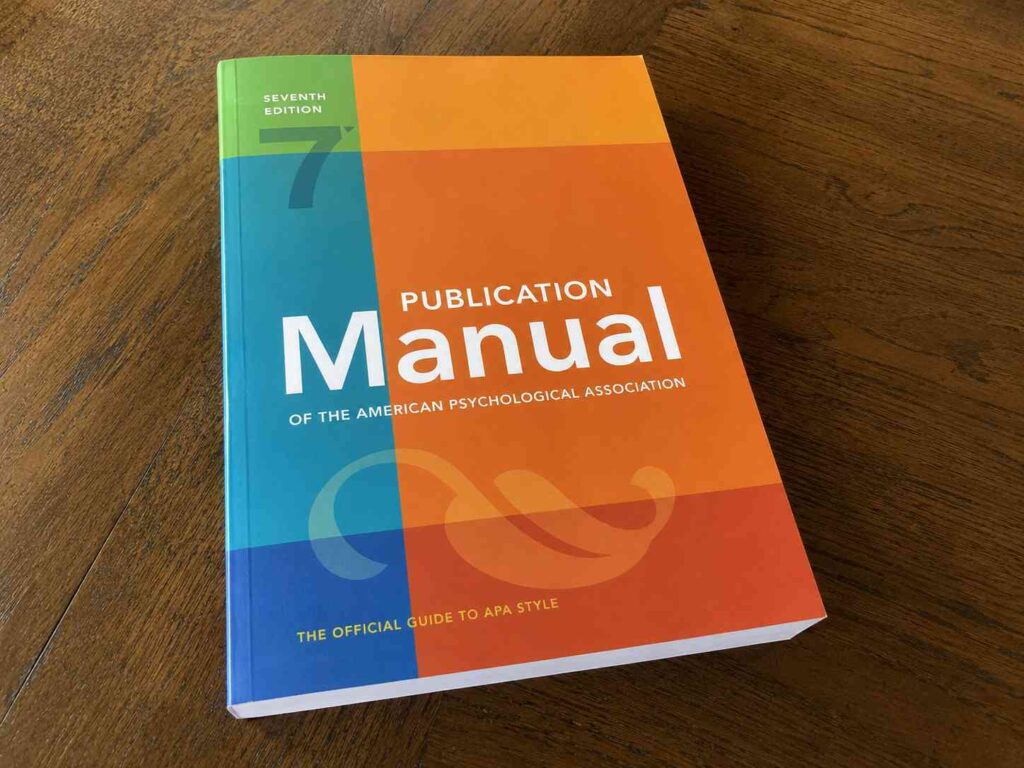
Using “et al.” for in-text citations in research papers
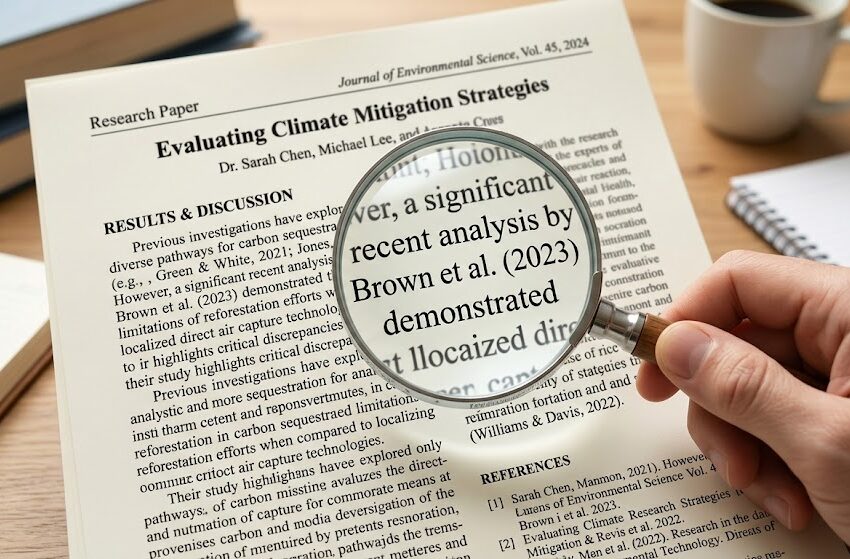
How to Use “Et Al.” Correctly in Research Citations: APA, Chicago & Harvard Guidelines
Meta Description:
Key Takeaways
- ✓ Et al. means “and others” and is used to shorten in-text citations with multiple authors
- ✓ When to use it depends on your citation style:
-
- APA: 3+ authors
- Chicago: 4+ authors (after first mention)
- Harvard: 4+ authors
- ✓ Always list ALL authors in your reference list, bibliography, or works cited section—never use “et al.” there
- ✓ Format matters: it’s always et al. (with a period after “al”), in regular text, not italicized
- ✓ When in doubt, check your journal’s author guidelines or use a citation generator
Why Use Et Al.?
Most research papers have multiple authors, and citing all their names every time creates cluttered, awkward references. That’s where “et al.” comes in. This Latin abbreviation means “and others,” and it’s essential for keeping your citations clean and professional.
The short version: Use “et al.” when citing papers with more than two authors (rules vary by citation style). We’ll show you exactly when and how to use it for each major style.
What Does “Et Al.” Actually Mean?
“Et al.” is Latin for et alii (masculine) or et aliae (feminine), both meaning “and others.” In academic writing, it’s a shorthand that tells readers there are additional authors you’re not listing.
Important formatting rule: The second word (al.) always takes a period, regardless of where it appears in your sentence. This trips up many writers, so remember: et al. (never “et al” or “etal”).
Et Al. Rules by Citation Style
Since different academic disciplines use different citation styles, rules for “et al.” vary. Here’s the complete breakdown:
Citation Style Quick Reference Table
| Citation Style | Number of Authors | First Citation | Subsequent Citations | Example |
| APA (7th ed.) | 1-2 authors | All names | All names | Smith & Jones (2022) |
| APA (7th ed.) | 3+ authors | First author + et al. | First author + et al. | Smith et al. (2022) |
| Chicago (17th ed.) | 1-3 authors | All names | All names | Smith, Jones, and Brown, 2022 |
| Chicago (17th ed.) | 4+ authors | All names (first citation) | First author + et al. | Smith, Jones, Brown, and Davis, 2022 (first); Smith et al., 2022 (after) |
| Harvard | 1-3 authors | All names | All names | Smith, Jones & Brown 2022 |
| Harvard | 4+ authors | First author + et al. | First author + et al. | Smith et al. 2022 |
| MLA (9th ed.) | Any number | First author only | First author only | Smith et al. 123 (in-text); Smith et al. in Works Cited |
| Cambridge University Press (STM) | 1-2 authors | All names | All names | Smith & Jones |
| Cambridge University Press (STM) | 3 authors | All three (variable) | All three or et al. | See note below |
| Cambridge University Press (STM) | 4+ authors | First author + et al. | First author + et al. | Smith et al. |
Cambridge Note: For 3-author citations, Cambridge offers flexibility: you may cite all three names throughout, use all three at first mention then et al. thereafter, or use et al. from the start.
APA Citation Style & Et Al.
The American Psychological Association (APA) is widely used in psychology, education, and social sciences.
APA Rules for Et Al.
1-2 Authors: Always list all names, every time.
- First citation: Smith & Jones (2022)
- Subsequent citation: Smith & Jones (2022)
3 or more authors: Use first author’s name + et al.
- First citation: Smith et al. (2022)
- Subsequent citation: Smith et al. (2022)
Practical APA Examples
One author:
Recent research shows that mindfulness interventions reduce anxiety (Johnson, 2021).
Two authors:
Two studies examined this effect (Brown & Davis, 2021; Wilson & Martinez, 2020).
Three or more authors:
Large-scale meta-analyses suggest positive outcomes (Anderson et al., 2022).
In your reference list, you still list all authors:
Anderson, K. L., Wilson, R. S., Martinez, J. P., & Davis, E. T. (2022). Mindfulness and mental health outcomes. Journal of Psychology, 15(3), 234-251.
Chicago Manual of Style & Et Al.
Chicago style is the standard in history, some humanities disciplines, and some professional writing.
Chicago Rules for Et Al.
1-3 authors: List all names in both first and subsequent citations (in notes and bibliography).
- Smith, Jones, and Brown. 2022.
- Smith, Jones, and Brown. 2022. (repeated)
4 or more authors:
- First mention: List all authors
- Subsequent mentions: First author + et al.
Practical Chicago Examples
In footnotes:
¹ John Smith, Maria Jones, and Robert Brown, “Effective Teaching Strategies,” Educational Review 45, no. 2 (2022): 112. ² Smith et al., “Effective Teaching Strategies,” 115.
In bibliography:
Smith, John, Maria Jones, Robert Brown, and Patricia Davis. “Effective Teaching Strategies.” Educational Review 45, no. 2 (2022): 110-128.
Harvard Citation Style & Et Al.
Harvard style is common in UK universities and some business schools.
Harvard Rules for Et Al.
1-3 authors: List all names.
- Smith, Jones & Brown 2022
4 or more authors: First author + et al.
- Smith et al. 2022
Practical Harvard Examples
In-text with one author:
According to Smith (2022), climate change requires immediate action.
In-text with two authors:
Two researchers argue that this approach fails (Brown & Davis, 2022).
In-text with three or more authors:
Research demonstrates mixed results (Anderson et al., 2022).
Reference list (all styles list all authors):
Anderson, K.L., Wilson, R.S., Martinez, J.P. & Davis, E.T. 2022, ‘Sustainable business practices’, Journal of Business Ethics, 78(4), pp.456-475.
Common Et Al. Mistakes to Avoid
Mistake #1: Inconsistent Usage
❌ Wrong: Anderson et al. (2022) found that… Later: Anderson, Wilson, and Martinez (2022) showed…
✅ Right: Pick one format and stick with it based on your style guide.
Mistake #2: Using Et Al. with One or Two Authors (in APA/Harvard)
❌ Wrong: Smith et al. (2022) for a two-author paper
✅ Right: Smith & Jones (2022)
Mistake #3: Forgetting the Period After “Al”
❌ Wrong: et al (without period) ❌ Wrong: et al. (with space before period)
✅ Right: et al. (period after the abbreviation)
Mistake #4: Capitalizing Et in the Middle of a Sentence
❌ Wrong: Recently, Jameson Et al. conducted a study…
✅ Right: Recently, Jameson et al. conducted a study…
Tools to Help You Get Citation Format Right
Managing citations across different styles can be overwhelming. These tools can help:
Paperpal Citation Generator
Paperpal’s free citation generator supports APA, Chicago, Harvard, MLA, and 10,000+ journal styles. It’s an excellent way to:
- Generate correctly formatted citations in seconds
- Switch between citation styles instantly
- Create full reference lists automatically
- Check citation formatting before submission
Try Paperpal’s free citation generator →
Other Helpful Resources
- Citation Management Software: Zotero, Mendeley, and EndNote help you organize sources and generate citations automatically
- Your Journal’s Website: Always check the “Instructions for Authors” page for specific requirements
FAQs About Et Al.
Do I need to list all authors in my bibliography or reference list?
Usually, the “et al.” abbreviation is only for in-text citations. In your reference list, bibliography, or works cited section, you list all authors. However, some biomedical journals ask you to list a set number of authors (usually 3-10) by name in the reference list and then use et al. for the rest. This is because there are huge multi-author, multi-center, multi-national studies with 50+ authors in fields like genetics and genomis.
Should “et al.” be italicized?
No. “Et al.” should be in regular (roman) text, not italics. The article or book title is italicized, but not the et al. abbreviation.
Is there a difference between “et al.” and “et alia”?
Both mean “and others,” but “et al.” is the standard abbreviation used in academic citations. You’ll rarely see “et alia” in modern research papers; stick with “et al.”
What if I’m citing a source by an organization instead of individual authors?
If there’s no individual author, cite the organization name. If the organization name is long, you can abbreviate it on subsequent citations, but this is different from “et al.” (which is only for multiple people).
Example: (American Psychological Association, 2020) → (APA, 2020)
Can I use “et al.” in my paper’s main text outside of citations?
Typically, no. Reserve “et al.” for citations and references only. In your main text, write out names naturally: “Patients, policymakers, and nurses participated…” rather than “Patients et al. participated …”
Do different journals have different et al. rules?
Yes. Always consult your target journal’s author guidelines. While most follow standard citation styles, some have modified rules. For example, the American Journal of Tropical Medicine and Hygiene avoids using “et al.” altogether, regardless of the number of authors.
This article was originally published on January 16, 2014, and updated on May 7, 2026.