When Everyone Uses AI: What Universities Must Protect and Redefine
AI is disruptive, unpredictable, and since we’re yet again talking about it, it is also unavoidable. Across industries, AI is influencing roles and operations in both expected and surprising ways, and higher education is no exception. The HEPI‑Kortext Student Generative AI Survey 2025 gives us a glimpse into just how widespread AI has become in academic settings. The survey shows that 92% of undergraduates have used AI tools, a big jump from 66% the previous year. Plus, 88% of students said they’ve used generative AI tools like ChatGPT for help with their assessments, which was just 53% the year before. This widespread use raises an important question: if AI can handle key academic tasks like thinking, researching, and writing, what unique role does education play now? How universities choose to define and protect that role in an AI-driven higher education landscape will shape how stakeholders perceive the value of what they offer.
Fractures, blind spots, and problems nobody planned for
In higher education, AI can be transformational: by streamlining workloads, increasing efficiency, and enhancing accessibility, however, this convenience comes with hidden costs. Increasing reliance on AI for key academic tasks can risk the development of essential skills such as critical thinking, reasoning, and independent research, which are central to the mission of universities. This shift can affect not only how students learn but also how they intellectually engage with their disciplines. Beyond skill degradation, AI presents a significant equity challenge as well. Access to advanced AI tools is uneven, often influenced by socioeconomic factors, potentially widening existing disparities within academic communities.
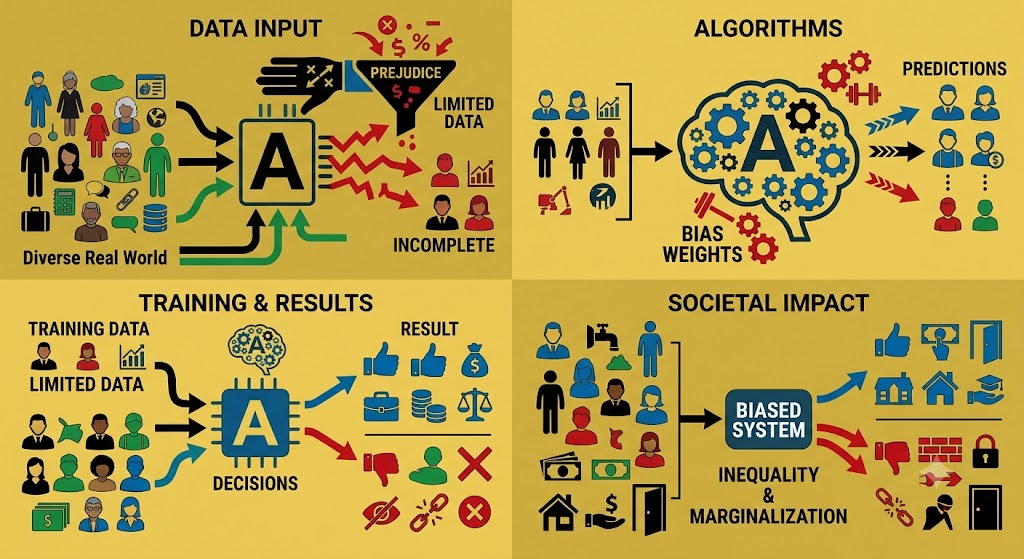
Another major challenge AI poses is to the very foundation of academic integrity. Despite AI tools offering remarkable efficiency in managing complex tasks, they have significant drawbacks that must be weighed. AI can produce misleading information that appears entirely credible. Additionally, it may generate biased content due to its training data, and there is always the potential for unintentional plagiarism. For instance, in the past, when plagiarism in academia was a main concern, plagiarism checkers were a clear solution to tackle it. But in the case of AI, there’s a twist because AI tools can generate content that seems original and well-crafted, making it tougher to assess genuine work, and the broader learning process. Without AI literacy and careful selection of which tools to employ and for what purposes, users, be they students or faculty, risk creating more issues than solving them.
The credibility of higher education institutions is also on the line. Most universities operate on clear standards, fairness, and trust, all rooted in specific policies and guidelines. If these frameworks aren’t updated promptly to keep up with AI advancements in the education and research landscape, an institution’s reputation could be at risk. Vague or outdated policies can lead to confusion and anxiety among students and faculty, who may be unsure about what’s acceptable when it comes to using AI. This uncertainty can discourage honest and strategic engagement with AI tools.
Universities face a paradox
Outright banning of AI in the contemporary educational landscape just isn’t practical. But at the same time, uncritical adoption of AI without verification systems and ethical safeguards in place can be irresponsible.
As we discussed above, AI can indeed stir up challenges, but it also offers opportunities such as reducing administrative burdens, and designing more tailored, engaging, accessible and innovative educational experiences. Investing in AI readiness can also help boost institutional reputation, enhance retention, and encourage enrollment because how universities navigate the AI-driven landscape directly affects multiple stakeholder groups:
- According to a survey, students recognize that being AI-savvy will matter for their futures, but only 36% think that university support has helped them build those skills.
- The gap extends to faculty as well. Academic leaders and professors acknowledge that graduates need to be AI-ready, and they themselves are also interested in using AI in their own work but lack the knowledge to go about it.
- In the workforce, AI literacy is becoming a must-have skill, with analysis of LinkedIn job postings showing AI proficiency being among the top competencies employers are actively seeking.
- Investing in AI readiness can also help boost institutional reputation, enhance retention, and encourage enrollment.
So, the question for universities now is how can they keep up their educational excellence and uphold academic integrity while addressing the needs of various stakeholders in a world where AI is becoming increasingly common.
According to the FICCI–EY–Parthenon AI Adoption Survey 2025, Indian higher education institutions are actively embracing AI technology, with most either having formal policies in place or developing them. The applications include supporting teaching efficiency and personalized student learning rather than just administrative tasks. While the crucial role of AI in the future of higher education is recognized, it just as important to ensure that implementation of tools is carefully managed and guided by clear institutional policies, AI literacy initiatives, and ethical frameworks that prioritize AI as a complement to, and not as a replacement for genuine intellectual development. Consider the University of Melbourne’s approach as they develop their AI Learning Assistant to help students better understand their course material. The tool generates responses based on content selected by subject coordinators and avoids giving direct assessment answers, while also ensuring all academic integrity rules apply to its use.
In the crowded and competitive world of higher education, being AI-ready can be key to universities gaining a competitive edge and positioning them as leaders in the evolving higher educational ecosystem.