Infographic: Types of biases in qualitative research and how to prevent them


Reading time
1 min
When it comes to research, we expect that the data researchers gather is unbiased and objective. But let’s face it – sometimes personal beliefs and experiences, in other words bias, can creep into the research work without researchers even realizing it. This is especially true in qualitative research, where the subjective nature of the study makes it even harder to maintain objectivity and avoid bias.
The infographic below presents important biases in qualitative research that researchers should be aware of when they conduct a qualitative study, and tips on how to avoid such biases.
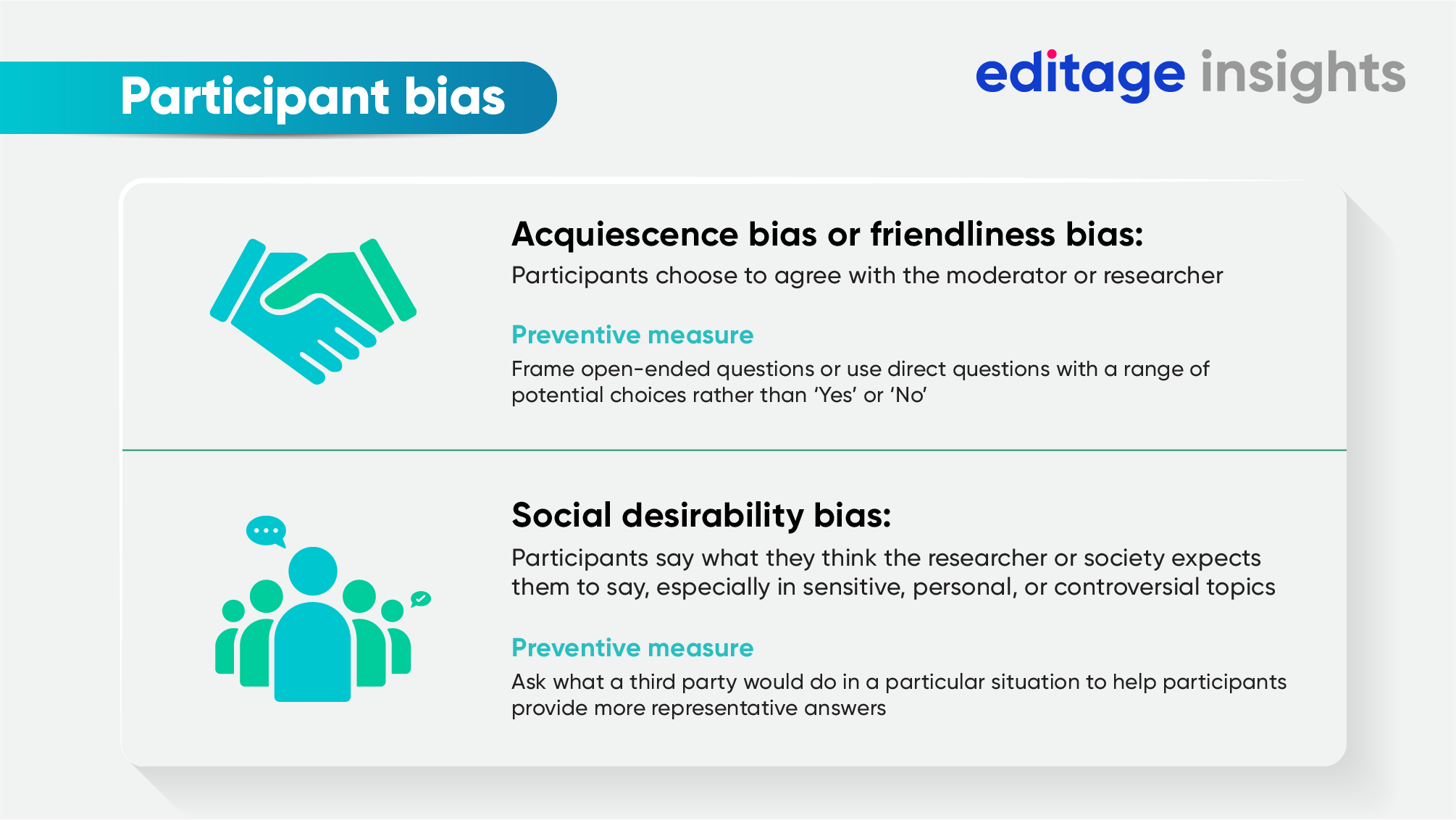
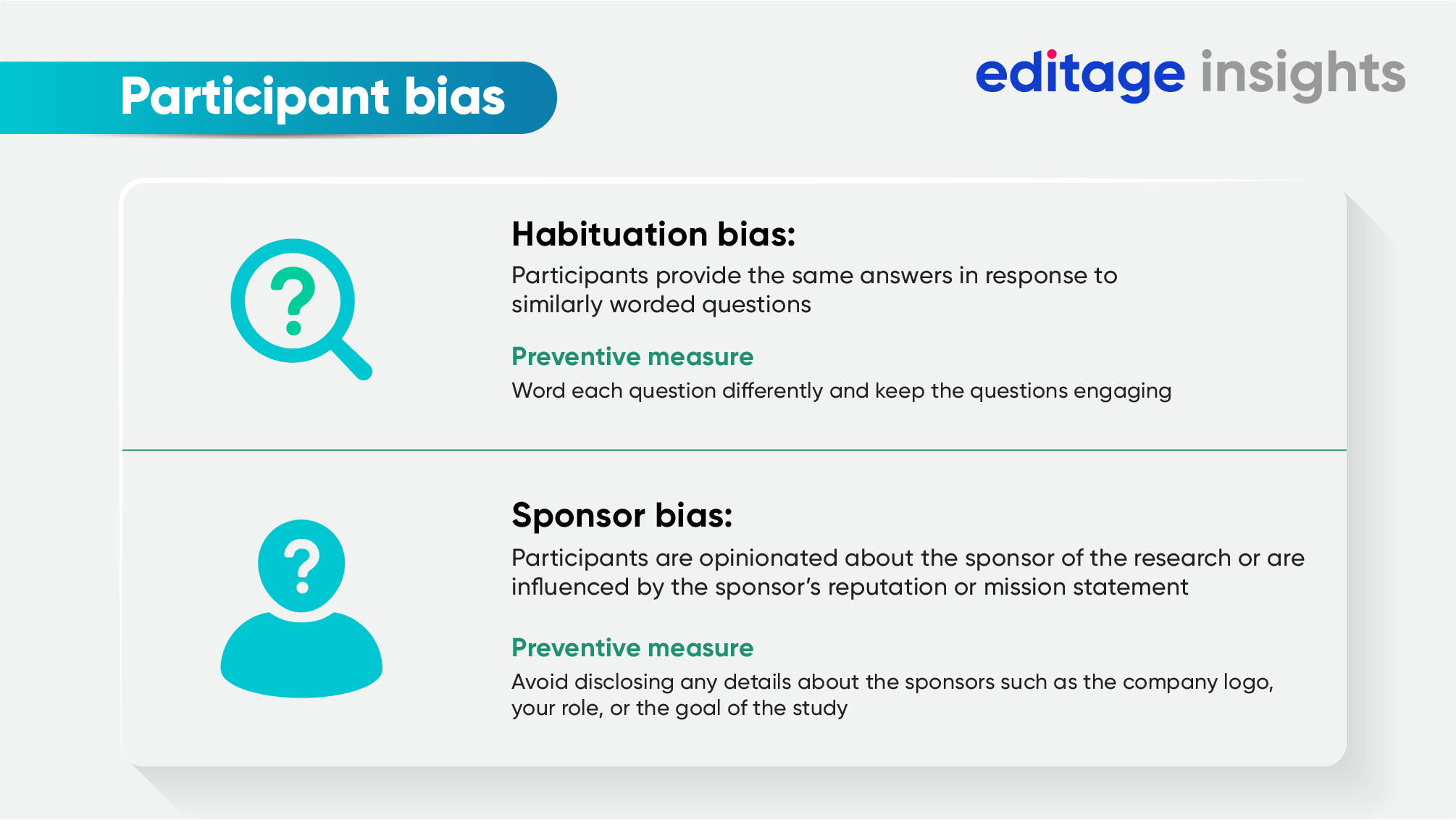
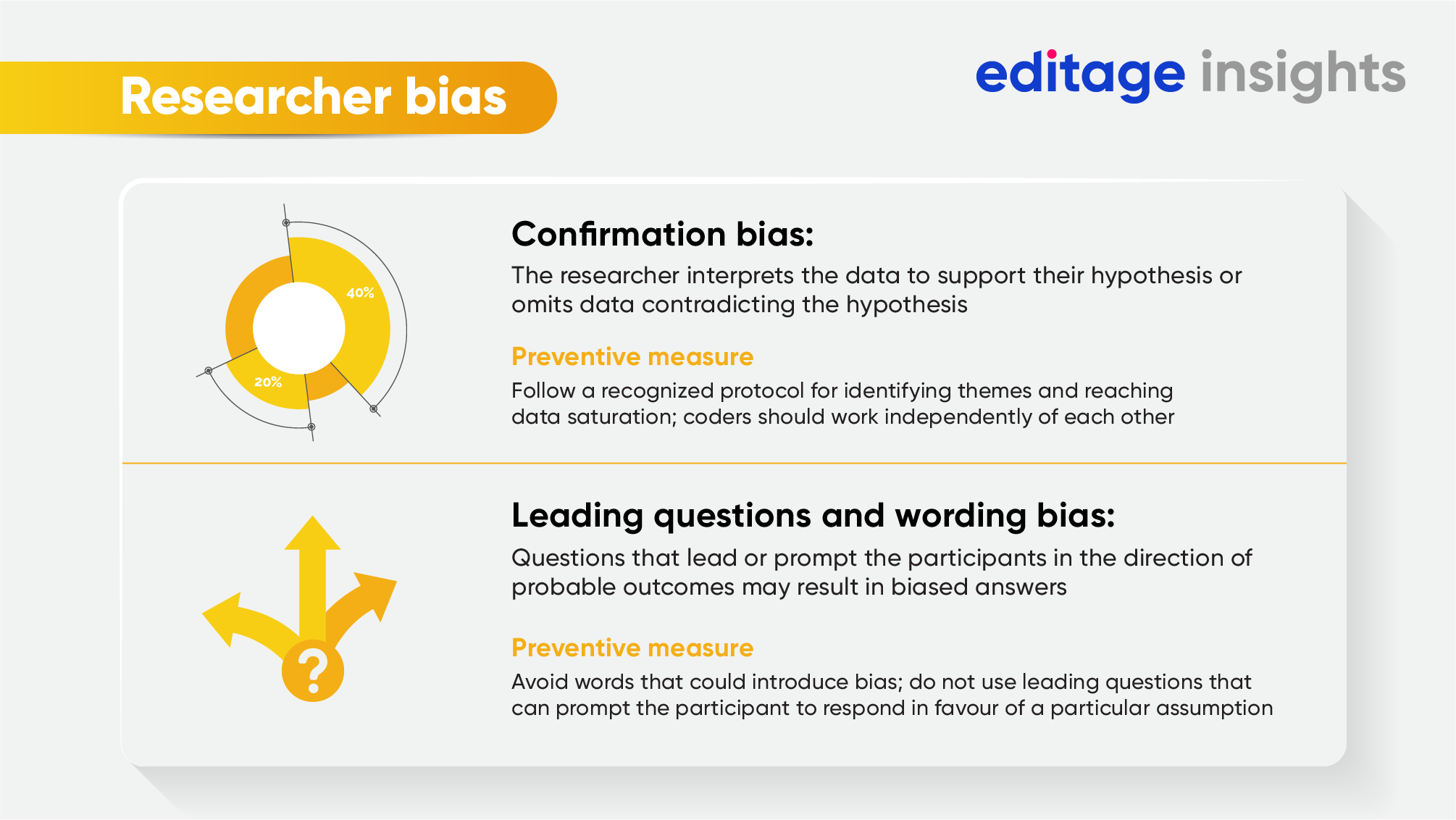
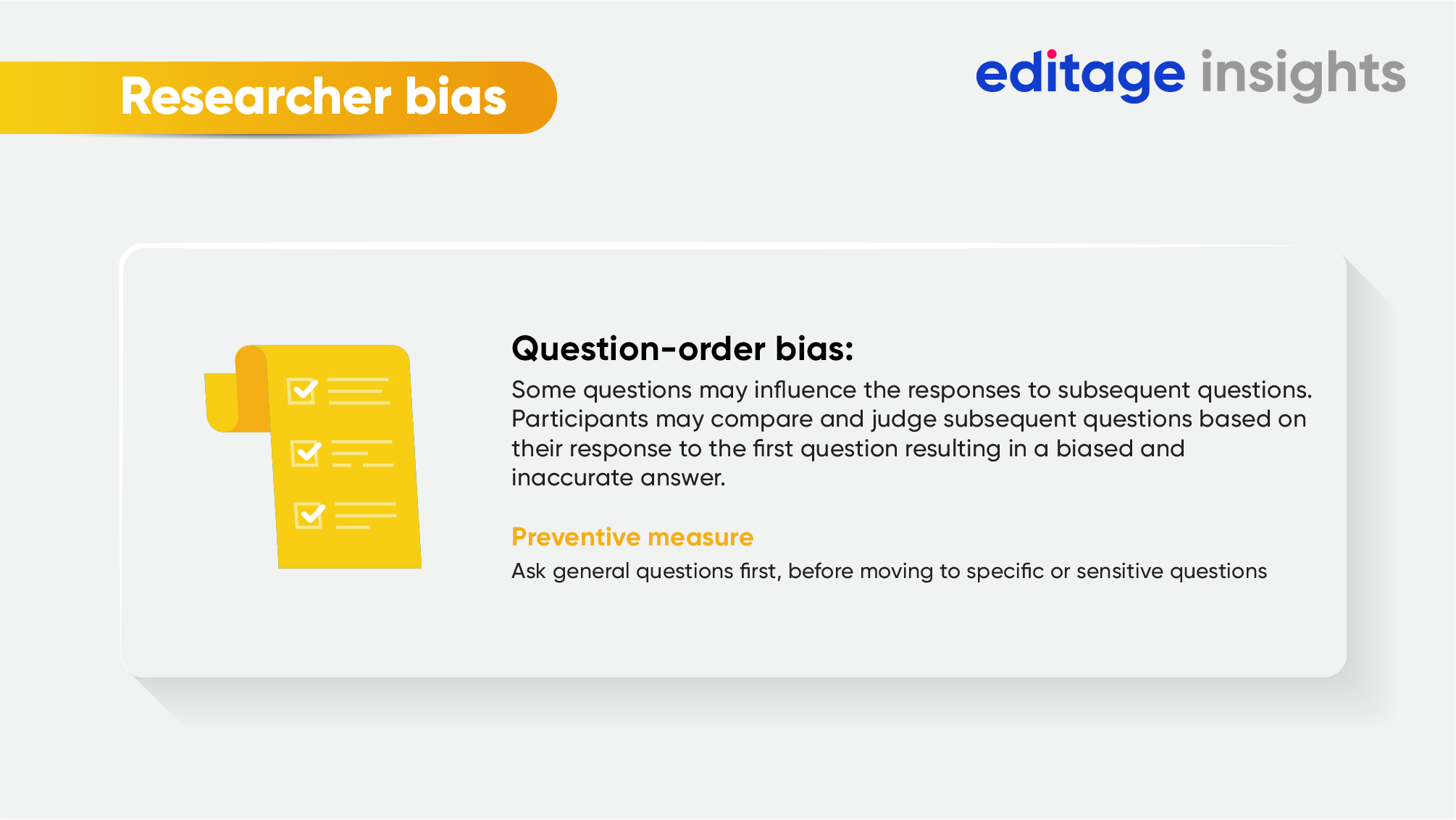
| Bias Type | Description | Preventive Measure |
|---|---|---|
| Participant bias | Participants choose to agree with the moderator or researcher | Frame open-ended questions or use direct questions with a range of potential choices rather than ‘Yes’ or ‘No’ |
| Acquiescence bias / Friendliness bias (Social desirability bias) | Participants say what they think the researcher or society expects them to say, especially in sensitive or controversial topics | Ask what a third party would do in a particular situation to help participants provide more representative answers |
| Habituation bias | Participants provide the same answers in response to similarly worded questions | Word each question differently and keep the questions engaging |
| Sponsor bias | Participants are influenced by the sponsor’s reputation or mission | Avoid disclosing details about the sponsor such as company logo, role, or study goals |
| Confirmation bias (Researcher bias) | Researcher interprets data to support their hypothesis or ignores contradictory data | Follow a recognized protocol for identifying themes and reaching data saturation; use independent coders |
| Leading questions / Wording bias | Questions prompt participants toward a particular answer | Avoid biased wording and leading questions that push a specific assumption |
| Question-order bias | Earlier questions influence responses to later questions | Ask general questions first, then move to specific or sensitive questions |
QualitativeResearch.pdf