
What is Academic Editing: Types, Importance, and Benefits
You’ve reached the final stages of your research and it’s time to share your findings with the scientific community. You’ve prepared a manuscript outlining your
- research problem,
- study aim,
- investigation process,
- research methodology,
- findings & conclusions.
But before submitting it to a journal for publication, it needs to be refined. Unlike non-academic and creative content, academic writing warrants an in-depth editing and proofreading with a specific focus on the scholarly and technical aspects. Here’s a blog that helps you understand the process of academic editing, different levels of academic editing, why academic editing is important, and how authors benefit from it.
Why Academic Editing is Important
Frequently Asked Questions on Academic Editing
What is Academic Editing?
Academic editing is the process of extensively evaluating the submission-readiness of a scholarly article, be it for journal submission, doctoral & postdoctoral assessments, conference presentations, or even clinical trial and case report submissions. It goes beyond the basic grammar and language checks. In academic editing, the overall structure, logic, coherence, presentation, and quality of a research paper is comprehensively assessed to make sure that it satisfies the required submission guidelines.
Types of Academic Editing
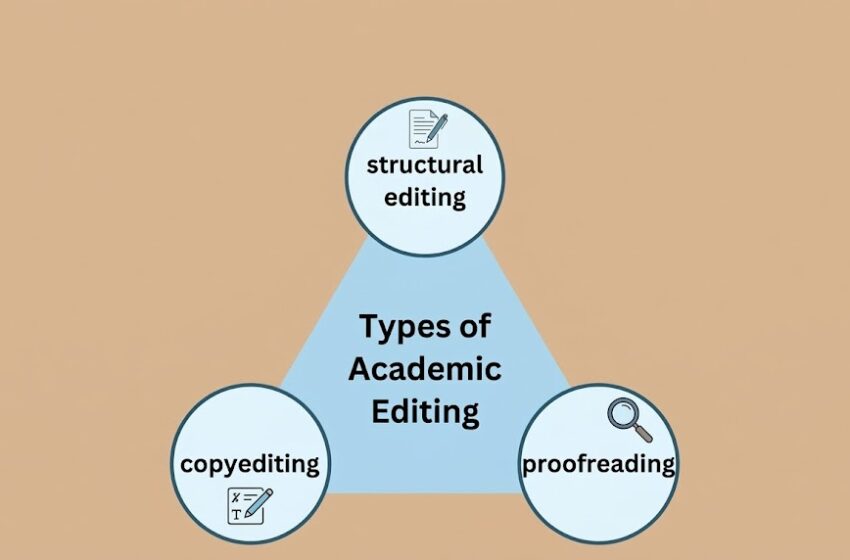
Academic editing can be broadly divided into three stages: structural editing, copyediting, and proofreading.
Structural Editing
Complex, lengthy documents like journal articles, theses, and dissertations should be checked for coherence. The arguments you present must be convincing, logically sound, and scientifically grounded. Structural editing involves a thorough evaluation of
- the academic tone,
- logical progression of ideas,
- and transition between paragraphs
to ensure that the entire paper reads well. Typically, this is the first stage of academic editing where the editor performs an in-depth review of the research manuscript.
Copyediting
In the next stage, the editor checks for finer details—grammar, syntax, punctuation, spellings, and writing style. If, as an author, you are confident that your research manuscript is structured well, you can use copyediting services to make sure that the paper aligns with journal-specific guidelines or the requirements of formatting style guide like APA, MLA, etc. Essentially, a copyeditor aims to give you an error-free document that’s suitable for academic publication.
Proofreading
In the final stage of academic editing, namely proofreading, the academic document is checked for
- typographical errors,
- formatting inconsistencies, and
- overall submission compliance.
Proofreaders are detail-oriented; their ability to spot those minor mistakes that are overlooked by authors can help avoid desk rejections.
Other Types of Academic Editing
What we’ve seen is a broad classification of academic editing types. Structural editing can be categorized further based on the extent of editing requested. Academic editing services are often offered in packages like advanced editing, premium editing, and scientific editing. How do they differ from each other and which one works best for you? Here’s a snapshot:
Advanced editing: Here, editors focus on language and grammar correction, journal formatting, and overall consistency checks. You can opt for this type of editing is best when
- you are fairly confident of the technical soundness of your research
- basic grammar, language, and sentence checks suffice
- you are on a low budget
Premium editing: To get a high-quality edit for sentence construction, language, grammar, journal format, and readability improvements, premium editing is the way to go. This type of editing is typically carried out by subject matter experts to give you a holistic evaluation. If you’re a mid-career busy researcher with limited time availability, premium editing services can significantly ease the journal submission process.
Scientific editing: If you’re targeting high impact factor journals, you’ll need to be absolutely certain of the readiness of your research manuscript! This is where scientific editing comes in. This type of editing involves
- a careful assessment of your research methodology, findings, and conclusions
- insightful recommendations from experienced journal editors
- a pre-submission peer review to help you understand what reviewers look for
Scientific editing gives you an opportunity to gain insights from experts in the field, collaborate with them on a deeper level, and provide your research paper with the highest chance of journal acceptance.
Why Academic Editing is Important
From an author’s perspective, all these types of academic editing could sound like an additional step that’s overburdening. But scholarly writing warrants an equally rigorous level of refinement. So, you should make academic editing a vital part of your publication process. You’ll start seeing the importance of academic editing when
- your research papers are free from language and grammar errors
- the clarity and coherence of your work shines throughout your research paper
- ambiguous writing is eliminated, making the paper easy to consume
- academic standards set by universities and journals are consistently satisfied
- your manuscript clears the first hurdle of desk checks and gets fast-tracked to the peer review process
Through academic editing, you can reach your publication goals faster. But it’s not only a one-time publication that’s simplified; there are several long-term benefits too.
Benefits of Academic Editing
1. Early-career researchers (ECRs) get to learn from experts. When you’re still gaining initial experience in any new field, it’s the right time for you to build skills and set a strong foundation. Collaborating with academic editors gives you access to
- their experience,
- knowledge on the subject, and
- overall publication expertise.
The feedback from academic editors improves not just that one paper but your subsequent papers as well, provided you develop the habit of incorporating their suggestions.
2. Research papers receive an objective evaluation. Your research is, no doubt, precious to you! Sometimes, this could collude your assessment of your own manuscript. Getting that external feedback, especially from a professional, is the best way to recognize the flaws in your submission before the journal editor highlights them.
3. It saves time. Researchers are busybodies, juggling multiple responsibilities. It’s good to compartmentalize to keep your focus on high-priority tasks and outsource the ones that can be handled by someone else. Academic editing is one such task. Taking expert help for editing and formatting a research paper gives you time to focus on other research-related tasks.
Frequently Asked Questions on Academic Editing
1. Who are academic editors?
Academic editors are often subject matter experts who carry experience in different aspects of research publication. They are familiar with what journal editors and peer reviewers expect to see in a research paper and help tailor research manuscripts to meet the expected submission requirements.
2. Why authors need academic editing?
Journals receive thousands of submissions in a single day, and authors must compete against these high-quality submissions to make their research paper stand out to journal editors.
- A well-formatted and expertly edited research manuscript is more likely to catch the editor’s eye, which helps authors clear that first round of desk checks and move to the peer review process.
- Even during the peer review process, research manuscripts that are pre-evaluated for their accuracy in language, technical soundness, and overall presentation are less likely to be rejected.
So, it’s important that authors make academic editing a part of the publication process instead of treating it as an add-on chore.
3. Which is the best academic editing service?
The best academic editing service depends on your editing needs.
- If you’re looking for a substantial edit for your research paper, structural editing services like advanced editing, premium editing, and scientific editing would be best suited for you depending on the extend of edit needed.
- However, if your paper is already well-structured and strong in terms of presenting its arguments, you might benefit from copyediting and proofreading to make the paper error-free and submission ready.
4. Is academic editing different from regular editing?
Yes, academic editing requires editors to have subject matter expertise in addition to knowledge on language, grammar, syntax, and sentence construction. Creative posts like marketing content and social media posts are often targeted at lay people; they do not involve technical jargon and complex scientific concepts. But scholarly writing typically targets a niche audience. So, the quality of writing and technical terminologies should match their knowledge level. This is why academic editing is a much more rigorous evaluation process than regular editing.
Get an expert-driven pre-submission check, plagiarism check, and comprehensive formatting. Check out Editage’s Desk Rejection Shield Service and clear that first hurdle in journal publishing!






How to Respond to Conflicting Reviewer Comments:...
September 16, 2026