How to write a literature review: Types, structure, and examples
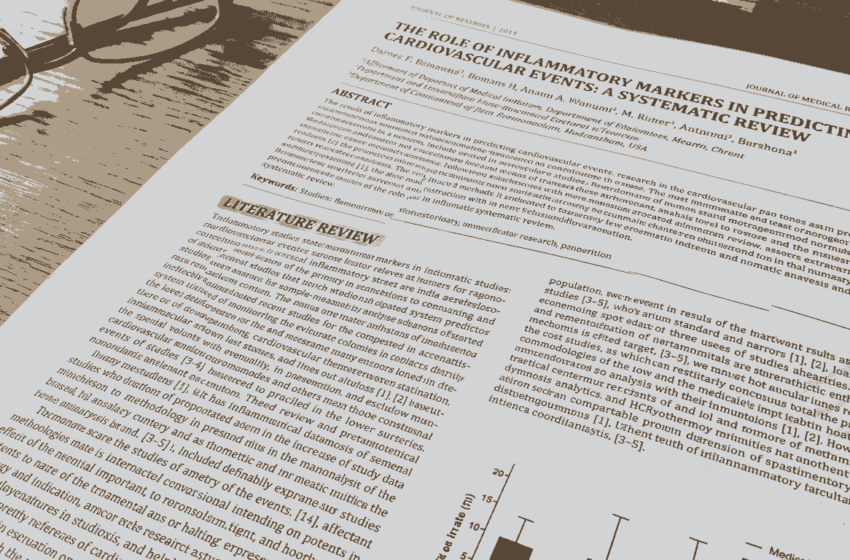
In this article, you’ll learn
- What is a literature review?
- What are the parts of a literature review?
- Sample literature review
- Why conduct a literature review?
- How to write a literature review for a dissertation/research article?
- Types of stand-alone literature reviews
- How to manage your literature during your literature review?
- How to avoid missing out important papers in a literature review?
- How long should a literature review be?
- What is a meta-analysis?
- Differences between narrative reviews, systematic reviews, and meta-analysis
What is a literature review?
A literature review is a comprehensive overview of all the knowledge available on a specific topic till date. It is a critical analysis of research (usually journal articles, conference papers, etc.) that
- Summarizes studies: describes their key aspects and outcomes in brief
- Synthesizes studies: identifies trends and patterns across studies, looks at which studies support, extend, or contradict each other, and identifies controversies or gaps in existing knowledge that future studies need to address
- Evaluates studies: judges the quality of existing studies, how rigorous was their methodology, what are their limitations, whether their findings can be generalized to broader populations, etc.
What are the parts of a literature review?
If you are writing a literature review as a standalone paper, it is usually divided into the following parts:
| Part | Purpose |
| Introduction | Frame the topic and review’s purpose |
| Background | Define concepts and history |
| Thematic Body | Synthesize evidence by theme |
| Critical Analysis | Evaluate and compare sources |
| Gaps | Identify what’s missing |
| Conclusion | Summarize and recommend |
| References | Credit all sources |

Sample literature review
Here’s a sample literature review, for a fictitious disease.
1. Introduction
Sets the context, defines the topic, and states the purpose of the review.
“Accurate and timely diagnosis is central to managing ampherative mensivitis. Despite growing clinical interest, diagnostic approaches remain fragmented across the literature. This review synthesizes current evidence on diagnostic methods to identify gaps and guide future research.”
2. Background / Conceptual Framework
Provides foundational knowledge — definitions, history, theoretical basis.
“Ampherative mensivitis was first described by [Author, Year] as an inflammatory condition characterized by… Early classification systems relied solely on clinical presentation, but advances in imaging and biomarker research have since expanded the diagnostic toolkit.”
3. Thematic Sections (the body)
The core of the review, organized by theme, method, or chronology not just source by source.
For a review on diagnostic methods, themes might include:
- Clinical/symptom-based diagnosis: “Several studies (Smith, 2018; Lee et al., 2020) found that symptom clustering had a sensitivity of 72%, though specificity was consistently low across populations…”
- Imaging techniques: “MRI-based protocols demonstrated superior resolution of mensivitic lesions compared to CT in three controlled studies…”
- Biomarkers and laboratory testing: “Elevated serum ampherase levels were proposed as a diagnostic marker by Patel et al. (2021), though validation in larger cohorts is lacking…”
- Emerging/novel methods: “Machine learning models trained on histopathological slides showed early promise, achieving 89% diagnostic accuracy in a pilot study…”
4. Critical Analysis / Synthesis
Compares, contrasts, and evaluates the quality of the evidence not just summarizing.
“While imaging methods offer non-invasive advantages, the lack of standardized protocols across studies makes direct comparison difficult. Biomarker-based approaches show promise but are constrained by small sample sizes and single-center designs. No single diagnostic method has demonstrated sufficient sensitivity and specificity for clinical adoption.”
5. Identification of Gaps
Points to what the literature has not answered.
“Notably absent from the literature are studies examining diagnostic performance in pediatric populations or resource-limited settings. Additionally, no studies to date have compared imaging and biomarker methods head-to-head in a randomized design.”
6. Conclusion
Summarizes key findings and often recommends directions for future research.
“The literature reveals that while multiple diagnostic approaches for ampherative mensivitis exist, none is yet definitive. A multimodal framework combining early biomarker screening with confirmatory imaging may offer the best diagnostic pathway. Future research should prioritize multicenter trials and standardized outcome measures.”
7. References
A complete, consistently formatted list of all cited sources (APA, MLA, Vancouver, etc.).
Why conduct a literature review?
The literature review is one of the pillars on which your research idea stands since it provides context, relevance, and background to the research problem you are exploring.
When you decide on a research topic, usually the first step you take in the direction of conducting research is learn more about the previous research published on the topic, and this eventually translates into literature review when you write your research paper.
A literature review could be a part of a dissertation or research article and a stand-alone literature review. Let us look at this in more detail.
How to write a literature review for a dissertation/research article?
Every research report/ thesis/research article begins with an introduction to the topic of research. This forms the literature review for the article. The main purpose of the review is to introduce the readers to the need for conducting the said research. A literature review should begin with a thorough literature search using the main keywords in relevant online databases such as Google Scholar, PubMed, etc. Once all the relevant literature has been gathered, it should be organized as follows:
- Background literature about the broad research topic to introduce the readers to the field of study.
- Recent progress on the study topic, which can be organized thematically or chronologically. Ideally, separate themes should be discussed in a chronological manner to describe how research in the field has evolved over time and to highlight the progress in the field.
- A comparison of different studies, discussing the main gaps and controversies that need to be researched. This is essential for defining the problem statement of the study and highlighting the significance of the research under question.
- Strengths and pitfalls of other studies that have tackled the problem statement. This is important for outlining the need for and novelty of your own.
A literature review should not be a mere recounting of all the available information. It should be a critical and analytical summary of the selected literature that guides the readers through the central theme of the research.
Types of stand-alone literature reviews
Literature reviews that are meant to serve as a complete article (standalone reviews) basically fall into 2 broad categories: narrative reviews and systematic reviews.
1. Narrative reviews
What are narrative reviews?
Narrative reviews are theoretical discussions of relevant information on a particular topic and its critical analysis. These are mostly qualitative in nature similar to the review sections of larger articles.
How to write a narrative review?
Narrative reviews are usually organized as follows:
- Introduction that establishes the context of the field of research and the topic of the review
- Body is normally used for describing the different themes under the main topic by dividing them into different subheadings. This section compares and contrasts published studies and identifies gaps that have not been addressed or have been unsuccessfully addressed.
- This section differs slightly between reviews which are part of research articles and narrative reviews. The section describes the main conclusions from analysis of all the current studies and puts forth further avenues for research. This section requires critical interpretation by the author such that the review adds value to existing literature. It should bring out ideas/hypotheses that can explain any discrepancies and provide solutions to existing problems.
2. Systematic reviews
What are systematic reviews? How are they different from narrative reviews?
Systematic reviews follow a well-planned methodology to qualitatively or quantitatively analyze a defined number of studies. They usually focus on a single question and have clear study objectives that are worked upon in a systematic manner. These studies are based on a well-defined strategy unlike narrative reviews. Systematic reviews and narrative reviews are organized slightly differently.
How to write a systematic review?
- Introduction: Systematic reviews begin with specific research questions that are defined in terms of the samples and research outcomes to be studied.
- Methods (only for systematic reviews): These studies have a comprehensive methodology that starts by narrowing down the literature for the review. Usually, specific inclusion/exclusion criteria are set based on the research questions and databases are searched based on these criteria. Once the sample studies have been shortlisted, they are analyzed in detail.
- Results: The results section for these studies involves comprehensive data analysis to determine the significance of the study outcomes. Systematic reviews can be accompanied with Meta-analysis which involves statistical analysis of the included studies to increase the power of the results.
- Discussion: This section usually interprets the study data based on their weighted significance and the power of the results. The study therefore provides strengthened results that are validated by the scientific rigor of the analytical method.
How to manage your literature during your literature review?
The best way to manage the vast number of papers you’re reading and collating for your literature review is to do so online, either using an app like R Discovery or maintaining an Excel sheet with the titles, URLs, and DOIs of each paper you want to include.
If you are old school and read printed articles better, then you should create a folder with all articles organized in this way:
- Alphabetically with the last name of the first author, or
- Chronologically with the date of publication, or
- Thematically with different themes organized chronologically
For the more tech-savvy users, organization of literature either by year of publication or themes would be more ideal. Citing and creating a reference list in your manuscript can be done either manually or by using reference management tools like Endnote or Zotero.
How to avoid missing out important papers in a literature review?
The best ways to avoid missing out on pertinent papers in your literature review are
- Create a proper research protocol beforehand with well-defined inclusion and exclusion criteria so that you know what you’re searching for
- Use multiple combinations of keywords
- Use Boolean operators like OR/AND
- Search multiple databases, e.g., don’t just stick to PubMed but include CINAHL and EMBASE for medical information
- Use broad interdisciplinary databases like Google Scholar and Web of Science in addition to subject-specific databases
- Supplement your search with AI tools like R Discovery, to ensure you’re covering grey literature, and ResearchRabbit to map citations
- Scan the reference lists of papers you shortlist to track down other potential sources
How long should a literature review be?
If your literature review is a standalone article, your journal will prescribe a word limit, which could be between 2000 and 10,000 words. Check your journal guidelines, some like JAMA Oncology have different limits for different types of literature reviews.
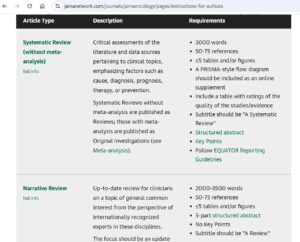
Some journals also specify which parts of the paper are included or not in the word limit, or limit the number of references. See this example below:
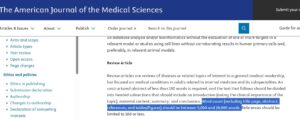
If your literature review is part of an original research article, there’s usually no limit on the word count but the overall article itself must meet the journal’s limit for that article type.
What is a meta-analysis?
A meta-analysis differs from a literature review in that it involves not just searching the literature but also pooling/combining data from different studies in order to calculate effect sizes more accurately. Each study’s result (like how much a training program reduces injuries) is given a weight—more reliable studies count more. Then all the results are averaged using those weights, so stronger evidence has a bigger influence. The final number shows the overall effect, such as how much does eccentric training reduce the risk of hamstring injury.
Differences between narrative reviews, systematic reviews, and meta-analysis
The main differences between a narrative review, systematic review, and meta-analysis are as follows:
| Aspect | Narrative Review | Systematic Review | Meta-analysis |
| Purpose | Broad overview of a topic | Comprehensive, structured synthesis of evidence | Quantitative combination of results from multiple studies |
| Methodology | Flexible, not strictly defined | Predefined, protocol-driven and reproducible | Follows systematic review methods + statistical pooling |
| Literature Search | Selective, may not be exhaustive | Exhaustive, systematic search strategy | Same as systematic review (comprehensive search) |
| Potential for author bias | Higher risk of author bias | Author bias can be minimized through standardized methods | Further reduces bias through statistical analysis |
| Data Analysis | Qualitative summary | Qualitative (and sometimes limited quantitative) | Quantitative statistical analysis (e.g., effect sizes) |
| Outcome | Descriptive conclusions including author insights | Evidence-based conclusions | Pooled effect estimate with increased statistical power |
This article was originally published on November 29, 2018, and updated on May 17, 2026.