
New on Editage Insights

Academic Translation vs. General Translation: What’s the Difference?
Non-native speakers translating research papers from their native language to English often face a dilemma: “I’m confident of the research content, but is my meaning conveyed properly?” This is where academic translation—rather than simple language conversion—is required. Indeed, accuracy is important in general translation as well. But in research papers, the choice of a single […]
-
Nov 17, 2026
Features of Reliable AI Tools: How to Identify Researcher-friendly AI solutions
Discover the key features of reliable AI tools and learn how researchers can evaluate AI solutions for accuracy, usability, transparency, and research needs.

-
Nov 12, 2026
VIDEO : Six Useful Tips to Increase Research Paper Citations
Learn practical, evidence-based tips to boost the visibility and citation potential of your published research and increase its academic impact.

-
Nov 10, 2026
VIDEO : ChatGPT Prompts: What Works for Research Paper Preparation
Learn how good prompts differ from bad prompts and why the way you communicate with AI can significantly affect the quality of the output.
-
Nov 5, 2026
What Do Medical Reviewers Notice in AI-Assisted Manuscripts?
Generative AI can make medical manuscripts more polished, but does it make them more scientifically robust? We explore what medical editors and peer reviewers look for, where AI-assisted writing can go wrong, and what authors should verify before submitting their work. The Changing Landscape of Medical Publishing Artificial intelligence (AI) has changed the way researchers […]

-
Nov 4, 2026
Ask the Editor: How do Editors and Reviewers Know if a Paper was Written Using AI?
Iva Grabarić Andonovski Editor of Food Technology and Biotechnology, University of Zagreb Faculty of Food Technology and Biotechnology, Zagreb, Croatia; European Association of Science Editors (EASE) Vice President Today’s research and publishing landscape is heavily influenced by the development of generative artificial intelligence (AI). Recent findings point out that authors use AI tools to write […]
-
Nov 2, 2026
What the 2026 Journal AI Policies Mean for Research Writing as a Task and as a Skill
Is a journal’s understanding of AI use for copyediting the same as the author’s? Rapidly evolving AI guidelines In August 2026, The Lancet and JAMA updated their AI use guidelines. The Lancet permits the use of AI and AI-assisted tools in manuscript preparation with human oversight and asks authors to disclose their purpose of AI […]

-
Oct 31, 2026
Paper Retraction and Its Impact on Researchers’ Career, Reputation, and Funding
Learn how paper retraction affects researchers’ careers, academic reputation, and research funding. Understand the potential consequences and long-term impact.

-
Oct 30, 2026
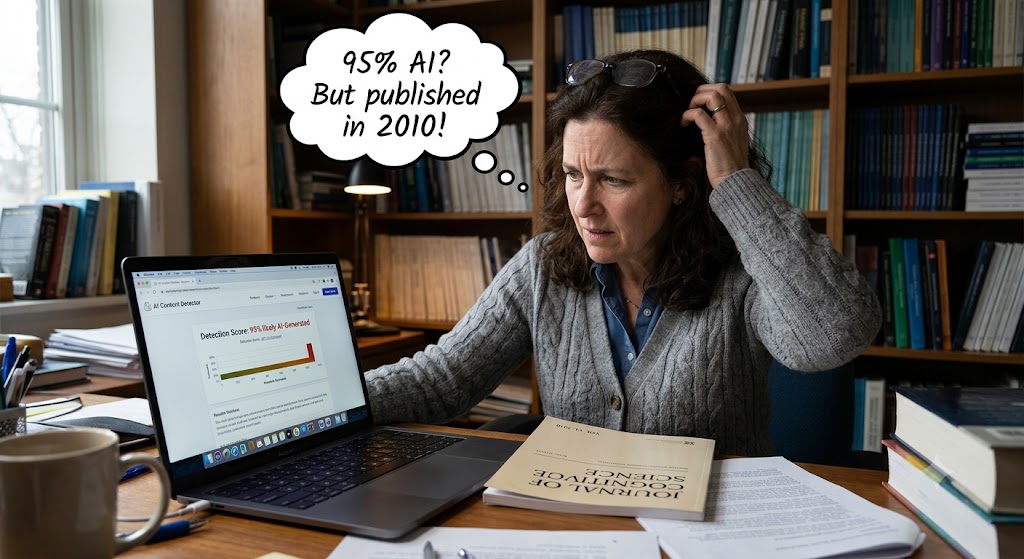
AI Detector False Positives: Why Human Writing Can Be Flagged as AI-Generated
Jump to Contents Uses of AI detectors What AI detectors measure What is an AI detector false positive? How common are AI false positives? What to do if you are falsely accused of AI writing? Uses of AI detectors AI detectors are used to flag potentially AI-generated text in the following situations: Universities use it […]
-
Oct 29, 2026
VIDEO : Using AI? Watch Out for Violations of Submission Ethics
Most journals have clear AI disclosure policies and why researchers must carefully follow journal guidelines before manuscript submission. Learn where and how to disclose the use of AI tools, whether in acknowledgements, methods sections, or dedicated AI statements.
-
Oct 28, 2026
