What are frequentist statistics? What are Bayesian statistics? Advantages of Frequentist Statistics Familiar Terrain Simple Questions, Simple Answers Large Sample Sizes Advantages of Bayesian Statistics Embracing Uncertainty Small Sample Sizes Iterative Learning How to Choose Read More

Articles
Other Content Types
Have you ever wondered how to successfully collaborate across borders? Here is the first part of a 2-part series on overcoming geographical and language challenges in research collaboration. Why practical international collaborations matter Read More
Open access (OA) publishing has been a transformative force in the academic community, democratizing knowledge and accelerating the pace of scientific discovery. Owing to the growing recognition of the importance of OA in scholarly communication, Read More
Key Takeaway: Researchers can make their figures accessible by not relying on color to convey information, using texture and shading to distinguish data series, including alt text, providing high-resolution figures, and using tools like Viz Read More
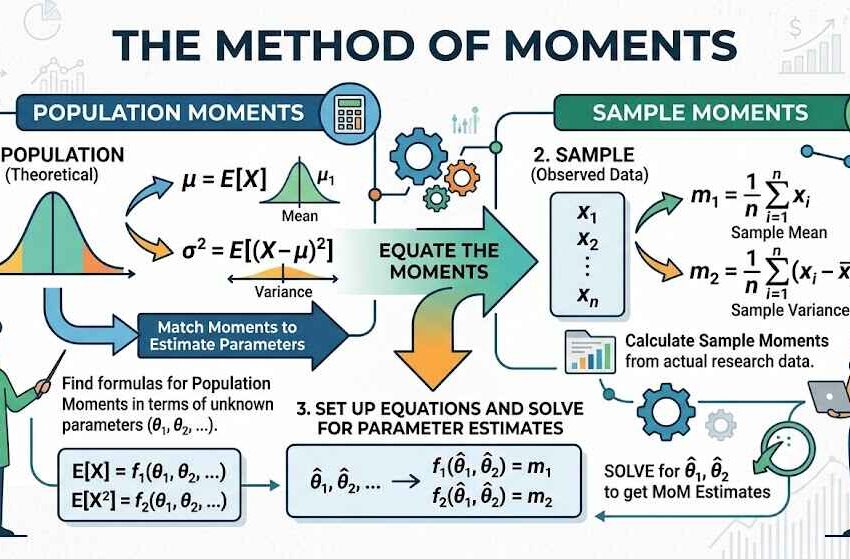
In biomedical research, you often know what type of distribution your data follows. Maybe it’s normally distributed like blood pressure measurements, or it follows an exponential distribution like drug metabolism times. But here’s Read More
In genetics and genomics research, regression methods are frequently used to identify significant genetic markers, understand genetic contributions, and predict outcomes based on genetic information. One popular regression technique used in this field Read More
The artificial boundaries separating communities internationally have long disappeared in the virtual world. This has led to access to knowledge across borders, irrespective of where one lives. A large proportion of research is still communicated Read More
The vast potential of research hinges on its accessibility. But locked within academic journals and dense terminology, valuable findings often struggle to transcend language barriers, limiting their impact. Translating research for wider access and impact Read More
A patent grants an exclusive right for an invention to the owner such that others cannot commercially exploit the invention. This imposes social costs on the public which limits access to protected work. Although patents Read More
In today’s world, the traditional boundaries that separated the “scientist” from “society” are rapidly disappearing. Gone are the days when one could stay within the walls of a laboratory or clinic for hours Read More