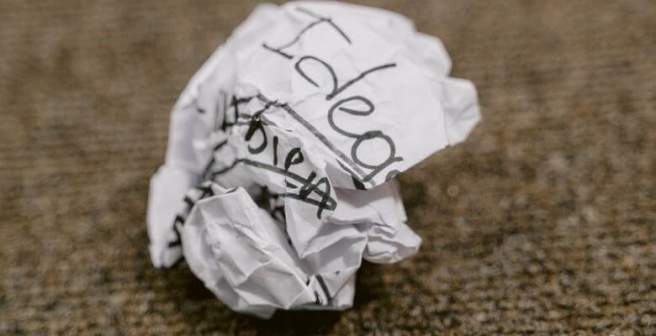
Paper Retraction and Its Impact on Researchers’ Career, Reputation, and Funding
- Retracted research does not always signal research misconduct. Honest mistakes or differing opinions among the scientific community could make the findings unreliable, leading to paper retractions.
- Unethical AI use, non-disclosure of AI use, AI-fabricated citations/references, AI-assisted plagiarism, AI-manipulated figures, and failing to adhere to journal’s AI policy could lead to paper retractions.
- Retracted research papers do not end a researcher’s career. Varying circumstances and reasons for retraction determine the impact on future publishing opportunities and collaborations.
- Repeated or multiple paper retractions could influence prospective funding support. Authors must consciously maintain research integrity to avoid deliberate mistakes that result in retracted research papers.
Why are Research Papers Retracted?
Does a Retracted Research Paper Always Mean Misconduct?
How Can a Retracted Paper Affect a Researcher’s Career?
Can Retracted Research Affect Funding?
Can AI Use Lead to Paper Retraction?
What Should Researchers Do if Their Paper is Retracted?
What is a Paper Retraction?
A retracted article is a published scientific paper that has been invalidated, either by the authors or the journal’s editors, to inform the scientific community that the findings reported in that paper are no longer reliable. A retracted research paper is typically not completely deleted from the database. Rather it is permanently tagged with a “retracted” label to inform readers that the article has now been disavowed by the journal.
Why are Research Papers Retracted?
A common misconception is that research papers are always retracted because there was some kind of fraudulent behavior identified on the authors’ part. This is NOT true! Retraction can occur for many reasons.
- Honest errors. Sometimes, there could be genuine mistakes in the experimental procedure or the data analysis technique that perhaps went unnoticed during research execution. For example, authors retracted a paper from Frontiers in Psychology after noticing a clerical mistake in data merging across time points in a longitudinal study [1]. Since the re-analysis of data after correcting the error did not support the reported findings, the paper was retracted.
- Duplicate publications. Another common reason for paper retraction is re-publication of a research article that already exists in another journal. In a way, this can be deemed author misconduct since simultaneous submissions to multiple journals is deemed to be unethical scientific practice. Take this retraction notice from Asian Journal of Psychiatry for instance [2]. The editors determined that the article was already published in Psychiatry Research, leading them to withdraw the paper from their own journal.
- Research misconduct. The Office of Research Integrity (ORI) defines research misconduct as deliberate fabrication, falsification, or plagiarism (FFP) of research data either when performing or reporting an investigation [3]. If authors are found to have fabricated results, manipulated research materials, changed or omitted data, or taken credit for another researcher’s work without proper attribution, it leads to paper retraction.
- Ethical violations. Say you are conducting research involving human or animal trials but did not obtain the necessary IRB approvals and informed participant consent before executing the research. Or let’s say you failed to disclose certain conflicts of interest during submission. All these are classified as ethical violations that can result in retracted research articles.
- Unreliable data. Data misrepresentation or falsification, also categorized under research misconduct, can cause retractions. For example, Frontiers in Psychology retracted a paper on a machine-learning-based mental health analysis of children and young adults citing lack of response from authors when approached for clarification using raw data to dispel confusion of data misrepresentation [4].
Does a Retracted Research Paper Always Mean Misconduct?
As explained in the previous section, the reasons for paper retraction can be several. Whenever you come across a retracted article, do not automatically assume research misconduct. In fact, journals attach a formal retraction notice alongside the published article, clearly stating why the paper was retracted.
| Reason for paper retraction | What it means |
| Fabrication | Often misconduct |
| Falsification | Often misconduct |
| Plagiarism | Research misconduct |
| Duplicate publication | Not necessarily fraudulent |
| Serious methodological error | Not necessarily fraudulent |
| Coding/calculation mistake | Not necessarily fraudulent |
| Ethical violations | Depends on the violation |
| Unreliable conclusions | Not necessarily fraudulent |
| Manipulated peer review | Publication integrity issue |
| Undisclosed AI use | Misconduct |
| Failure to adhere to journal’s AI policy | Misconduct |
According to COPE’s retraction guidelines [5], the key purpose of retraction must be to rectify the literature and ensure research integrity rather than to punish the authors. The guidance elaborates on the instances that call for a paper retraction, such as severely flawed or misleading findings, irregularities in data or figures, plagiarized content without appropriate authorizations, duplication publications, and undisclosed conflicts of interest that could have led to biased peer reviews.
Even the International Committee of Medical Journal Editors (ICMJE) recognizes that honest errors are simply a part of science. Under its Corrections and Version Control guidelines [6], ICMJE allows for corrections in case of errors resulting from coding issues or miscalculated data, provided these errors do not alter the direction of study’s implications. In other words, rather than retracting the entire paper, journal editors and authors can coordinate to resolve the errors and publish corrected versions of the paper by attaching appropriate correction notices.
What these guidelines indicate is that retraction is fundamentally meant for correcting erroneous scientific records and is not necessarily a verdict that authors were fraudsters! Whether it is unintentional mistakes, fabricated information, data manipulation, duplicate submission, ethical violations, research misconduct, or systematic manipulation of the publication process [7], papers that do not contribute to furthering scientific knowledge in the right direction must be retracted.
How Can a Retracted Paper Affect a Researcher’s Career?
One of the key questions that bothers authors, especially early-career researchers (ECRs): “What will this paper retraction do to my career?” Let’s put your mind at ease. One retracted article is not a sign that your career is at an end. Think of it as a bump. One that simply must be driven over. Having said that, it is indeed good to be aware of how retracted research could potentially affect a researcher’s career in general.
In 2025, Han et al. [8] performed a quantitative analysis of 373 medical researchers in China and investigated how their retracted papers impacted their careers to get insights into retraction trends. Interestingly, retractions caused by scientific errors had a greater negative impact on researchers’ career prospects in comparison with academic misconduct, with reduction in both citations (-61.8%) and co-authorship opportunities (-23.6%). Another finding indicated that ECRs experience reduced collaborations, while mid-career researchers received fewer citations for their works.
These insights clarify in what areas researchers can expect impact post retraction. However, the long-term influence on a researcher’s career goes beyond citation numbers and collaborations. Some researchers, mainly ECRs with minimal experience, tend to discontinue this career path anticipating adverse reaction from the scientific community, especially if the retraction becomes widely known. But a study by Memon et al. [9] noted that despite paper retractions, researchers who persist in academic publishing could eventually establish impactful collaborations over time.
So, what’s the takeaway? One retracted research does not determine the career path for you. Indeed, there could be certain adverse effects in terms of collaborations, co-authoring of papers, and citation numbers. Retractions caused by research misconduct or non-compliance with publication ethics could even negatively impact your professional reputation. However, if you’re a passionate researcher and determined to establish your scientific proficiency, the potential of reduced future research opportunities or the possibility of delays in promotions or tenure should not hinder you from pursuing a career in research publishing. Instead, learn from your mistakes and avoid having multiple retractions attached to your name. What could you have done to prevent it? How can you be more careful in the future? Take the learnings and turn them into actionable outcomes.
Can Retracted Research Affect Funding?
Researchers rely on funding and financial support. So another key concern for authors is: if my research paper is retracted, how will it affect my future funding?
It would be wrong to claim that there’ll be no impact whatsoever. Funding agencies and institutions that offer financial aid do scrutinize your research proposal or grant proposal closely before approving the release of funds. During their review, a retracted paper attached to your name could be considered a blemish on your record. However, several factors come into play.
- What was the reason for retraction? Was it a fraudulent practice or a genuine mistake?
- Is it an isolated instance? Or are there multiple paper retractions recorded?
- Were there research integrity issues like FFP?
- Did the journal determine that authors had flouted their AI policy?
- Was the retraction fair or unfair?
Funders usually decide on the next steps depending on what their internal investigations determine. So, the financial support could still be offered despite paper retractions, provided all other funder’s requirements are satisfied.
A recent study [10] reported a potential reduction in NIH funding for authors with paper retractions. The impact was also seen on active grants in the name of retracted authors, which reduced by about 9%. The study also determined that the change in funding and grant approval trends was significant for authors with multiple retractions as opposed to those with single retractions. Therefore, detailed checks before journal submission and active monitoring of the status of a published paper are both crucial for authors.
Can AI Use Lead to Paper Retraction?
Modern publication practices have added another major concern: AI! The use of AI tools and platforms are not entirely new. Yet, the rapid pace with which generative AI, machine learning technologies, and large language models are evolving calls for authors to be mindful of ethical AI use.
AI-generated Factual Errors and Hallucinations
Authors often prefer using generative AI for brainstorming ideas. This practice is typically accepted, and sometimes even encouraged, to expand the scope of knowledge regarding your research. However, watch out for AI hallucinations. Generative AI tools are known to provide users with satisfactory output simply with the intent of answering questions rather than admitting that it has no knowledge of what the user is expecting!
Accepting AI-stated information as facts without proper verification and validation could be one of the reasons to initiate paper retraction.
Fabricated References and Citations
Even when browsing the web for sources, especially during literature review, the use of general AI tools may hinder your search results. AI-fabricated citations have wormed their way into published papers despite peer review evaluations. So, every reference cited by the tool must be double-checked before being listed as a source in your work.
AI Plagiarism
Plagiarism in research has plagued authors for decades. With AI, the chances of being accused of plagiarism has now increased. AI plagiarism could be caused by using AI-generated text as is without any paraphrasing. If AI tools have picked strings of text from existing sources and presented it to you, copying the text word-to-word puts you at the risk of committing plagiarism. So, even if you use generative AI, avoid reproducing its output verbatim. Instead, read and internalize the information before presenting the details in your paper in your own words, thus preserving author voice.
Note: You can now use Editage’s instant plagiarism check report to know the similarity score of your manuscript.
Undisclosed AI Use
Most journals are particular about disclosing how AI was used in your research. AI disclosure statements are often mandated during submissions, requiring authors to specify the tool name, version, why it was used, what purpose it served, and exactly to what extent AI supported your work. Not disclosing AI use or improper disclosures can be a reason for journals to initiate paper retraction.
AI-generated Images or Manipulated Figures
Manipulated results depicted in figures, AI-generated nonsensical figures, and gibberish labels are all reasons that could not only lead to retracted research papers but also negatively impact a researcher’s reputation. One could argue that the burden falls on journals to verify the authenticity of images before publishing. But the responsibility lies with the authors too.
Let your figures represent exactly what you found. Do not try to exaggerate data and findings to fit your research hypothesis. There are even ways to publish negative results. So avoid using AI to manipulate graphs, images, charts, photos, and micrographs.
Failure to Follow Journal AI Policies
With stringent AI policies in place, journals express strong disliking to non-compliant practices. Read the guidelines carefully before you employ AI tools for research paper preparation. Some journals mention that no AI assist is allowed, whereas some journals permit limited usage for specific tasks like manuscript outlining and structuring. Know what’s allowed and what should be avoided so that you do not unintentionally end up violating the guidelines.
Even if you disclose AI use during submission and later learn that the journal does not allow it, it will still be a valid reason for rejection. Or worse, if you fail to disclose AI use because the journal does not allow it and it later comes to light that you did not comply with journal policy, the published paper will be retracted citing misconduct reasons.
Who is Responsible when AI Makes a Mistake?
It all comes down to who takes responsibility when AI mistakes get published. Whether it is because of poor peer review, publication oversight, or honest errors from authors, there should be appropriate ownership taken for publishing incorrect science.
So, remain responsible as an author and ensure that there are no obvious AI-generated errors during submission. You can minimize the risk of rejection by using Editage’s post-AI risk assessment service and get your manuscripts checked, validated, and finalized by human experts.
What Should Researchers Do if Their Paper is Retracted?
Despite all precautionary measures, paper retractions could occur. What should authors do?
- Read the retraction notice with an open mind. If you initiated the retraction, you are already aware of what went wrong. But if the journal initiated it, understand why. Was it a policy breach? Was the methodology wrong? Take time to analyze the reason for retraction so you can avoid such instances in future.
- Distinguish between genuine mistakes and misconduct. Honest errors in science are acceptable. But research misconduct and compromised publication integrity could have a negative impact on future submissions. Know the difference. Follow guidelines and ethical research practices. Avoid deliberate data fabrication, plagiarism, and falsification, the most common reasons for retractions.
- Keep your stakeholders informed. If necessary, let your organization, laboratory, institution, or funding agency know of the retraction. If there were collaborators involved in your research but were not named authors in your paper, keep them informed too.
- Correct related work if applicable. Sometimes, retractions happen years after research publication. You could have used those very papers as the base to conduct further investigation on the topic and published other research papers as well. How have they been impacted? Should you correct the findings there? Check what changes should be made.
- Watch out for mistakes in future publications. Learn from the mistakes made. Repeated retractions could hamper your career progression. Avoid repeating the same errors, verify citations, check for unintended plagiarism, double-check AI policy, follow journal guidelines, and disclose AI use honestly.
- Be transparent. Accept and move on. There is no point in trying to hide the information from your peers and collaborators during upcoming projects. Be open and honest about it. Eventually, as you conduct research and continue to publish papers, a retraction remains just one bumpy instance in a life-long career!
Retraction does not indicate punishment for authors. It is how science progresses through appropriate corrections. Maintaining research integrity is the collective responsibility of authors, journals editors, peer reviewers, and everyone involved in the publication pipeline to ensure that at the end of the day, science wins.
References
1. Retraction: When Words Hurt: Affective Word Use in Daily News Coverage Impacts Mental Health https://www.frontiersin.org/journals/psychology/articles/10.3389/fpsyg.2020.630044/full
2. Retraction notice to “Chinese mental health burden during the COVID-19 pandemic” [Asian J. Psychiatr. 51 (2020) 102052] https://www.sciencedirect.com/science/article/pii/S1876201820305955
3. Office of research integrity (ORI): Definition of research misconduct https://ori.hhs.gov/definition-research-misconduct
4. Retraction: Mental health identification of children and young adults in a pandemic using machine learning classifiers https://www.frontiersin.org/journals/psychology/articles/10.3389/fpsyg.2024.1456387/full
5. COPE Council. COPE Guidelines: Retraction Guidelines. August 2025. https://publicationethics.org/guidance/guideline/retraction-guidelines
6. ICMJE Corrections and Version Control https://www.icmje.org/recommendations/browse/publishing-and-editorial-issues/corrections-and-version-control.html
7. RETRACTION: Construction of Mental Health Education Model for College Students Based on Fine-Grained Parallel Computing Programming https://onlinelibrary.wiley.com/doi/10.1155/scpr/9876257
8. Fang Han, Yanqing Ren, Ruhao Zhang, Lingzi Feng, Lixue Wang, Junpeng Yuan. Drivers and penalties of retraction: An empirical study of Chinese medical researchers, Journal of Informetrics, Volume 19, Issue 4, 2025, 101745, https://doi.org/10.1016/j.joi.2025.101745
9. Memon, S.A., Makovi, K. & AlShebli, B. Characterizing the effect of retractions on publishing careers. Nat Hum Behav 9, 1134–1146 (2025). https://doi.org/10.1038/s41562-025-02154-0
10. Cost of Retracted Articles to the NIH: A Living Analysis https://pmc.ncbi.nlm.nih.gov/articles/PMC13370526/
Disclosure: ChatGPT free version was used to get suggestions for the headers, blog structure, and sources from the web. All suggestions were reviewed, verified, and finalized by the author before being used in the post.