Final Manuscript Submission Checklist: Reviewing Everything from Abstract to References
Your research is complete. Your manuscript is written. But is it ready for submission yet? A lot of effort has gone into consolidating your research manuscript. So, before you submit it to your preferred target journal, here are some crucial final checks that can ensure a journal-ready manuscript.
What are Manuscript Submission Checklists?
- Title Page Checklist
- Abstract and Keyword Checklist
- Introduction Checklist
- Methods Checklist
- Results Checklist
- Discussion and Conclusion Checklist
- References, Figures/Tables, and Supplementary Material Checklist
What are Manuscript Submission Checklists?
Checklists are excellent aids to review your manuscripts one final time. What usually helps is creating a template of things you often need to check in any academic work and re-use the same by customizing the checks for that specific assignment.
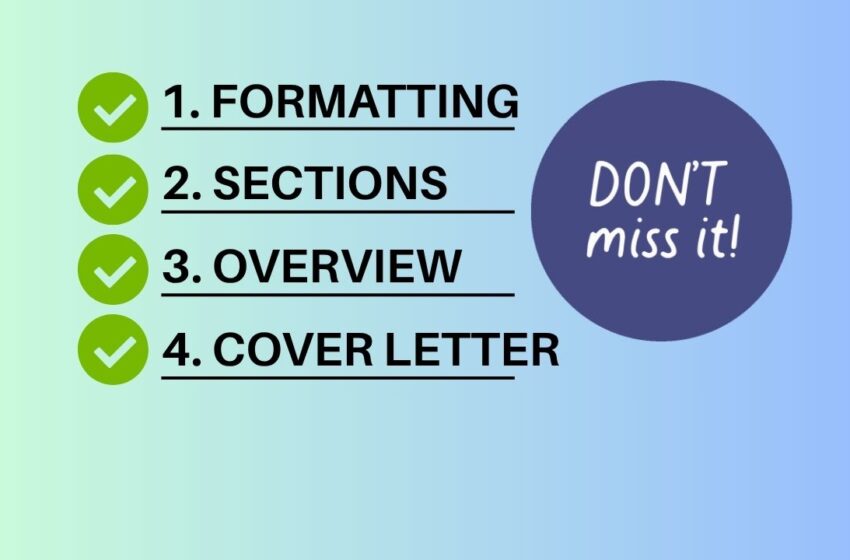
For instance, the four key checklists for any research manuscript can be related to
- formatting,
- manuscript sections,
- overview, and
- cover letter.
There could be other checks that might be needed for a research paper depending on the subject area. For example, medical manuscripts warrant checks for compliance with reporting guidelines like PRISMA, CONSORT, CARE, STROBE etc. But the following four checklists can be used commonly for any research manuscript.
Formatting Checklist
Why Formatting Checklist Matters
A correctly formatted manuscript can help you clear the first hurdle of editorial checks easily. While it may not sound important, formatting is one of the first things that editors notice when they receive a manuscript for evaluation. Despite their limited time, any formatting guidelines overlooked by authors will be obvious to experienced journal editors. So, rather than assuming that it’s alright to miss a few guidelines outlined by the journals, be sure to check for every requirement from the list.
Template for Formatting Checklist
Formatting can be done either manually or by using tools; but the latter comes with risks that you should be aware of. Regardless of how you go about the formatting process, this final review checklist should help you cover all key aspects before submission.
| Formatting checklist | Yes/No |
| Correct article type (research paper, review article, case report, short communication, etc.) | |
| Journal template (if provided) applied | |
| Page numbers and line numbers added | |
| Font type and size are accurate | |
| Line spacing and margins are correct | |
| Abstract and main text word counts are within limits | |
| No. of references, tables, and figures are within limit | |
| Consistency in style (numbers, P values, symbols, punctuation, etc.) | |
| Appropriate sections, headings, and sub-headings | |
| Reference list in journal-recommended style | |
| In-text citations in journal-recommended style |
This simple Yes/No checklist allows you to identify what’s missing in your manuscript, recognize what should be fixed, and make necessary changes before submitting.
- Have you formatted the paper for the correct article type? Some journals provide different templates for each type of article. So ensure that you have used the right one.
- Then comes the checks for manuscript layout: this entails your page margins, line spacing, page numbering, line numbering, content in header/footer, font type and size, etc.
- You should also check whether the order of sections matches the journal-recommended style. For example, some journals may instruct you to have the Title Page first followed by the rest of the manuscript. In others, the Methods section may have to be placed at the end after Conclusions instead of after the Introduction section.
- Always check for consistency in style—be it punctuation, numbers, reporting P values, in-text citations, or reference list.
Important Tip: Sometimes, there could be contradicting guidelines in the journal website and the template. In such cases, it is better to contact the journal and clarify the correct formatting requirements.
Manuscript Sections Checklist
Each section of the manuscript should be subjected to thorough checks individually as well as collectively. A yes/no template typically works for these checklists. But depending on the target journal and article type, you may modify the checklist.
Title Page Checklist
| Is the title concise (word count/character count limit if applicable) | Yes | No |
| Does the title provide an effective summary of the manuscript | Yes | No |
| Authors and affiliations provided | Yes | No |
| Corresponding author identified with correct contact details | Yes | No |
| Other information (acknowledgment, declarative statements, total word count of the manuscript etc.) required by journal included | Yes | No |
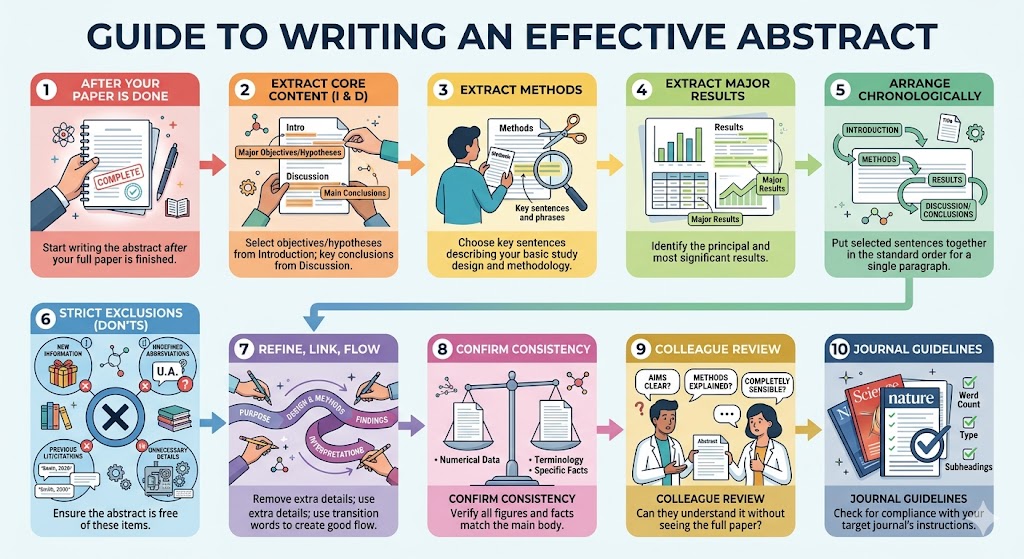
Abstract and Keyword Checklist
| Abstract | ||
| Study purpose stated clearly | Yes | No |
| Important points of the study summarized | Yes | No |
| Novelty of research highlighted | Yes | No |
| Gap in literature mentioned | Yes | No |
| Reason for initiating study clear | Yes | No |
| Word count limit (if any) satisfied | Yes | No |
| Keywords | ||
| Keyword list follows journal requirements (e.g., listed alphabetically, abbreviations avoided, etc.) | Yes | No |
| Are the keywords used in the main text | Yes | No |
| Keywords exist in MeSH (medical subject headings) if required by the journal | Yes | No |
Note: Sometimes, the abstract cannot include all information because of word count limitations. In such cases, use your discrepancy and avoid stating the less important information. For instance, the literature gap and why your study was initiated can be covered in the purpose of the study itself without exceeding the word count limits.
Introduction Checklist
| Brief background is presented with a focus on study topic | Yes | No |
| Gap in literature is sufficiently highlighted with appropriate references to previously published works | Yes | No |
| Study objective is presented clearly | Yes | No |
| Research question is apparent to readers | Yes | No |
| The last paragraph outlines the structure of the paper, if needed by the journal | Yes | No |
Methods Checklist
| Organized logically in sub-sections | Yes | No |
| Study design and setting explained | Yes | No |
| Inclusion and exclusion criteria stated | Yes | No |
| Enough details for others to replicate the study | Yes | No |
| Validated experiments and instruments used for the analysis | Yes | No |
| Procedures for statistical analyses provided (t-test, ANOVA, etc.) | Yes | No |
Results Checklist
| Order of results corresponds to order of methods | Yes | No |
| Study purpose/study objective has been addressed | Yes | No |
| Findings are reported objectively | Yes | No |
| Participant demographics are provided | Yes | No |
| Results are supported by credible statistical analyses | Yes | No |
| Figures and tables do not repeat the results in the text but provide key additional information | Yes | No |
Discussion and Conclusion Checklist
| Discussion | ||
| Study purpose/objective is briefly stated at the beginning | Yes | No |
| Principal findings are summarized | Yes | No |
| Results are discussed and interpreted in the context of similar existing literature | Yes | No |
| Limitations are mentioned | Yes | No |
| Significance of study highlighted | Yes | No |
| Study implications are discussed | Yes | No |
| Conclusion | ||
| Succinct summary of salient study findings | Yes | No |
| Key take-home message included | Yes | No |
| Future research directions mentioned | Yes | No |
Note: The Discussion and Conclusion sections can either be combined or standalone sections. Check your journal instructions if there’s a preferred format.
References, Figures/Tables, and Supplementary Material Checklist
| References | ||
| All works in the reference list are cited in text and vice versa | Yes | No |
| Reference list and in-text citations are formatted as per required style guide (APA, MLA, Chicago, etc.) | Yes | No |
| Majority of references are fairly recent (published in the past 10 years) | Yes | No |
| Figures/Tables | ||
| Content and labels within the figures are legible | Yes | No |
| Information in tables is not repeated in figures and vice versa | Yes | No |
| Titles of display items are concise and representative of the item | Yes | No |
| Abbreviations used are defined in figure legends | Yes | No |
| All figures/tables are cited in text in order of their appearance | Yes | No |
| Included within manuscript or uploaded separately (depending on journal requirements) | Yes | No |
| Supplementary Materials | ||
| Writing and formatting style align with main manuscript | Yes | No |
| Adds value with appropriate additional details rather than reiterate content included in main text | Yes | No |
Overview Checklist
When you finish drafting the manuscript, it is common practice to run it through a spelling and grammar check. That’s what the overview checklist involves, but after the final manuscript is prepared.
- Spell check: Does the writing follow the American English or British English spelling requirements? This is usually clear from the journal’s website as to which spelling convention they prefer. If not, you may check some of the published articles to know what the journal prefers.
Tip: Use the ctrl+f function to check for “-ise” vs. “-ize” or “-er” vs. “-re” or “-our” vs. “or” - Grammar check: Use of articles, verbs, singular/plural nouns, and other syntax must be checked.
- Consistency in terminology: Check for consistency in abbreviations, acronyms, subject-specific terminology, and field-specific definitions.
- Accurate tense usage: Ensure that correct tenses are used in different sections of the manuscript depending on the context of the sentence; past tense for reporting experiments that were performed during the study, present tense when referring to figures/table in the text, future tense for recommended research directions based on the study implications, etc.
- Logical flow of content: Overall information flow should be rational and logical. While the IMRaD structure helps keep track of this, check for proper transitions between paragraphs and from one sub-section to the next.
Cover Letter Checklist
A cover letter is the first thing that a journal editor reads before deciding to review your submitted paper. There’s often a standardized template that most academic journals prefer. Your checklist can also adhere to this template to make the review easier.
| Submission date included and not the cover letter writing date | Yes | No |
| Addressed to journal’s editor-in-chief, chief editor, etc. with the correct name and designation | Yes | No |
| Target journal name is mentioned | Yes | No |
| Article type is specified (original research article, review article, case report, short communication, etc.) | Yes | No |
| Manuscript title, co-author names, corresponding author with contact information provided | Yes | No |
| Brief explanation of the knowledge gap that your study addresses | Yes | No |
| Study importance, novelty, significance of selected topic clear | Yes | No |
| Reason for suitability to target journal is mentioned | Yes | No |
| Disclosures and suggested/excluded reviewers mentioned as per journal guidelines | Yes | No |
FAQs on Submission Checklists
1. Why do I need a manuscript submission checklist?
Journal submission can be taxing, and rushing through the last-minute submission tasks could make you forget minor (or even major) items that you need to complete. Having a checklist makes it easy for you to review the manuscript one final time without missing anything important.
2. How to use checklists?
Checklists can be used in the digital format on your computer. Or, if you prefer the pen and paper method, print out the checklists as hard copies and tick each item off the list as and when you finish the checks.
3. What should I check just before manuscript submission?
The final checks should be an overall review of whether all submission guidelines have been met. What usually helps is a checklist of the broad journal requirements. See whether
- the journal formatting template applied
- the references and citations formatted as per journal guidelines
- stylistic requirements (page layout, margin, page numbering, header text etc.) are satisfied
- manuscript sections adhere to recommended word count limits
- you have provided the contact information correctly
- figures and tables are formatted and uploaded in the suggested file format
- ethical requirements are met
- statements of declaration (AI disclosure, conflicts of interest, patient consent, other acknowledgments etc.) are included
- cover letter is addressed to the right person with all important details of the study summarized