

If your experiment needs statistics, you ought to have done a better experiment. – Lord Ernest Rutherford A Peer Reviewer’s Conundrum: Sample size of 1 In the journal Neuroimage, in 2009, a group of investigators reported an Read More

If your experiment needs statistics, you ought to have done a better experiment. – Lord Ernest Rutherford A Peer Reviewer’s Conundrum: Sample size of 1 In the journal Neuroimage, in 2009, a group of investigators reported an Read More
Remember that moment of receiving an email notification from a journal you have submitted to? Anticipating what peer reviewers would have thought of your manuscript can be nerve-racking indeed! As you gradually read the journal Read More
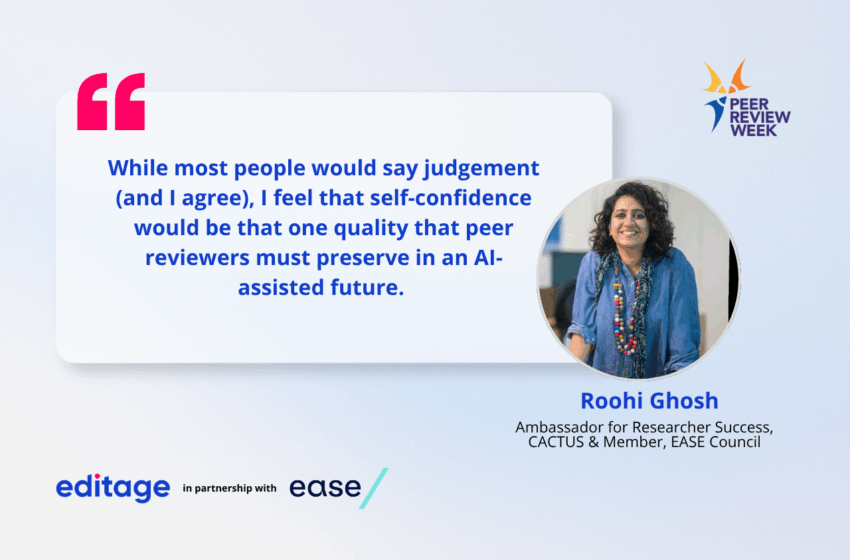
AI may bring in consistency but I would trust the human to maintain the trust in the peer review process. As part of the Peer Review Week 2026 event, we interviewed industry experts to understand their Read More

Have you experienced a lot of desk rejection recently? Does it seem that journals are just not interested in your paper, despite all the solid research you’ve done? It may be time to re-evaluate Read More
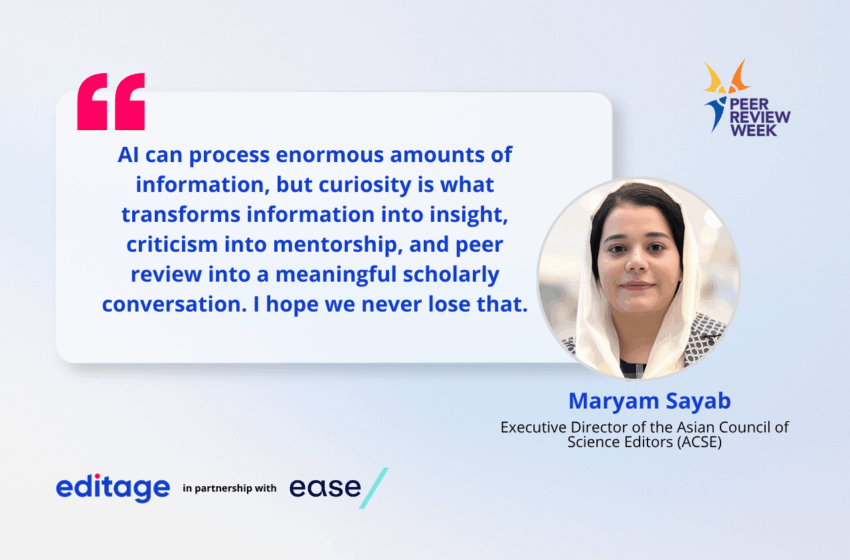
AI should help editors spend less time on routine tasks and more time exercising the judgment that makes peer review valuable in the first place. As part of the Peer Review Week 2026, we feature the Read More
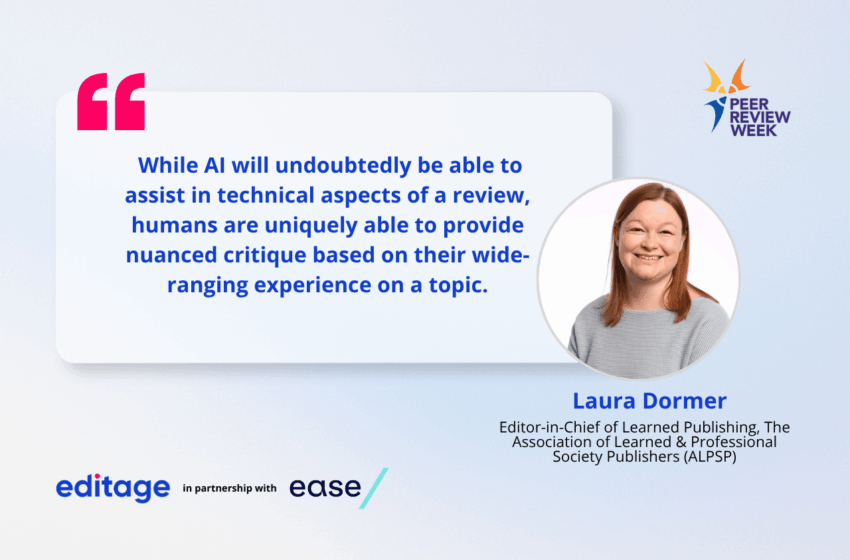
While AI will undoubtedly be able to assist in technical aspects of a review, humans are uniquely able to provide nuanced critique based on their wide-ranging experience on a topic. We interviewed Laura Dormer, Editor-in-Chief – Read More
All authors dream of having their manuscript published as a book. But the process of book publishing can be an overwhelming experience if not done correctly. This guide will help you understand what it takes Read More
“Oh! I simply love reading her books. The storyline builds effortlessly and the characters truly come to life!” “Professor Arnold has published a new textbook on handling social transitions in Read More
A lot has happened since large language models (LLMs) and chatbots became mainstream in academia (Figure 1). Remember how in late 2022 and early 2023, researchers began publishing papers listing ChatGPT as a co-author? At least four such Read More
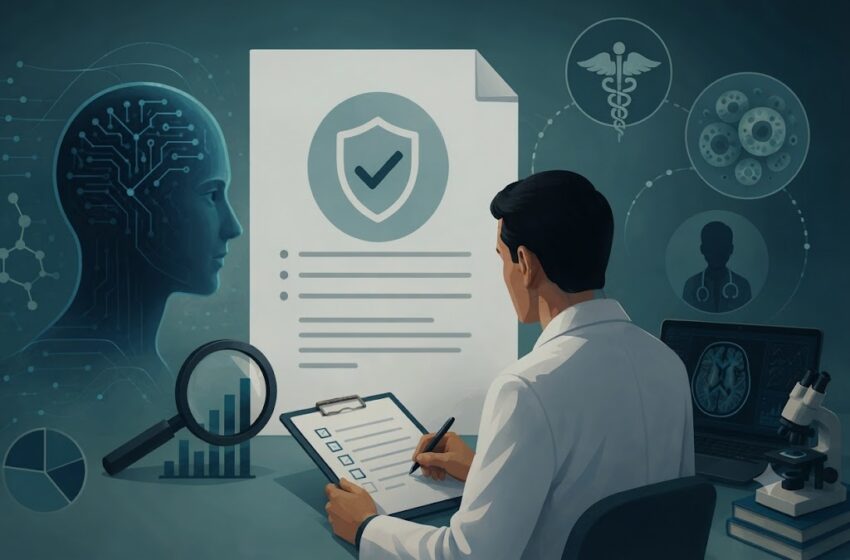
Have you noticed these declarations at the end of recently published papers? AI Use Disclosure ChatGPT was used for reference formatting purposes only. Declaration of Generative AI Use ChatGPT 5.5 [Open AI] was used solely for Read More
Full disclosure: Editage Insights is a product of Editage, a global provider of world-class scientific communication solutions. Editage Insights is funded by Editage and endorses services provided by Editage but is editorially independent. English Editing - Editage.com | 英文校正 – Editage.jp | 원어민영문교정 – Editage.co.kr | SCI英文论文发表 – Editage.cn | publicação de artigos – Editage.com.br | 編輯英文 – Editage.com.tw



